All-Grass of Discolor Cinquefoil
- Chinese
- 翻白草
- Pinyin
- Fan Bai Cao
- Latin
- Herba Potentillae Discoloris
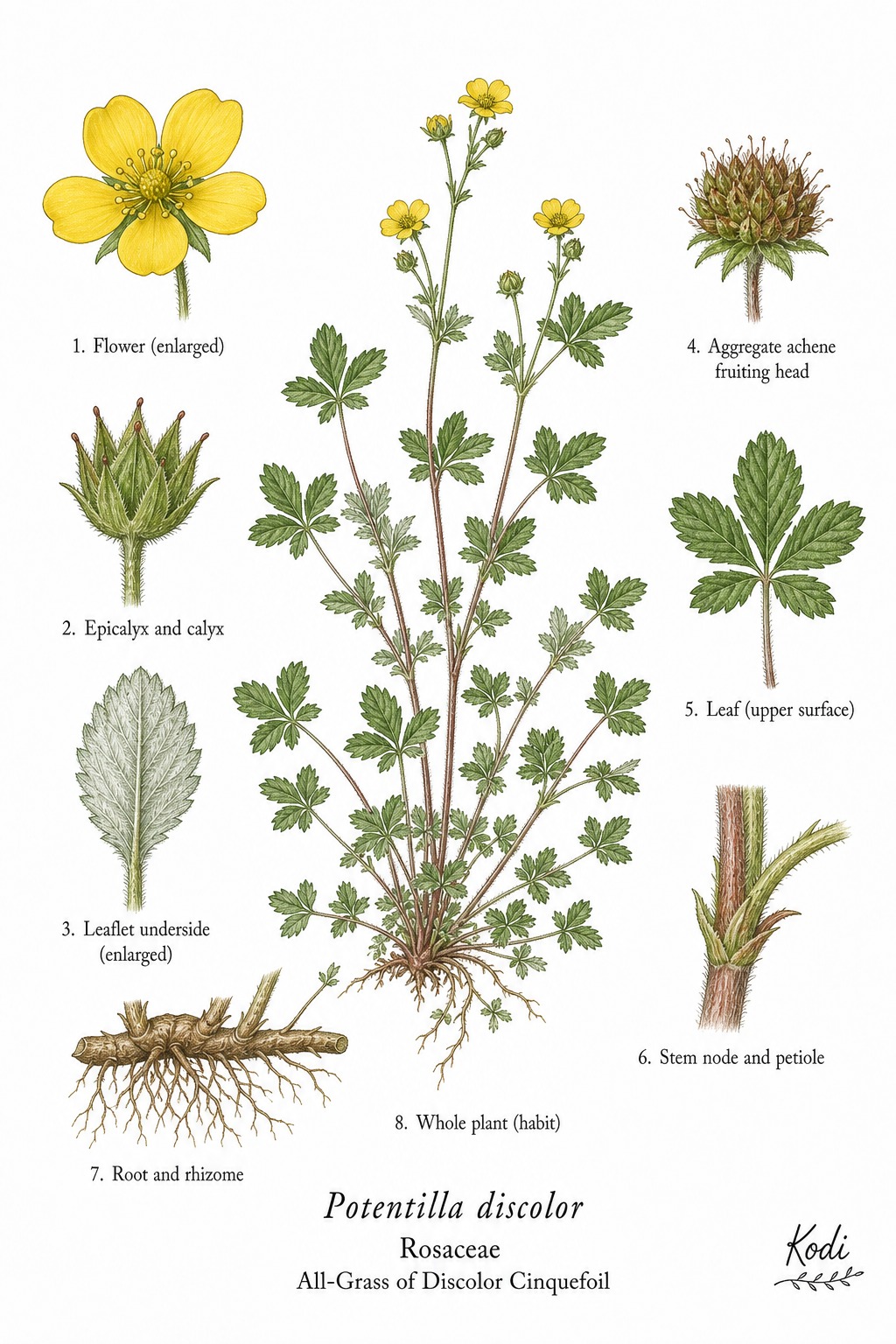
Known in TCM as Fan Bai Cao (翻白草), this bitter and sweet, cold herb enters the Stomach and Large Intestine. Traditionally, it clears heat and resolves toxin; treats acute enteritis, bacillary dysentery, amoebic dysentery, tonsillitis, and stomatitis, most often applied for dysentery, type 2 diabetes, and bronchitis. Modern research has identified Quercetin among its active constituents.
Part used: Whole herb
Also Known As
Latin: Herba Potentillae Discoloris | Pinyin: Fan Bai Cao | Chinese: 翻白草
TCM Properties
- Taste
- bitter, sweet
- Temperature
- cold
- Channels
- Stomach, Large Intestine
Traditional Use
Primary Actions
- Clears heat and resolves toxin; treats acute enteritis, bacillary dysentery, amoebic dysentery, tonsillitis, and stomatitis
- Cools blood and stops bleeding; used for menorrhagia, functional uterine bleeding, and traumatic haemorrhage
- Clears heat-damp from the intestines; arrests diarrhea and dysenteric patterns with blood in stool
Secondary Actions
- Clears heat from the Lung; treats acute bronchitis, pneumonia, lung abscess, and acute laryngitis
- Reduces swelling and dissipates masses; applied topically and internally for acute mastitis and skin carbuncles
- Modern adjunct for type 2 diabetes … blood-sugar-lowering effect validated in clinical observation
Classical References
- Jiuhuang Bencao (救荒本草 … Materia Medica for Relief of Famines, Zhu Su, 1406 AD) … earliest recorded entry; noted as edible and medicinal herb for clearing heat and toxin
- Ben Cao Gang Mu (本草纲目 … Compendium of Materia Medica, Li Shizhen, 1578) … documented for cooling blood, stopping bleeding, and treating dysentery
Modern Research
Active Compounds
- Quercetin
- Kaempferol
- Beta-sitosterol
- Tannins (condensed and hydrolysable)
- Triterpenoids (ursolic acid, oleanolic acid)
- Polyphenolic acids (gallic acid, ellagic acid)
- Polysaccharides (hypoglycaemic fraction)
Studied Effects
- Antidiabetic … polysaccharides and flavonoids reduce fasting blood glucose and improve insulin resistance in T2DM animal models; network pharmacology identifies PI3K/Akt and MAPK pathways (PMC10577192)
- Hepatoprotective … improves lipid metabolism, reduces hepatic steatosis (NAFLD), and reverses insulin resistance via multi-target mechanisms (PMID 36176915)
- Anti-inflammatory … NF-κB pathway inhibition; reduces IL-6, TNF-α in inflammatory models
- Antioxidant … scavenges hydroxyl and DPPH free radicals; activates Nrf2/HO-1 pathway
- Antimicrobial … active against Staphylococcus aureus, Bacillus subtilis, and intestinal pathogens
- Antitumor … cytotoxic activity against HepG-2 hepatocellular carcinoma cell line (ScienceDirect 2011)
PubMed References
- Therapeutic potential of traditional Chinese medicine for the treatment of NAFLD: A promising drug Potentilla discolor Bunge (2022)
- Network pharmacology-based analysis on bioactive anti-diabetic compounds in Potentilla discolor bunge (2019)
- Mechanisms of Action of Potentilla discolor Bunge in Type 2 Diabetes Mellitus Based on Network Pharmacology and Experimental Verification in Drosophila (2024)
Safety & Interactions
Contraindications
- Yang deficiency or cold-deficiency patterns … cold thermal nature may aggravate deficiency-cold conditions
- Pregnancy … blood-cooling and haemostatic actions contraindicated; may affect uterine circulation
- Active menstruation in patients with cold-type dysmenorrhea … cold nature may worsen cramping
Cautions
- May potentiate hypoglycaemic medications … monitor blood glucose when used alongside antidiabetic drugs
- Use cautiously in patients on anticoagulant therapy … combined haemostatic and blood-moving properties may produce unpredictable coagulation effects
- Standard decoction dose 9–15 g dried herb; fresh herb 30–60 g; do not exceed without practitioner supervision
Drug Interactions
- Antidiabetic drugs (metformin, insulin, sulfonylureas, GLP-1 agonists) … Additive blood-glucose-lowering effect via polysaccharide and flavonoid fractions; concurrent use may cause hypoglycaemia (Moderate) Source: PMC10577192 … Effects of Potentilla discolor bunge extracts on oxidative stress and glycolipid metabolism (systematic review and meta-analysis)
Conditions
- Dysentery Traditional ★★★★☆ JSON
- Type 2 Diabetes Research ★★★☆☆ JSON
- Bronchitis Traditional ★★★☆☆ JSON
- Uterine Bleeding Traditional ★★★☆☆ JSON
- Nafld Preclinical ★★☆☆☆ JSON
Frequently Asked Questions
What is All-Grass of Discolor Cinquefoil used for?
All-Grass of Discolor Cinquefoil is traditionally used to Clears heat and resolves toxin; treats acute enteritis, bacillary dysentery, amoebic dysentery, tonsillitis, and stomatitis, Cools blood and stops bleeding; used for menorrhagia, functional uterine bleeding, and traumatic haemorrhage, Clears heat-damp from the intestines; arrests diarrhea and dysenteric patterns with blood in stool. Research has investigated its effects on: Antidiabetic … polysaccharides and flavonoids reduce fasting blood glucose and improve insulin resistance in T2DM animal models; network pharmacology identifies PI3K/Akt and MAPK pathways (PMC10577192); Hepatoprotective … improves lipid metabolism, reduces hepatic steatosis (NAFLD), and reverses insulin resistance via multi-target mechanisms (PMID 36176915).
What are other names for All-Grass of Discolor Cinquefoil?
All-Grass of Discolor Cinquefoil is also known as Potentilla. In TCM: 翻白草 (Fan Bai Cao); Herba Potentillae Discoloris.
Is All-Grass of Discolor Cinquefoil safe during pregnancy?
All-Grass of Discolor Cinquefoil is not recommended during pregnancy.
What are the contraindications for All-Grass of Discolor Cinquefoil?
All-Grass of Discolor Cinquefoil should not be used in: Yang deficiency or cold-deficiency patterns … cold thermal nature may aggravate deficiency-cold conditions; Pregnancy … blood-cooling and haemostatic actions contraindicated; may affect uterine circulation; Active menstruation in patients with cold-type dysmenorrhea … cold nature may worsen cramping. Consult a qualified practitioner before use.
Does All-Grass of Discolor Cinquefoil interact with any medications?
All-Grass of Discolor Cinquefoil may interact with: Antidiabetic drugs (metformin, insulin, sulfonylureas, GLP-1 agonists) - Additive blood-glucose-lowering effect via polysaccharide and flavonoid fractions; concurrent use may cause hypoglycaemia - (Moderate severity). Always inform your healthcare provider of any herbal supplements you are taking.