All-Grass of Field Sowthistle
- Chinese
- 苣荬菜
- Pinyin
- Qu Mai Cai
- Latin
- Herba Sonchi Arvensis
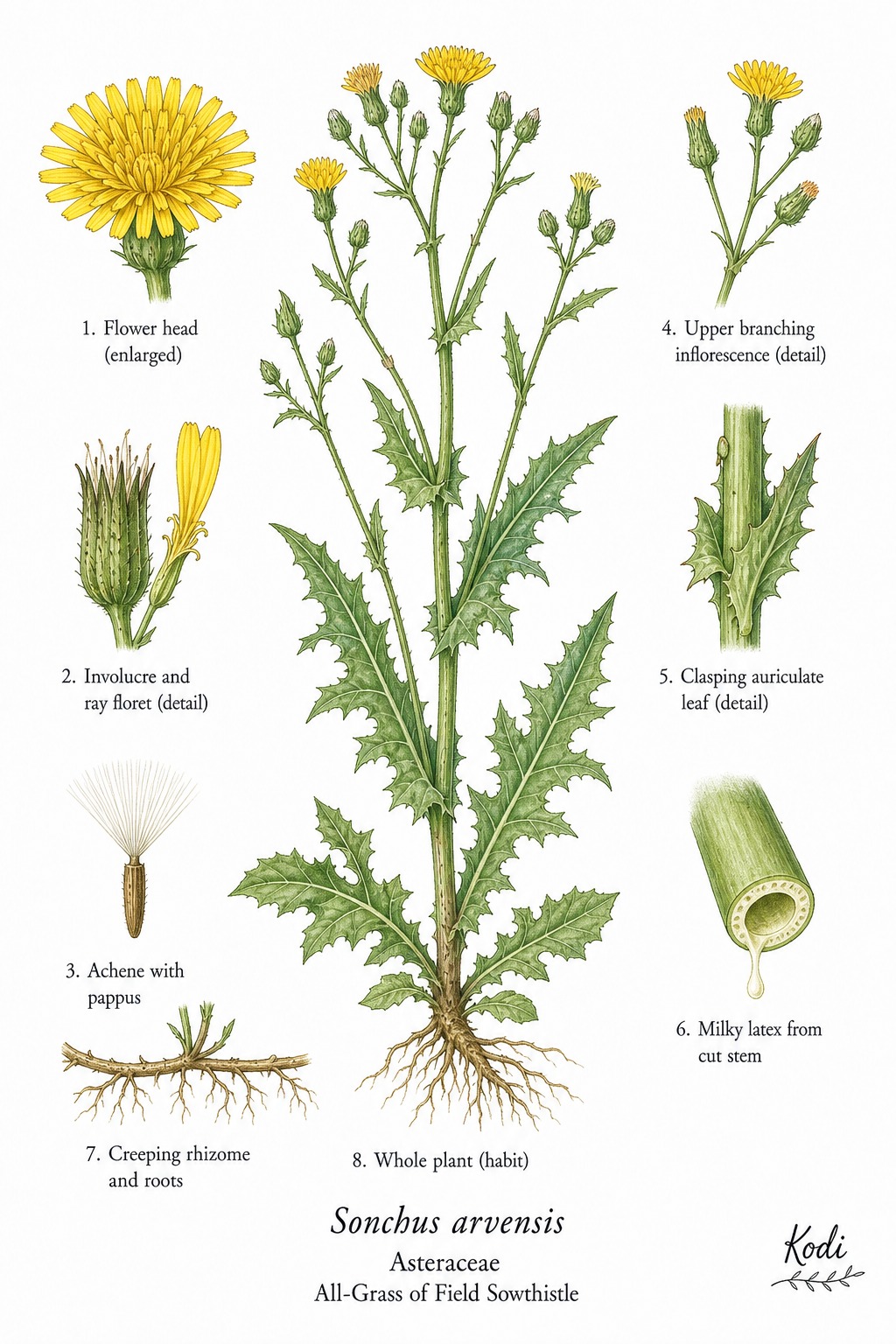
Known in TCM as Qu Mai Cai (苣荬菜), this bitter and sweet, cold herb enters the Liver, Stomach, and Large Intestine. Traditionally, it clears heat and resolves toxin; used for heat-toxin sores, swellings, tonsillitis, intestinal abscess, and appendicitis-pattern pain, most often applied for wind heat and blood stasis. Modern research has identified Luteolin among its active constituents.
Part used: Whole herb
Also Known As
Latin: Herba Sonchi Arvensis | Pinyin: Qu Mai Cai | Chinese: 苣荬菜
TCM Properties
- Taste
- bitter, sweet
- Temperature
- cold
- Channels
- Liver, Stomach, Large Intestine
Traditional Use
Primary Actions
- Clears heat and resolves toxin; used for heat-toxin sores, swellings, tonsillitis, intestinal abscess, and appendicitis-pattern pain
- Cools blood and stops bleeding; addresses hematuria, uterine bleeding from blood-heat, and hematemesis
- Disperses swelling and promotes lactation; folk medicine application for mastitis and insufficient lactation in postpartum women
Secondary Actions
- Anti-inflammatory for hot painful dysentery and bloody stool … clears Large Intestine damp-heat
- Clears Liver heat; used in northeast China folk medicine for jaundice and hepatitis with heat presentation
- Topical application as fresh-herb poultice for snake bites and infected sores
Classical References
- Classified primarily as a folk/regional herb in northeast China (Heilongjiang, Jilin, Inner Mongolia) … widely consumed as a wild vegetable and medicine in Chinese ethnobotanical tradition
- Bencao Gangmu Shiyi (本草纲目拾遗) … listed as 苦荬菜 (Ku Mai Cai), heat-clearing, bitter-cold herb for toxin removal and blood cooling
Modern Research
Active Compounds
- Luteolin
- Luteolin-7-O-glucoside
- Apigenin
- Chlorogenic acid
- Caffeic acid
- Taraxasterol
- Taraxacin
- Inulin-type fructooligosaccharides
- Phenolic acids (ferulic acid, protocatechuic acid)
- Sesquiterpene lactones
Studied Effects
- Anti-inflammatory … ethanol extract inhibits COX-2 and suppresses pro-inflammatory cytokines (TNF-α, IL-6) in LPS-stimulated macrophage models; luteolin identified as primary active agent
- Antibacterial … aqueous and ethanol extracts show inhibitory activity against Staphylococcus aureus, Escherichia coli, and Bacillus subtilis; supports traditional use for infections
- Hepatoprotective … taraxasterol fraction attenuates CCl4-induced liver injury in mice, reduces AST/ALT, and restores hepatic antioxidant enzymes
- Antioxidant … strong DPPH and ABTS radical scavenging capacity; chlorogenic acid and luteolin contribute to high total phenolic content
- Anti-tumor (preclinical) … sesquiterpene lactone fraction induces apoptosis in HeLa and MCF-7 cell lines; mechanism involves ROS-mediated mitochondrial pathway
PubMed References
Safety & Interactions
Contraindications
- Cold-deficiency Spleen-Stomach patterns … cold thermal nature may aggravate loose stool, chronic diarrhea, or fatigue from cold
- Hypersensitivity to Asteraceae (daisy family) … cross-reactivity possible with chrysanthemum, echinacea, or chamomile-sensitive individuals
Cautions
- Long-term high-dose use not established in clinical literature; use within standard decoction doses (9–15 g)
- Topical fresh-herb preparation: perform patch test for individuals with sensitive skin
- No clinically significant drug interactions documented; general monitoring recommended when combined with anticoagulants given potential anti-platelet flavonoid activity
Conditions
- Wind Heat Traditional ★★★☆☆ JSON
- Blood Stasis Traditional ★★☆☆☆ JSON
Frequently Asked Questions
What is All-Grass of Field Sowthistle used for?
All-Grass of Field Sowthistle is traditionally used to Clears heat and resolves toxin; used for heat-toxin sores, swellings, tonsillitis, intestinal abscess, and appendicitis-pattern pain, Cools blood and stops bleeding; addresses hematuria, uterine bleeding from blood-heat, and hematemesis, Disperses swelling and promotes lactation; folk medicine application for mastitis and insufficient lactation in postpartum women. Research has investigated its effects on: Anti-inflammatory … ethanol extract inhibits COX-2 and suppresses pro-inflammatory cytokines (TNF-α, IL-6) in LPS-stimulated macrophage models; luteolin identified as primary active agent; Antibacterial … aqueous and ethanol extracts show inhibitory activity against Staphylococcus aureus, Escherichia coli, and Bacillus subtilis; supports traditional use for infections.
What are other names for All-Grass of Field Sowthistle?
All-Grass of Field Sowthistle is also known as Sonchi. In TCM: 苣荬菜 (Qu Mai Cai); Herba Sonchi Arvensis.
Is All-Grass of Field Sowthistle safe during pregnancy?
The safety of All-Grass of Field Sowthistle during pregnancy has not been established. Consult a qualified healthcare provider before use.
What are the contraindications for All-Grass of Field Sowthistle?
All-Grass of Field Sowthistle should not be used in: Cold-deficiency Spleen-Stomach patterns … cold thermal nature may aggravate loose stool, chronic diarrhea, or fatigue from cold; Hypersensitivity to Asteraceae (daisy family) … cross-reactivity possible with chrysanthemum, echinacea, or chamomile-sensitive individuals. Consult a qualified practitioner before use.