Golden Saxifrage
- Chinese
- 金腰草
- Pinyin
- Jing Yao Cao
- Latin
- Herba Chrysosplenii
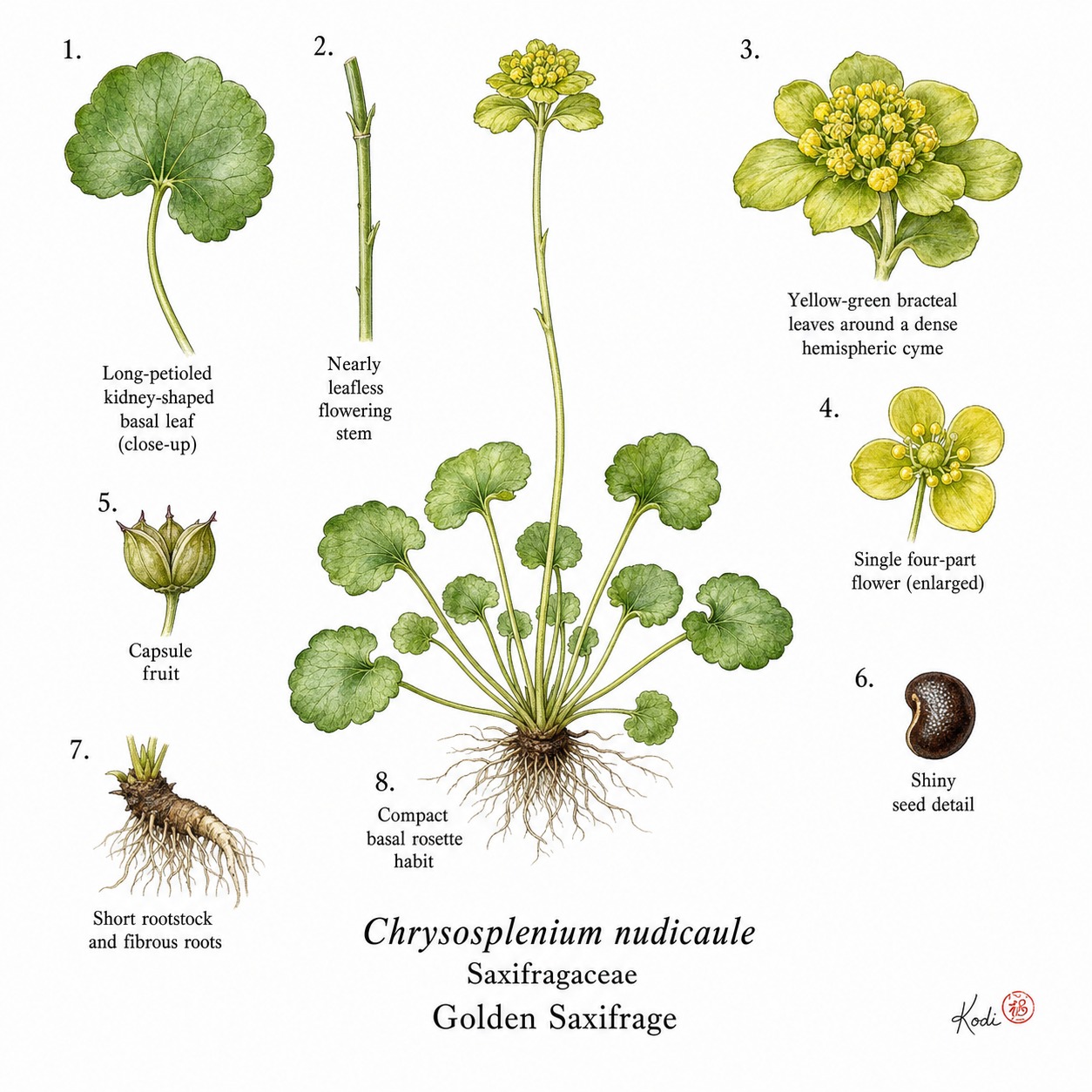
Known in TCM as Jing Yao Cao (金腰草), this bitter, cool herb enters the Liver and Gallbladder. Traditionally, it clears Heat and resolves toxicity, most often applied for hepatitis, fever, and digestive weakness. Modern research has identified Chrysosplenol among its active constituents.
Part used: Whole herb
Also Known As
Latin: Herba Chrysosplenii | Pinyin: Jing Yao Cao | Chinese: 金腰草
TCM Properties
- Taste
- bitter
- Temperature
- cool
- Channels
- Liver, Gallbladder
Traditional Use
Primary Actions
- Clears Heat and resolves toxicity
- Clears Damp-Heat from the Liver and Gallbladder
- Promotes bile flow and reduces jaundice
- Reduces inflammation and fever
Secondary Actions
- Hepatoprotective … reduces liver enzyme elevation in hepatobiliary disease
- Addresses headache associated with Liver-Gallbladder Fire
Classical References
- Tibetan Pharmacopoeia chronicles record the genus Chrysosplenium (Tibetan: Yajima) for removing undesired Heat, treating acute icteric hepatitis, and acute liver necrosis … the closest classical tradition for this folk herb
- Chrysosplenium sinicum Maxim. (中华金腰 Zhong Hua Jin Yao) is documented in Chinese folk medicine of southwest China as a remedy for cholecystitis and cholelithiasis
Modern Research
Active Compounds
- Chrysosplenol (polymethoxylated flavonoid; predominant metabolite)
- Chrysosplenoside (polymethoxylated flavonoid)
- Chrysosplenosides B and D
- Chrysosplenols B and D
- Triterpenoids
- Volatile oils
Studied Effects
- Hepatoprotective: Chrysosplenium nudicaule extract reduced serum AST, ALT, ALP, and bilirubin in ANIT-induced intrahepatic cholestasis mice; mechanism involves activating FXR and BSEP/MRP2 transporter genes to reduce bile acid synthesis and enhance biliary excretion (PMID 30989870)
- Flavonoid profile characterised in C. alternifolium by HPLC; chrysosplenoside B and D and chrysosplenol B and D identified as quality-control markers with total flavonoid content 2.5–4.3% dry weight (PMID 19615839)
- Genomic analysis of C. sinicum confirmed high-level expression of flavonoid biosynthesis genes; chrysosplenol and chrysosplenoside identified as characteristic bioactive components (PMID 39152309)
PubMed References
- Protective effects of Chrysosplenium nudicaule (Yajima) extract on ANIT-induced intrahepatic cholestasis (2019)
- Quality evaluation of golden saxifrage (Chrysosplenium alternifolium) bioactive flavonoids by HPLC (2009)
- The Chrysosplenium sinicum genome provides insights into adaptive evolution of shade plants (2024)
Safety & Interactions
Contraindications
- Cold-Damp patterns of the Liver and Gallbladder
- Spleen-Stomach Deficiency Cold
Cautions
- Standard dose 9–15g in decoction
- Primarily documented in Tibetan and southwest Chinese folk medicine; limited clinical safety data for extended use
- Avoid in the absence of Heat or Damp-Heat signs
Conditions
Frequently Asked Questions
What is Golden Saxifrage used for?
Golden Saxifrage is traditionally used to Clears Heat and resolves toxicity, Clears Damp-Heat from the Liver and Gallbladder, Promotes bile flow and reduces jaundice, Reduces inflammation and fever. Research has investigated its effects on: Hepatoprotective: Chrysosplenium nudicaule extract reduced serum AST, ALT, ALP, and bilirubin in ANIT-induced intrahepatic cholestasis mice; mechanism involves activating FXR and BSEP/MRP2 transporter genes to reduce bile acid synthesis and enhance biliary excretion (PMID 30989870); Flavonoid profile characterised in C. alternifolium by HPLC; chrysosplenoside B and D and chrysosplenol B and D identified as quality-control markers with total flavonoid content 2.5–4.3% dry weight (PMID 19615839).
What are other names for Golden Saxifrage?
Golden Saxifrage is also known as Chrysosplenium. In TCM: 金腰草 (Jing Yao Cao); Herba Chrysosplenii.
Is Golden Saxifrage safe during pregnancy?
The safety of Golden Saxifrage during pregnancy has not been established. Consult a qualified healthcare provider before use.
What are the contraindications for Golden Saxifrage?
Golden Saxifrage should not be used in: Cold-Damp patterns of the Liver and Gallbladder; Spleen-Stomach Deficiency Cold. Consult a qualified practitioner before use.