Epimedium Herb
- Chinese
- 淫羊藿
- Pinyin
- Yin Yang Huo
- Latin
- Herba Epimedii
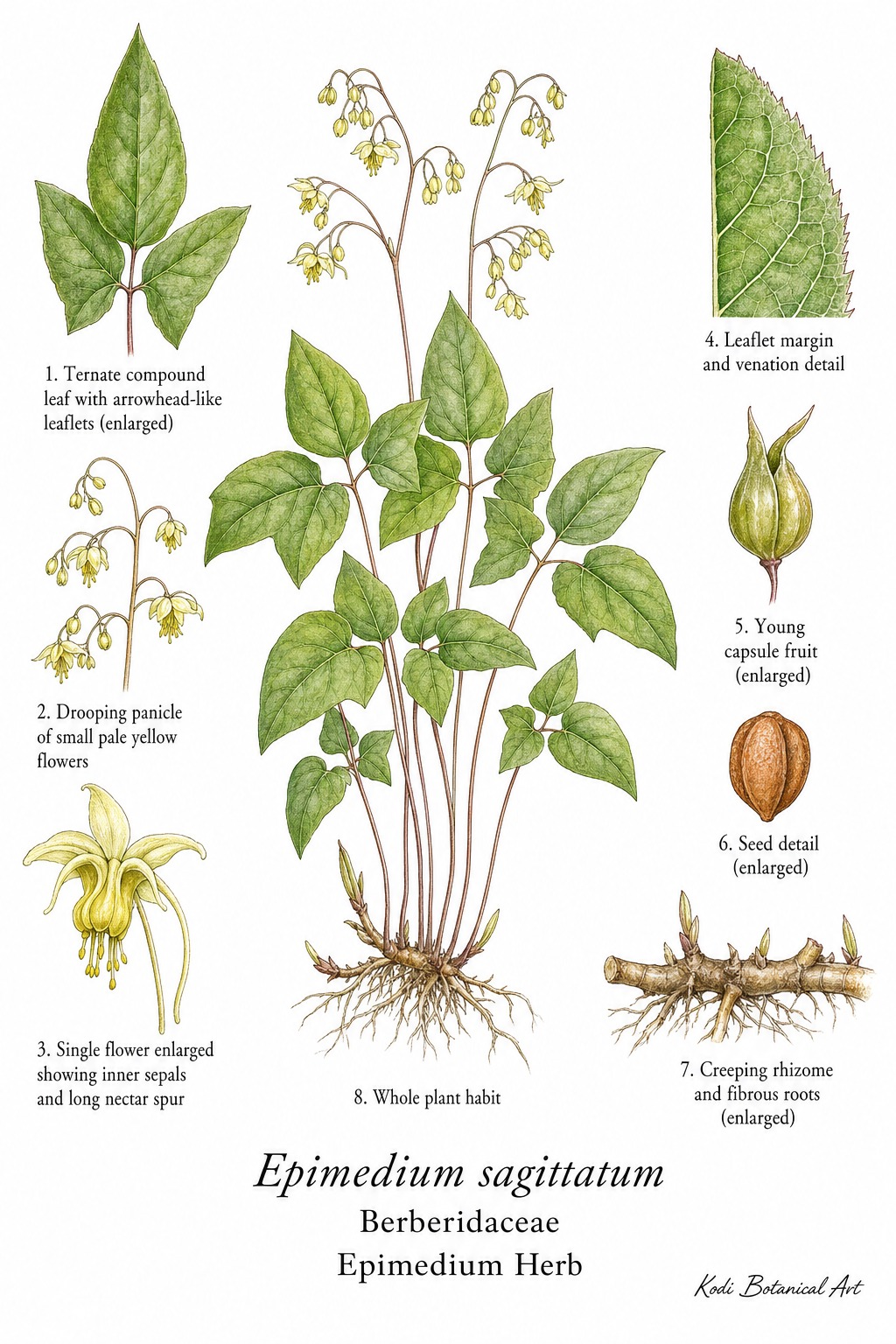
Known in TCM as Yin Yang Huo (淫羊藿), this acrid and sweet, warm herb enters the Kidney and Liver. Traditionally, it tonifies Kidney Yang and replenishes Essence, most often applied for erectile dysfunction, osteoporosis, and kidney deficiency. Modern research has identified Icariin among its active constituents.
Part used: Whole herb
Also Known As
Latin: Herba Epimedii | Pinyin: Yin Yang Huo | Chinese: 淫羊藿
TCM Properties
- Taste
- acrid, sweet
- Temperature
- warm
- Channels
- Kidney, Liver
Traditional Use
Primary Actions
- Tonifies Kidney Yang and replenishes Essence … primary tonic for Yang deficiency
- Strengthens sinews and bones … treats Kidney-deficient weakness, soreness, and numbness
- Dispels Wind-Cold-Dampness and relieves Bi syndrome joint pain
- Warms and unblocks Yang … used for impotence, infertility, and cold uterine patterns
Secondary Actions
- Anti-osteoporotic … improves bone mineral density; used in post-menopausal bone loss
- Aphrodisiac … classical reputation supported by PDE5-inhibitory activity of icariin
Classic Formulas
- Zan Yu Dan (赞育丹) … classic formula for male infertility and Kidney Yang deficiency; Yin Yang Huo combined with Ba Ji Tian, Du Zhong, She Chuang Zi
- Er Xian Tang (二仙汤) … modern formula for menopausal syndrome; Yin Yang Huo combined with Xian Mao, Huang Bai, Zhi Mu, Dang Gui, Ba Ji Tian … balances Kidney Yang and Yin
Classical References
- Shen Nong Ben Cao Jing: lists Yin Yang Huo (also called Xian Ling Pi 仙灵脾) for strengthening Yang Qi, benefiting sinews and bones, and treating male sexual dysfunction
- Ben Cao Gang Mu (Li Shizhen): 'Yin Yang Huo warms Kidney Yang, disperses Cold-Dampness from the sinews and bones, strengthens the will, and increases vital capacity … named because rams eating the herb mated excessively'
Modern Research
Active Compounds
- Icariin (principal prenylated flavonoid; 8-isopentenyl flavonoid; PDE5 inhibitor IC50 5.9 μM)
- Icariside I and icariside II (icariin metabolites; PDE5 inhibition)
- Icaritin (flavonoid aglycone; estrogenic and anticancer activity)
- Epimedin A, B, C (flavonoid glycosides)
- Kaempferol and quercetin glycosides
- Polysaccharides (immune modulation)
Studied Effects
- Bone metabolism / anti-osteoporosis: icariin and icariside II promote osteoblast differentiation and inhibit osteoclast activity via BMP-2/Wnt/β-catenin pathways; human and animal studies confirm improvement in bone mineral density and biomechanical properties … primary evidence base for menopausal bone loss application
- Erectile dysfunction: icariin inhibits PDE5A1 (IC50 5.9 μM) in vitro, increasing cGMP and promoting smooth muscle relaxation … mechanism identical to sildenafil/tadalafil; network pharmacology confirms PTGS2, NOS3, and AR as key targets for ED treatment (PMID 33368466)
- Estrogenic/aromatase activity: icariin promotes CYP19 (aromatase) biosynthesis and upregulates estrogen receptor expression; raises bone estrogen signalling … use with caution in hormone-sensitive conditions and with aromatase inhibitor medications (PMID 23261485)
PubMed References
- Analysis of pharmacological mechanisms of Yinyanghuo as treatment of erectile dysfunction with network pharmacology (2021)
- Icariin from Epimedium brevicornum promotes biosynthesis of estrogen by aromatase (CYP19) (2013)
- An Evidence-Based Systematic Review of Yin Yang Huo (Epimedium spp.) by the Natural Standard Research Collaboration (2015)
Safety & Interactions
Contraindications
- Yin deficiency with Heat signs (night sweats, afternoon fever, dry mouth, red tongue without coat)
- Excess Heat patterns
- Hormone-sensitive conditions (breast cancer, uterine cancer, endometriosis) … estrogenic activity
Cautions
- Standard dose 6–15g decoction
- Prolonged use may induce CYP3A4 via pregnane X receptor activation … potential reduced efficacy of CYP3A4-metabolised drugs (immunosuppressants, statins, antivirals) with extended use
- Aromatase inhibitors: icariin promotes aromatase (CYP19) activity … may reduce efficacy of anastrozole, exemestane, and letrozole in breast cancer treatment
- PDE5 inhibitors (sildenafil, tadalafil, vardenafil): additive pharmacodynamic effect; avoid concurrent use … herb-drug interaction documented in animal PK study (PMC6270200)
Drug Interactions
- Aromatase inhibitors (anastrozole, exemestane, letrozole): icariin promotes aromatase activity … potential reduction in drug efficacy in estrogen-sensitive cancer treatment
- PDE5 inhibitors (sildenafil, tadalafil): pharmacodynamic additive effect via shared cGMP pathway; potential for enhanced hypotensive effect
- CYP3A4 substrates: prolonged Epimedium use may induce CYP3A4 … reduced plasma levels of narrow-therapeutic-index CYP3A4 drugs possible with extended use
Conditions
- Erectile Dysfunction Research ★★★★☆ JSON
- Osteoporosis Research ★★★★☆ JSON
- Kidney Deficiency Traditional ★★★★★ JSON
- Rheumatoid Arthritis Traditional ★★★☆☆ JSON
- Menopausal Syndrome Research ★★★☆☆ JSON
Frequently Asked Questions
What is Epimedium Herb used for?
Epimedium Herb is traditionally used to Tonifies Kidney Yang and replenishes Essence … primary tonic for Yang deficiency, Strengthens sinews and bones … treats Kidney-deficient weakness, soreness, and numbness, Dispels Wind-Cold-Dampness and relieves Bi syndrome joint pain, Warms and unblocks Yang … used for impotence, infertility, and cold uterine patterns. Research has investigated its effects on: Bone metabolism / anti-osteoporosis: icariin and icariside II promote osteoblast differentiation and inhibit osteoclast activity via BMP-2/Wnt/β-catenin pathways; human and animal studies confirm improvement in bone mineral density and biomechanical properties … primary evidence base for menopausal bone loss application; Erectile dysfunction: icariin inhibits PDE5A1 (IC50 5.9 μM) in vitro, increasing cGMP and promoting smooth muscle relaxation … mechanism identical to sildenafil/tadalafil; network pharmacology confirms PTGS2, NOS3, and AR as key targets for ED treatment (PMID 33368466).
What are other names for Epimedium Herb?
Epimedium Herb is also known as Epimedium. In TCM: 淫羊藿 (Yin Yang Huo); Herba Epimedii.
Is Epimedium Herb safe during pregnancy?
The safety of Epimedium Herb during pregnancy has not been established. Consult a qualified healthcare provider before use.
What are the contraindications for Epimedium Herb?
Epimedium Herb should not be used in: Yin deficiency with Heat signs (night sweats, afternoon fever, dry mouth, red tongue without coat); Excess Heat patterns; Hormone-sensitive conditions (breast cancer, uterine cancer, endometriosis) … estrogenic activity. Consult a qualified practitioner before use.
Does Epimedium Herb interact with any medications?
Epimedium Herb may interact with: Aromatase inhibitors (anastrozole, exemestane, letrozole): icariin promotes aromatase activity … potential reduction in drug efficacy in estrogen-sensitive cancer treatment; PDE5 inhibitors (sildenafil, tadalafil): pharmacodynamic additive effect via shared cGMP pathway; potential for enhanced hypotensive effect; CYP3A4 substrates: prolonged Epimedium use may induce CYP3A4 … reduced plasma levels of narrow-therapeutic-index CYP3A4 drugs possible with extended use. Always inform your healthcare provider of any herbal supplements you are taking.