Madagascar Periwinkle
- Chinese
- 长春花
- Pinyin
- Chang Chun Hua
- Latin
- Herba Catharanthi Rosei
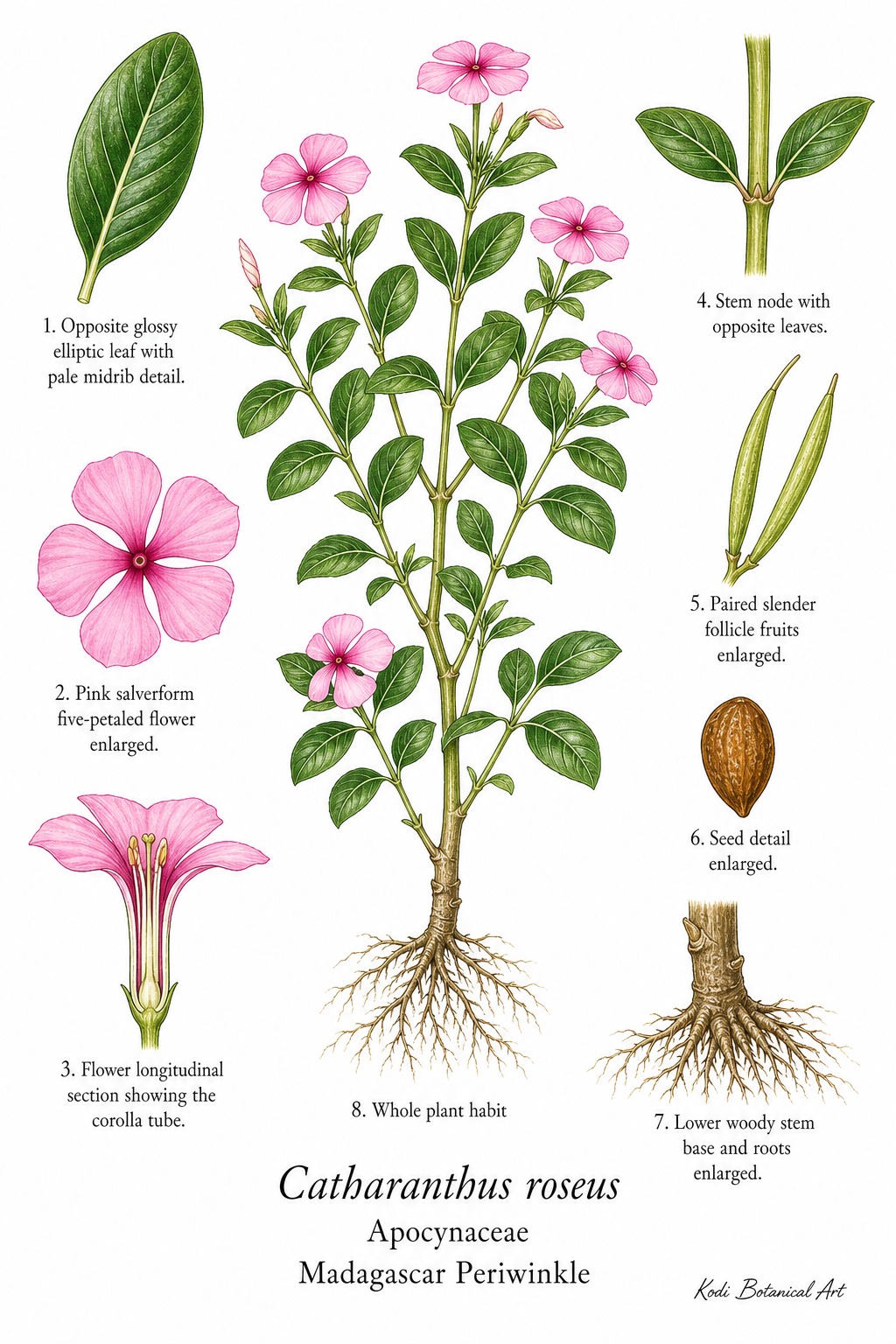
Known in TCM as Chang Chun Hua (长春花), this bitter, cool herb enters the Liver and Kidney. Traditionally, it clears Heat and resolves toxicity, most often applied for cancer, hypertension, and diabetes. Modern research has identified Vincristine (monoterpene indole alkaloid; antimitotic among its active constituents.
Part used: Whole herb
Also Known As
Latin: Herba Catharanthi Rosei | Pinyin: Chang Chun Hua | Chinese: 长春花
TCM Properties
- Taste
- bitter
- Temperature
- cool
- Channels
- Liver, Kidney
Traditional Use
Primary Actions
- Clears Heat and resolves toxicity … folk use for febrile illness, sores, and abscesses
- Hypoglycemic … folk use for diabetes mellitus
- Antihypertensive … lowers blood pressure in traditional use
- Anti-neoplastic … modern Chinese medicine use for cancer treatment (under medical supervision only)
Secondary Actions
- Diuretic and anti-edematous in folk medicine
- Source of four FDA-approved anticancer vinca alkaloids: vincristine, vinblastine, vindesine, vinorelbine
Classical References
- Chang Chun Hua (长春花, 'Eternal Spring Flower') is not a classical TCM herb … it is a modern addition to Chinese folk medicine, introduced from Madagascar and incorporated primarily for its antidiabetic and antihypertensive properties in 20th-century Chinese folk practice
- Of primary pharmacological importance as the source plant for the vinca alkaloid class of anticancer drugs: vincristine (used in ALL, Hodgkin lymphoma, Wilms tumour) and vinblastine (Hodgkin disease, testicular cancer) were first isolated in the 1950s by Canadian and American researchers and are now on the WHO Essential Medicines List
Modern Research
Active Compounds
- Vincristine (monoterpene indole alkaloid; antimitotic … binds tubulin, prevents spindle formation)
- Vinblastine (monoterpene indole alkaloid; antimitotic; structurally related to vincristine)
- Vindesine and vinorelbine (semi-synthetic vinca alkaloid derivatives from plant-sourced precursors)
- Catharanthine and tabersonine (precursor alkaloids; >100 alkaloids total identified)
- Ajmalicine (antihypertensive alkaloid)
- Serpentine (hypoglycemic alkaloid)
Studied Effects
- Anticancer via tubulin inhibition: vincristine and vinblastine block mitosis at metaphase by binding β-tubulin and preventing polymerisation into mitotic spindles; FDA-approved for haematological malignancies; sourced exclusively from C. roseus as chemical synthesis is not commercially viable (PMID 30256480)
- Antidiabetic: serpentine and other alkaloids stimulate insulin release and inhibit glucose absorption … validated in rodent diabetic models; consistent with folk hypoglycemic use
- Toxicity in uncontrolled ingestion: case report of C. roseus intoxication mimicking acute cholangitis … hepatotoxicity, GI symptoms, and neurological effects following unsupervised consumption (PMC10993546)
PubMed References
Safety & Interactions
Contraindications
- Unsupervised self-medication for any indication … HIGH RISK; alkaloid content requires controlled dosing
- Pregnancy … embryotoxic and teratogenic; vinca alkaloids are Pregnancy Category D
- Peripheral neuropathy (pre-existing) … vinca alkaloids worsen neuropathy
- Concurrent chemotherapy without oncology supervision
Cautions
- SAFETY-CRITICAL: The whole plant contains vinca alkaloids at pharmacologically active concentrations. Unlike most TCM herbs, C. roseus is NOT suitable for casual folk self-treatment … therapeutic doses overlap with toxic doses
- Neurotoxicity: peripheral neuropathy (sensory, motor, autonomic) is the primary dose-limiting toxicity of vinca alkaloids; reported even at sub-pharmaceutical doses with repeated exposure
- SIADH risk: vinca alkaloids are associated with syndrome of inappropriate ADH secretion … hyponatremia reported
- Hepatotoxicity: case reports of liver injury following unsupervised ingestion of plant preparations
- Folk hypoglycemic use: if used, monitor blood glucose closely; additive effect with antidiabetic drugs
- Standard folk dose (Chinese practice): 5–15g decoction … but this dose range carries unpredictable alkaloid delivery and is NOT recommended without medical supervision
Drug Interactions
- Antineoplastic vinca alkaloids (vincristine, vinblastine, vinorelbine): additive toxicity … peripheral neuropathy, myelosuppression, SIADH; do not combine plant with pharmaceutical vinca alkaloids
- Antidiabetic drugs (insulin, metformin, sulfonylureas): additive hypoglycemic effect via serpentine; monitor blood glucose
- Antihypertensive drugs: additive blood pressure-lowering effect via ajmalicine; monitor for hypotension
- CYP3A4 substrates: vinca alkaloids are CYP3A4 substrates and inhibitors; potential for complex bidirectional interactions with CYP3A4-metabolised medications
- Neurotoxic drugs (platinum compounds, taxanes, thalidomide): additive peripheral neuropathy risk
Conditions
Frequently Asked Questions
What is Madagascar Periwinkle used for?
Madagascar Periwinkle is traditionally used to Clears Heat and resolves toxicity … folk use for febrile illness, sores, and abscesses, Hypoglycemic … folk use for diabetes mellitus, Antihypertensive … lowers blood pressure in traditional use, Anti-neoplastic … modern Chinese medicine use for cancer treatment (under medical supervision only). Research has investigated its effects on: Anticancer via tubulin inhibition: vincristine and vinblastine block mitosis at metaphase by binding β-tubulin and preventing polymerisation into mitotic spindles; FDA-approved for haematological malignancies; sourced exclusively from C. roseus as chemical synthesis is not commercially viable (PMID 30256480); Antidiabetic: serpentine and other alkaloids stimulate insulin release and inhibit glucose absorption … validated in rodent diabetic models; consistent with folk hypoglycemic use.
What are other names for Madagascar Periwinkle?
Madagascar Periwinkle is also known as Catharanthi. In TCM: 长春花 (Chang Chun Hua); Herba Catharanthi Rosei.
Is Madagascar Periwinkle safe during pregnancy?
Madagascar Periwinkle is not recommended during pregnancy.
What are the contraindications for Madagascar Periwinkle?
Madagascar Periwinkle should not be used in: Unsupervised self-medication for any indication … HIGH RISK; alkaloid content requires controlled dosing; Pregnancy … embryotoxic and teratogenic; vinca alkaloids are Pregnancy Category D; Peripheral neuropathy (pre-existing) … vinca alkaloids worsen neuropathy; Concurrent chemotherapy without oncology supervision. Consult a qualified practitioner before use.
Does Madagascar Periwinkle interact with any medications?
Madagascar Periwinkle may interact with: Antineoplastic vinca alkaloids (vincristine, vinblastine, vinorelbine): additive toxicity … peripheral neuropathy, myelosuppression, SIADH; do not combine plant with pharmaceutical vinca alkaloids; Antidiabetic drugs (insulin, metformin, sulfonylureas): additive hypoglycemic effect via serpentine; monitor blood glucose; Antihypertensive drugs: additive blood pressure-lowering effect via ajmalicine; monitor for hypotension; CYP3A4 substrates: vinca alkaloids are CYP3A4 substrates and inhibitors; potential for complex bidirectional interactions with CYP3A4-metabolised medications. Always inform your healthcare provider of any herbal supplements you are taking.