Montane Yellowcress Herb
- Chinese
- 山蔊菜
- Pinyin
- Han Cai
- Latin
- Herba Rorippae
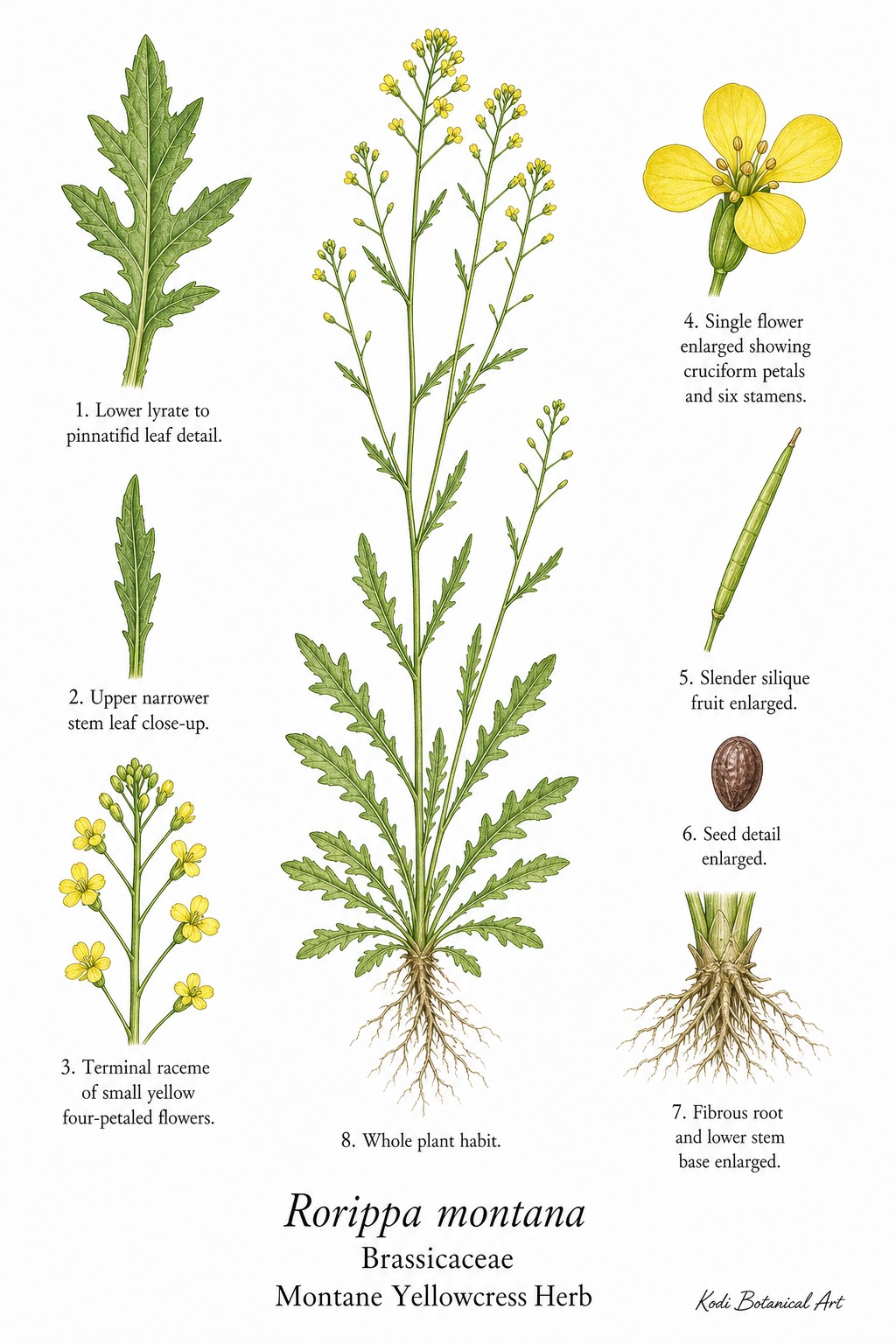
Known in TCM as Han Cai (山蔊菜), this acrid and bitter, cool herb enters the Lung, Liver, and Bladder. Traditionally, it clears Lung Heat and dissolves Phlegm, most often applied for cough, bronchitis, and urinary tract infection. Modern research has identified Glucosinolates among its active constituents.
Part used: Whole herb
Also Known As
Latin: Herba Rorippae | Pinyin: Han Cai | Chinese: 山蔊菜
TCM Properties
- Taste
- acrid, bitter
- Temperature
- cool
- Channels
- Lung, Liver, Bladder
Traditional Use
Primary Actions
- Clears Lung Heat and dissolves Phlegm … principal use for Heat-type cough with thick yellow phlegm
- Relieves cough and calms wheezing
- Promotes urination and clears Damp-Heat from the lower burner
- Clears Heat and resolves toxicity … external use for sores, abscesses, and snakebite
Secondary Actions
- Dispels Wind-Dampness and relieves rheumatic pain … folk use in southern China
- Edible wild vegetable eaten in Yunnan and Guizhou cuisine … low toxicity profile
Classical References
- Han Cai (蔊菜, Rorippa species) is an herb of Chinese folk and regional medicine; documented in Yunnan, Guizhou, and Sichuan provincial materia medica for heat-cough, dysentery, and rheumatic conditions
- Latin TYPO CORRECTION: the original XLSX entry had 'Herha Rorippae' … corrected to 'Herba Rorippae' in this record
- Herba Rorippae (蔊菜) in Chinese sources covers multiple Rorippa species: R. montana (山蔊菜), R. indica (印度蔊菜), and R. islandica (沼生蔊菜) … all used interchangeably for similar indications in folk practice
Modern Research
Active Compounds
- Glucosinolates and isothiocyanates (characteristic Brassicaceae bioactives; antibacterial, anti-inflammatory)
- Quercetin and kaempferol glycosides (flavonoids)
- Chlorogenic acid and caffeic acid derivatives
- Beta-sitosterol
- Vitamin C and beta-carotene (nutritive/antioxidant)
Studied Effects
- Antimicrobial: isothiocyanates released from glucosinolates on cell disruption show broad-spectrum antibacterial activity against respiratory pathogens including S. aureus and H. influenzae … consistent with traditional cough and infection use
- Anti-inflammatory: quercetin and kaempferol glycosides inhibit COX-2 and reduce NF-κB-mediated cytokine release; glucosinolate hydrolysis products modulate NLRP3 inflammasome
- Note: dedicated pharmacological studies specifically on R. montana are sparse in the English-language literature; pharmacological profile is inferred from genus-level data and closely related Brassicaceae species (including arugula, watercress) that share the glucosinolate-isothiocyanate chemistry
Safety & Interactions
Contraindications
- Cold-Damp cough (clear white phlegm, no fever, cold chills)
- Spleen-Stomach Deficiency Cold
Cautions
- Standard dose 9–15g decoction; 30–60g fresh herb
- Considered a safe edible folk vegetable at standard doses; no significant toxicity reports at therapeutic doses
- Limited dedicated clinical data; use primarily based on folk practice and genus-level pharmacology
Conditions
- Cough Traditional ★★★★☆ JSON
- Bronchitis Traditional ★★★☆☆ JSON
- Urinary Tract Infection Traditional ★★☆☆☆ JSON
- Rheumatoid Arthritis Traditional ★★☆☆☆ JSON
Frequently Asked Questions
What is Montane Yellowcress Herb used for?
Montane Yellowcress Herb is traditionally used to Clears Lung Heat and dissolves Phlegm … principal use for Heat-type cough with thick yellow phlegm, Relieves cough and calms wheezing, Promotes urination and clears Damp-Heat from the lower burner, Clears Heat and resolves toxicity … external use for sores, abscesses, and snakebite. Research has investigated its effects on: Antimicrobial: isothiocyanates released from glucosinolates on cell disruption show broad-spectrum antibacterial activity against respiratory pathogens including S. aureus and H. influenzae … consistent with traditional cough and infection use; Anti-inflammatory: quercetin and kaempferol glycosides inhibit COX-2 and reduce NF-κB-mediated cytokine release; glucosinolate hydrolysis products modulate NLRP3 inflammasome.
What are other names for Montane Yellowcress Herb?
Montane Yellowcress Herb is also known as Rorippa. In TCM: 山蔊菜 (Han Cai); Herba Rorippae.
Is Montane Yellowcress Herb safe during pregnancy?
The safety of Montane Yellowcress Herb during pregnancy has not been established. Consult a qualified healthcare provider before use.
What are the contraindications for Montane Yellowcress Herb?
Montane Yellowcress Herb should not be used in: Cold-Damp cough (clear white phlegm, no fever, cold chills); Spleen-Stomach Deficiency Cold. Consult a qualified practitioner before use.