Remote Lemongrass Herb
- Chinese
- 云香草
- Pinyin
- Yun Xiang Cao
- Latin
- Herba Cymbopogonis
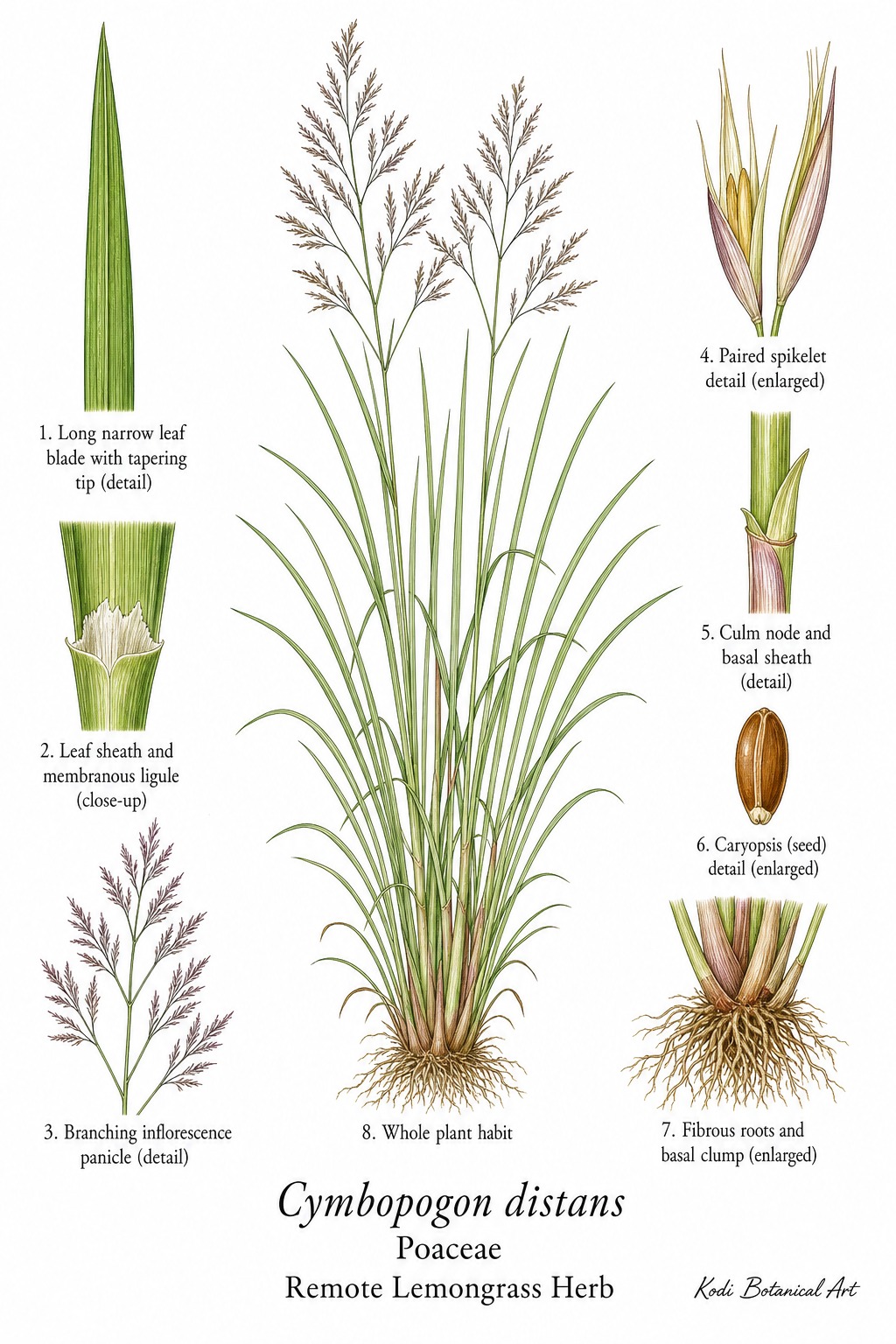
Known in TCM as Yun Xiang Cao (云香草), this pungent and bitter, warm herb enters the Lung, Stomach, and Liver. Traditionally, it dispels Wind-Cold, releases the exterior, most often applied for common cold, headache, and abdominal pain. Modern research has identified Citronellol among its active constituents.
Part used: Whole herb
Also Known As
Latin: Herba Cymbopogonis | Pinyin: Yun Xiang Cao | Chinese: 云香草
TCM Properties
- Taste
- pungent, bitter
- Temperature
- warm
- Channels
- Lung, Stomach, Liver
Traditional Use
Primary Actions
- Dispels Wind-Cold, releases the exterior … headache, fever without sweating, and body aches from wind-cold invasion
- Regulates Qi and stops pain … epigastric pain, abdominal distension, and flatulence from Qi stagnation
- Dispels Wind-Damp, relieves Bi syndrome … rheumatic joint and muscle aches, especially in cold-damp conditions
- Warms Lung and stops cough … wind-cold cough with white or clear phlegm
Secondary Actions
- External use: fumigation or fresh-herb poultice for skin conditions, wound cleansing, and insect repellent … widespread in Yunnan folk practice
- Aromatic digestive … pungent volatile oils stimulate gastric secretion; used as a condiment-medicine in southwest China highland communities
Classical References
- Yunnan Zhong Cao Yao (云南中草药): documents Yun Xiang Cao (Cymbopogon distans) as a pungent-warm exterior-releasing herb used in Yunnan folk medicine for wind-cold colds, headache, abdominal pain, and rheumatic aches; not found in classical Song/Ming-era formularies as it is a regional folk herb from the southwest China highlands and not part of the mainstream Shang Han or Wen Bing traditions
Modern Research
Active Compounds
- Citronellol (major essential oil monoterpene alcohol; up to ~45% of oil; antimicrobial, analgesic, mosquito repellent)
- Geraniol (essential oil monoterpene alcohol; ~25% of oil; antimicrobial, anti-inflammatory)
- Linalool (essential oil monoterpene alcohol; anti-inflammatory, anxiolytic in animal models)
- Elemol and β-elemene (sesquiterpenes; anti-inflammatory)
- β-Myrcene (monoterpene; analgesic, anti-inflammatory)
- Luteolin and apigenin (flavonoids; anti-inflammatory, antioxidant)
- Chlorogenic acid and caffeic acid (phenolic acids; antioxidant)
Studied Effects
- Essential oil antimicrobial activity: GC-MS analysis of C. distans essential oil identifies citronellol and geraniol as dominant components with confirmed broad-spectrum antimicrobial activity against Staphylococcus aureus, Escherichia coli, and Candida albicans; minimum inhibitory concentrations comparable to other medicinal Cymbopogon species … supports the heat-clearing and toxin-resolving folk applications
- Anti-inflammatory and analgesic: linalool and β-myrcene from Cymbopogon species essential oils inhibit prostaglandin synthesis and significantly reduce carrageenan-induced paw edema in rodent models; geraniol shows NF-κB pathway inhibition … provides mechanistic basis for the Bi-syndrome and pain-relieving traditional uses
- Insect repellent: citronellol and geraniol from C. distans essential oil show repellent activity against Aedes aegypti mosquitoes; forms the scientific basis for the longstanding folk fumigation and topical repellent use across Yunnan and adjacent highland regions
Safety & Interactions
Contraindications
- Wind-Heat patterns (fever with sweating, sore throat, yellow or green phlegm) … pungent-warm nature would aggravate Heat
- Yin Deficiency with internal Heat … warming nature contraindicated in deficiency-heat conditions
Cautions
- Standard dose: 6–12g dried herb in decoction; essential oil preparations for topical use should be diluted to 1–3%
- Essential oil concentrate: avoid undiluted topical application; citronellol may cause contact dermatitis or sensitisation in susceptible individuals
- No significant systemic drug interactions identified at standard therapeutic doses
- Pregnancy: pungent-warm herbs are traditionally used with caution; insufficient clinical data for this species to confirm safety
Conditions
- Common Cold Traditional ★★★☆☆ JSON
- Headache Traditional ★★★☆☆ JSON
- Abdominal Pain Traditional ★★★☆☆ JSON
- Rheumatism Traditional ★★☆☆☆ JSON
Frequently Asked Questions
What is Remote Lemongrass Herb used for?
Remote Lemongrass Herb is traditionally used to Dispels Wind-Cold, releases the exterior … headache, fever without sweating, and body aches from wind-cold invasion, Regulates Qi and stops pain … epigastric pain, abdominal distension, and flatulence from Qi stagnation, Dispels Wind-Damp, relieves Bi syndrome … rheumatic joint and muscle aches, especially in cold-damp conditions, Warms Lung and stops cough … wind-cold cough with white or clear phlegm. Research has investigated its effects on: Essential oil antimicrobial activity: GC-MS analysis of C. distans essential oil identifies citronellol and geraniol as dominant components with confirmed broad-spectrum antimicrobial activity against Staphylococcus aureus, Escherichia coli, and Candida albicans; minimum inhibitory concentrations comparable to other medicinal Cymbopogon species … supports the heat-clearing and toxin-resolving folk applications; Anti-inflammatory and analgesic: linalool and β-myrcene from Cymbopogon species essential oils inhibit prostaglandin synthesis and significantly reduce carrageenan-induced paw edema in rodent models; geraniol shows NF-κB pathway inhibition … provides mechanistic basis for the Bi-syndrome and pain-relieving traditional uses.
What are other names for Remote Lemongrass Herb?
Remote Lemongrass Herb is also known as Cymbopogonis. In TCM: 云香草 (Yun Xiang Cao); Herba Cymbopogonis.
Is Remote Lemongrass Herb safe during pregnancy?
The safety of Remote Lemongrass Herb during pregnancy has not been established. Consult a qualified healthcare provider before use.
What are the contraindications for Remote Lemongrass Herb?
Remote Lemongrass Herb should not be used in: Wind-Heat patterns (fever with sweating, sore throat, yellow or green phlegm) … pungent-warm nature would aggravate Heat; Yin Deficiency with internal Heat … warming nature contraindicated in deficiency-heat conditions. Consult a qualified practitioner before use.