Sessile Joyweed Herb
- Chinese
- 莲子草
- Pinyin
- Lian Zi Cao
- Latin
- Herba Alternantherae
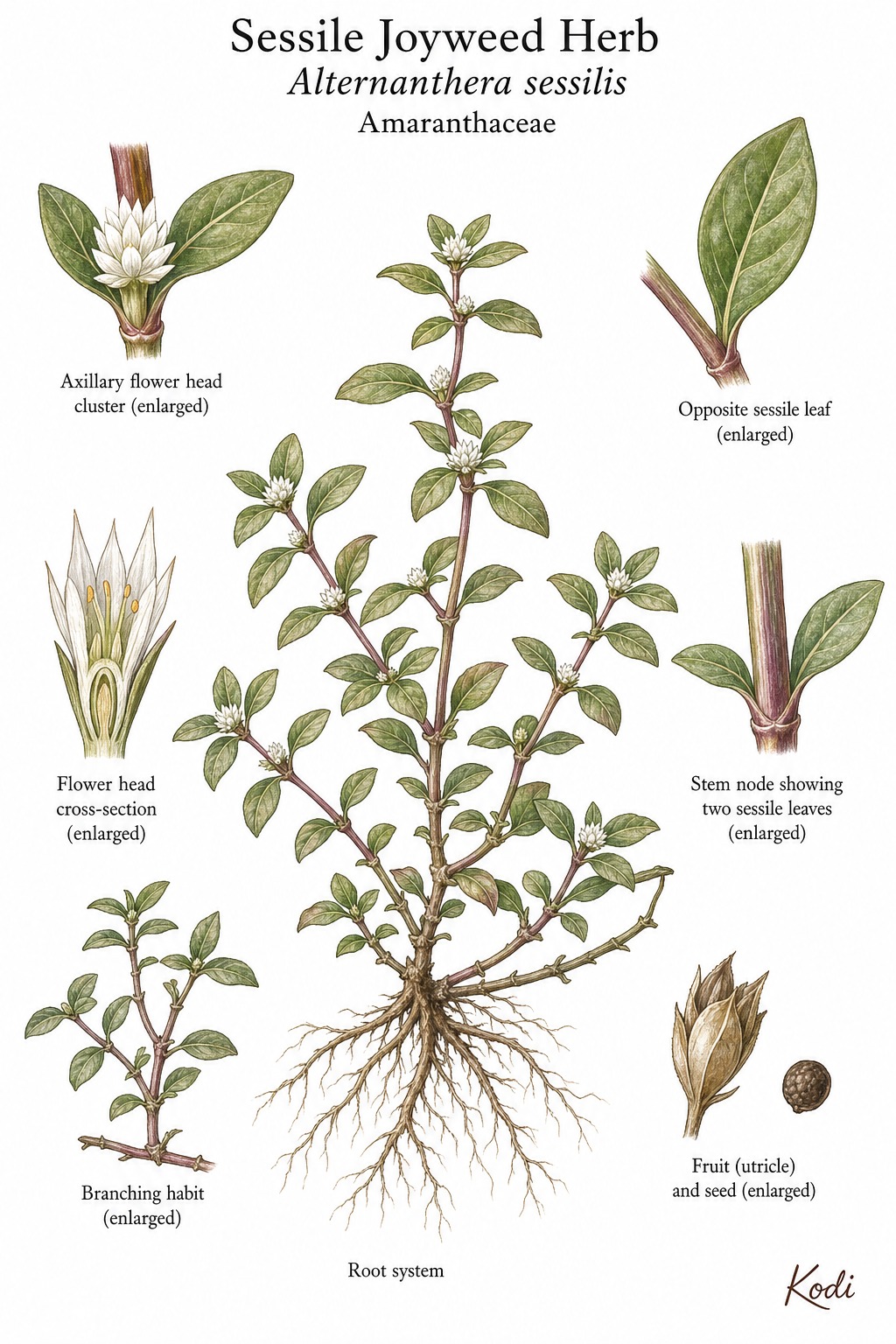
Known in TCM as Lian Zi Cao (莲子草), this slightly bitter and slightly sweet, cool herb enters the Liver, Lung, and Large Intestine. Traditionally, it clears Heat and cools Blood, most often applied for dysentery, hematuria, and carbuncle. Modern research has identified Quercetin among its active constituents.
Part used: Whole herb
Also Known As
Latin: Herba Alternantherae | Pinyin: Lian Zi Cao | Chinese: 莲子草
TCM Properties
- Taste
- slightly bitter, slightly sweet
- Temperature
- cool
- Channels
- Liver, Lung, Large Intestine
Traditional Use
Primary Actions
- Clears Heat and cools Blood … febrile illness, hemoptysis, hematuria, and nosebleed from Blood Heat
- Resolves toxicity and reduces swelling … carbuncles, furuncles, and infected wounds
- Clears Lung Heat and stops cough … Lung-heat cough and expectoration of blood-tinged phlegm
- Clears Large Intestine Heat … bloody dysentery and diarrhea from Intestinal Damp-Heat
Secondary Actions
- External use … fresh herb poultice for burns, scalds, skin rashes, and snake bite in southeast Asia and south China folk practice
- Edible medicinal green … young shoots consumed as a vegetable in tropical folk cuisines; considered a cooling food
Classical References
- Guang Zhou Min Jian Cao Yao (广州民间草药): records Lian Zi Cao (莲子草, 'lotus-seed herb', named for bead-like seed clusters) as a Heat-clearing folk herb used in south China and southeast Asia for febrile bleeding, dysentery, and topical burns; closely related to and used interchangeably with Kong Xin Lian Zi Cao (herb #90, Alternanthera philoxeroides) in most folk contexts
- SPECIES NOTE: Lian Zi Cao (莲子草) most likely refers to Alternanthera sessilis (L.) R.Br. ex DC. (Sessile Joyweed; Amaranthaceae) … a cosmopolitan tropical weed used as a vegetable and medicine throughout south and southeast Asia; shares the Herba Alternantherae Latin designation with herb #90 (A. philoxeroides); the two species have overlapping pharmacological profiles but A. sessilis has more extensive use as an edible herb
Modern Research
Active Compounds
- Quercetin and kaempferol glycosides (flavonoids; anti-inflammatory, antioxidant)
- Luteolin (flavone; anti-inflammatory, antioxidant)
- Betacyanins (betalain antioxidant pigments)
- β-Sitosterol and stigmasterol (phytosterols; anti-inflammatory)
- Chlorogenic acid and caffeic acid (phenolic acids; antioxidant)
- Protein-bound polysaccharides (immunostimulatory)
Studied Effects
- Anti-inflammatory: flavonoid and phenolic acid fractions from Alternanthera sessilis inhibit COX-2 and reduce LPS-induced cytokine production in macrophage models; in vivo anti-inflammatory activity confirmed in paw-edema models … validates the Heat-clearing and toxin-resolving folk applications for febrile and inflammatory conditions
- Antioxidant and hepatoprotective: quercetin glycosides and betacyanins from A. sessilis demonstrate significant DPPH scavenging and protect hepatocytes against CCl4-induced oxidative injury in rodent models; antioxidant capacity correlates with the Blood-cooling, Heat-clearing TCM energetic profile
- Antidiabetic: aqueous extract of A. sessilis reduces fasting blood glucose and improves lipid profiles in diabetic rodent models; α-glucosidase inhibition by flavonoids delays postprandial glucose absorption … consistent with the cooling vegetable food-as-medicine approach in southeast Asian traditional diet
Safety & Interactions
Contraindications
- Spleen-Stomach Deficiency Cold … cool nature impairs digestive Yang
- Cold-pattern bleeding … cooling action inappropriate for cold-deficiency haemorrhage
Cautions
- Standard dose: 15–30 g dried herb in decoction; 30–60 g fresh herb; widely consumed as a vegetable at food doses without adverse effects
- Antidiabetic medications: mild additive glucose-lowering effect; monitor blood glucose in diabetic patients consuming regularly
Conditions
Frequently Asked Questions
What is Sessile Joyweed Herb used for?
Sessile Joyweed Herb is traditionally used to Clears Heat and cools Blood … febrile illness, hemoptysis, hematuria, and nosebleed from Blood Heat, Resolves toxicity and reduces swelling … carbuncles, furuncles, and infected wounds, Clears Lung Heat and stops cough … Lung-heat cough and expectoration of blood-tinged phlegm, Clears Large Intestine Heat … bloody dysentery and diarrhea from Intestinal Damp-Heat. Research has investigated its effects on: Anti-inflammatory: flavonoid and phenolic acid fractions from Alternanthera sessilis inhibit COX-2 and reduce LPS-induced cytokine production in macrophage models; in vivo anti-inflammatory activity confirmed in paw-edema models … validates the Heat-clearing and toxin-resolving folk applications for febrile and inflammatory conditions; Antioxidant and hepatoprotective: quercetin glycosides and betacyanins from A. sessilis demonstrate significant DPPH scavenging and protect hepatocytes against CCl4-induced oxidative injury in rodent models; antioxidant capacity correlates with the Blood-cooling, Heat-clearing TCM energetic profile.
What are other names for Sessile Joyweed Herb?
Sessile Joyweed Herb is also known as Alternanthera. In TCM: 莲子草 (Lian Zi Cao); Herba Alternantherae.
Is Sessile Joyweed Herb safe during pregnancy?
The safety of Sessile Joyweed Herb during pregnancy has not been established. Consult a qualified healthcare provider before use.
What are the contraindications for Sessile Joyweed Herb?
Sessile Joyweed Herb should not be used in: Spleen-Stomach Deficiency Cold … cool nature impairs digestive Yang; Cold-pattern bleeding … cooling action inappropriate for cold-deficiency haemorrhage. Consult a qualified practitioner before use.