Asiatic Pennywort Herb (Luo De Da)
- Chinese
- 落得打
- Pinyin
- Luo De Da
- Latin
- Herba Centellae
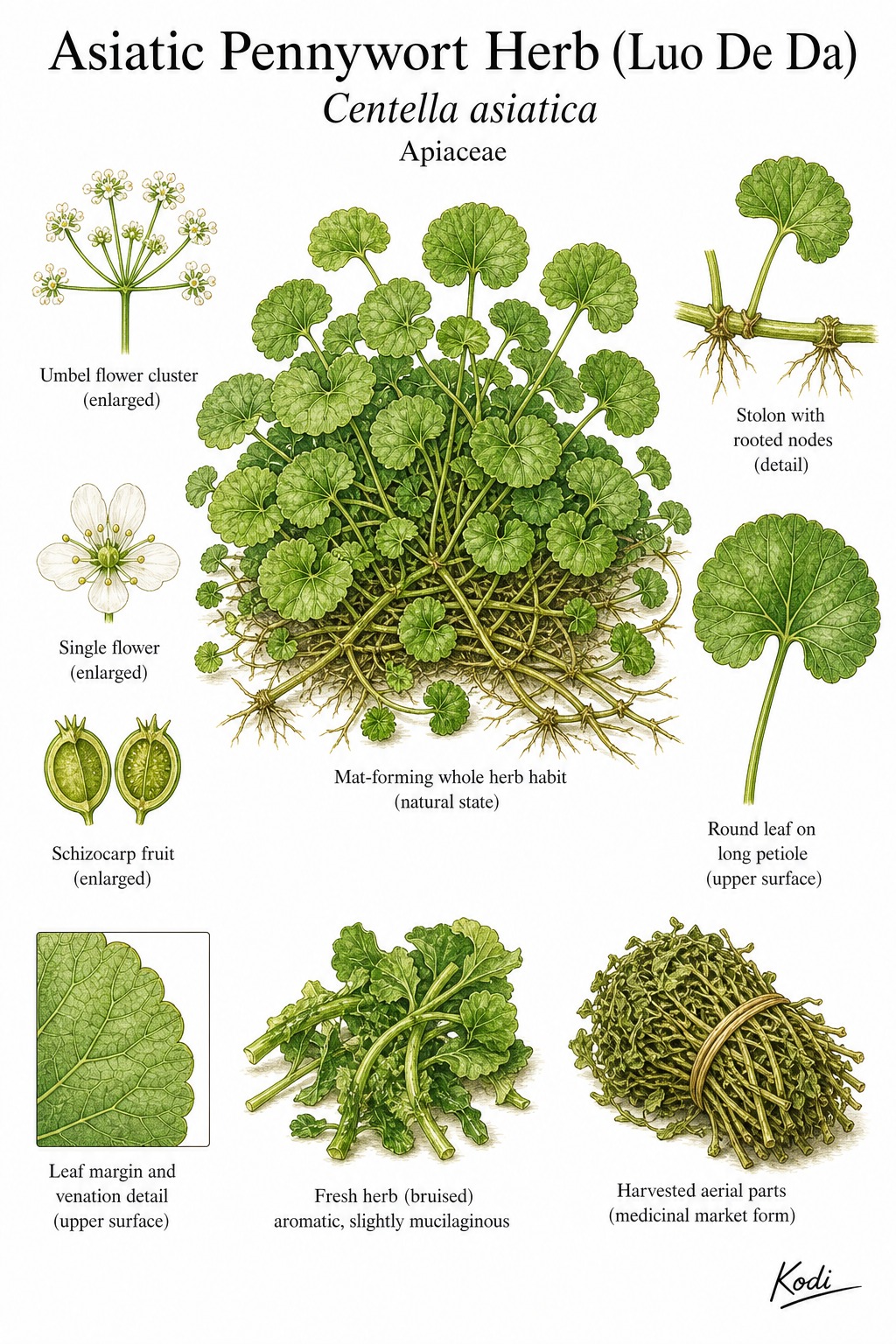
Known in TCM as Luo De Da (落得打), this bitter and acrid, cold herb enters the Liver, Spleen, and Kidney. Traditionally, it clears Heat and promotes urination, most often applied for jaundice, urinary tract infection, and eczema. Modern research has identified Asiaticoside among its active constituents.
Part used: Whole herb
Also Known As
Latin: Herba Centellae | Pinyin: Luo De Da | Chinese: 落得打
TCM Properties
- Taste
- bitter, acrid
- Temperature
- cold
- Channels
- Liver, Spleen, Kidney
Traditional Use
Primary Actions
- Clears Heat and promotes urination … used for Damp-Heat jaundice, painful urinary disorders, and summer-heat dysentery
- Resolves toxicity and reduces swelling … applied internally or topically for abscesses, sores, shingles, and inflamed skin lesions
- Promotes tissue regeneration and wound healing … valued for traumatic injury, chronic sores, burns, and delayed healing
- Cools Blood and stops bleeding while also invigorating Blood … used for blood in the urine, epistaxis, bruising, and traumatic swelling
Secondary Actions
- Supports the Liver and Gallbladder in Damp-Heat patterns with jaundice or hepatitis
- Fresh herb juice or poultice is a classic folk application for red eyes, sore throat, and hot swellings
Classical References
- SYNONYM NOTE: Luo De Da (落得打) is an alternate Chinese name for the same whole-herb drug as Ji Xue Cao (积雪草, herb #114), both referring to Centella asiatica / Herba Centellae. The source XLSX imported them as separate entries; this file is retained separately, but the therapeutic, research, and safety profile is shared with herb #114.
- AHPA Botanical Identity References Compendium lists both ji xue cao and luo-de-da as pinyin names for Centella asiatica aerial parts, confirming they are naming variants of the same botanical drug.
- Traditional retail materia medica usage also records Luo De Da (落得打) as the market name for Centellae Herba in some Chinese-speaking dispensary contexts.
Modern Research
Active Compounds
- Asiaticoside
- Madecassoside
- Asiatic acid
- Madecassic acid
- Flavonoids and polyphenols
Studied Effects
- Wound-healing and collagen support … asiaticoside increased collagen content, tensile strength, and epithelization in normal and delayed wound-healing models (PMID 10350364)
- Chronic venous insufficiency support … systematic review found improvement in microcirculatory parameters, edema, and related symptoms in controlled trials (PMID 23533507)
- Dermatologic scar and burn support … review literature highlights triterpenes for small wounds, hypertrophic scars, and burns (PMID 24399761)
PubMed References
Safety & Interactions
Contraindications
- Spleen and Stomach deficiency-cold with loose stools or poor appetite
- Cold-pattern dysmenorrhea or menstruation with marked Cold signs
Cautions
- High doses or prolonged use may cause digestive upset or contribute to liver irritation in susceptible patients
- Use with caution in patients with existing liver disease or when combining with other potentially hepatotoxic supplements
Drug Interactions
- CYP450 substrate drugs … In vitro gotu kola inhibits CYP1A2, CYP2C9, CYP2C19, CYP2D6, and CYP3A4 and may alter intracellular concentrations of substrate drugs (Moderate) Source: Memorial Sloan Kettering Integrative Medicine … Gotu Kola
Conditions
Frequently Asked Questions
What is Asiatic Pennywort Herb (Luo De Da) used for?
Asiatic Pennywort Herb (Luo De Da) is traditionally used to Clears Heat and promotes urination … used for Damp-Heat jaundice, painful urinary disorders, and summer-heat dysentery, Resolves toxicity and reduces swelling … applied internally or topically for abscesses, sores, shingles, and inflamed skin lesions, Promotes tissue regeneration and wound healing … valued for traumatic injury, chronic sores, burns, and delayed healing, Cools Blood and stops bleeding while also invigorating Blood … used for blood in the urine, epistaxis, bruising, and traumatic swelling. Research has investigated its effects on: Wound-healing and collagen support … asiaticoside increased collagen content, tensile strength, and epithelization in normal and delayed wound-healing models (PMID 10350364); Chronic venous insufficiency support … systematic review found improvement in microcirculatory parameters, edema, and related symptoms in controlled trials (PMID 23533507).
What are other names for Asiatic Pennywort Herb (Luo De Da)?
Asiatic Pennywort Herb (Luo De Da) is also known as Centella. In TCM: 落得打 (Luo De Da); Herba Centellae.
Is Asiatic Pennywort Herb (Luo De Da) safe during pregnancy?
The safety of Asiatic Pennywort Herb (Luo De Da) during pregnancy has not been established. Consult a qualified healthcare provider before use.
What are the contraindications for Asiatic Pennywort Herb (Luo De Da)?
Asiatic Pennywort Herb (Luo De Da) should not be used in: Spleen and Stomach deficiency-cold with loose stools or poor appetite; Cold-pattern dysmenorrhea or menstruation with marked Cold signs. Consult a qualified practitioner before use.
Does Asiatic Pennywort Herb (Luo De Da) interact with any medications?
Asiatic Pennywort Herb (Luo De Da) may interact with: CYP450 substrate drugs - In vitro gotu kola inhibits CYP1A2, CYP2C9, CYP2C19, CYP2D6, and CYP3A4 and may alter intracellular concentrations of substrate drugs - (Moderate severity). Always inform your healthcare provider of any herbal supplements you are taking.