Black-Bone Silky Fowl
- Chinese
- 乌骨鸡
- Pinyin
- Wu Gu Ji
- Latin
- Gallus domesticus
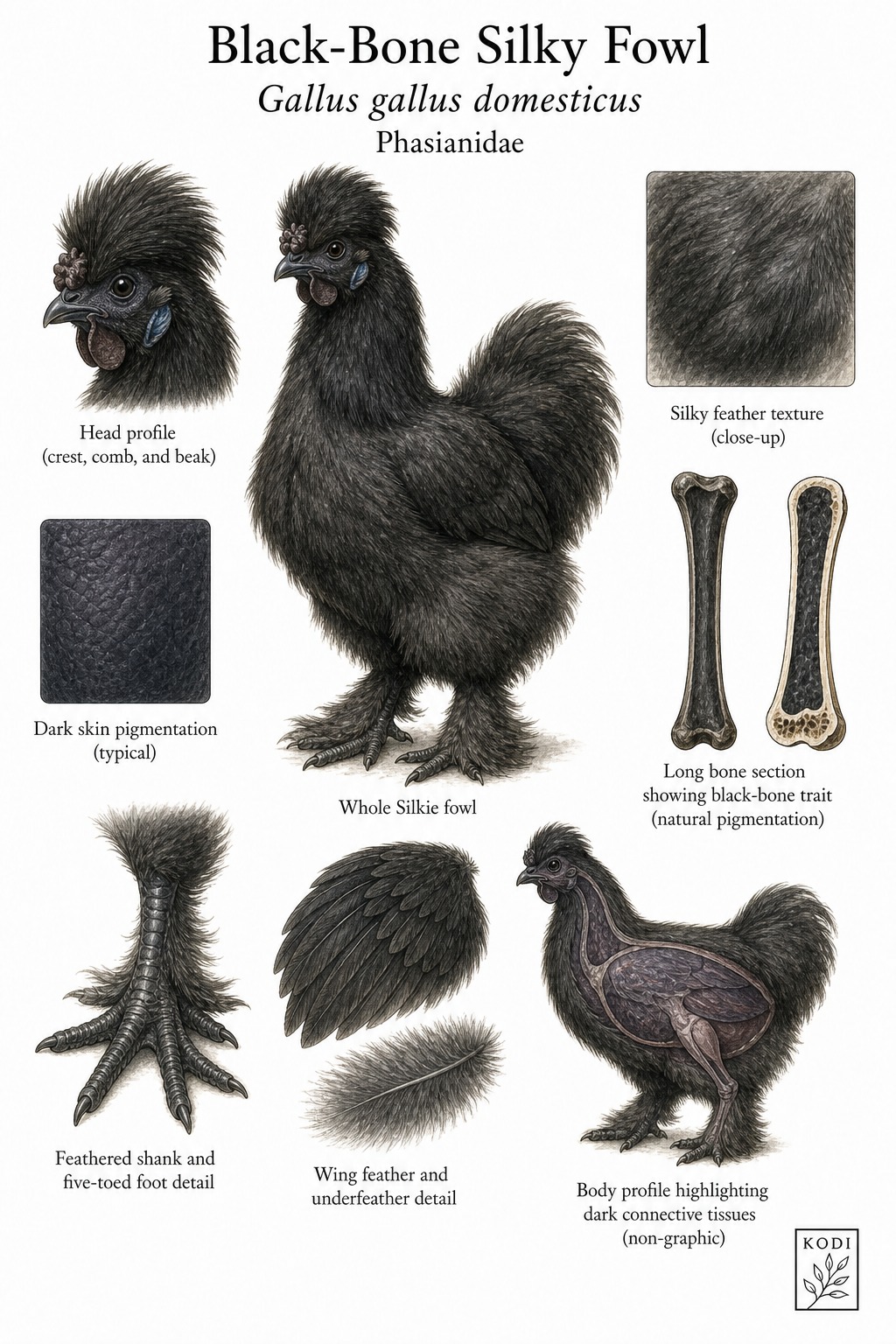
Known in TCM as Wu Gu Ji (乌骨鸡), this sweet, neutral herb enters the Liver, Kidney, and Lung. Traditionally, it tonifies Qi and nourishes Blood - used as a gentle but substantive food-medicine for chronic weakness, postpartum depletion, pale complexion, and deficiency patterns needing recovery rather than aggressive stimulation, most often applied for leukorrhea, abnormal uterine bleeding, and dizziness. Modern research has identified Melanin among its active constituents.
Also Known As
Latin: Gallus domesticus | Pinyin: Wu Gu Ji | Chinese: 乌骨鸡
TCM Properties
- Taste
- sweet
- Temperature
- neutral
- Channels
- Liver, Kidney, Lung
Traditional Use
Primary Actions
- Tonifies Qi and nourishes Blood - used as a gentle but substantive food-medicine for chronic weakness, postpartum depletion, pale complexion, and deficiency patterns needing recovery rather than aggressive stimulation.
- Nourishes Yin and reduces deficiency heat - classically chosen for low-grade deficiency fever, dry weakness, and wasting states where the patient is too depleted for drying or strongly hot tonics.
- Regulates menstruation and supports gynecologic weakness - widely used for irregular menses, excessive or lingering uterine bleeding, and leukorrhea when Liver-Kidney-Blood deficiency underlies the complaint.
- Strengthens the sinews and supports recovery from chronic illness - used in broths and medicated food therapy when emaciation, dizziness, tinnitus, and low vitality suggest deep constitutional depletion.
Secondary Actions
- Wu Gu Ji is used far more often in medicinal diet, broth, and pill contexts than as a raw decoction item, reflecting its dual identity as both animal food and restorative medicine.
- The shorter name Wu Ji is common in formulas such as Wu Ji Bai Feng Wan, but the formal medicinal name of the black-bone fowl is Wu Gu Ji.
Classic Formulas
- Wu Ji Bai Feng Wan (乌鸡白凤丸) - iconic gynecologic tonic pill using black-bone silky fowl to nourish Qi and Blood, regulate menstruation, and treat weakness with leukorrhea or uterine bleeding.
- Dang Gui Wu Ji Tang (当归乌鸡汤) - medicinal food-style chicken and blood-tonic soup tradition for postpartum or chronic deficiency recovery, illustrating the bird's role in restorative diet therapy.
Classical References
- TCM Wiki and modern Chinese dietetic references classify Wu Gu Ji as sweet and neutral, entering the Liver, Kidney, and Lung channels and nourishing Yin, replenishing Qi, and tonifying Blood.
- Its best-known classical application is in gynecologic and postpartum weakness, especially where menstrual irregularity, uterine bleeding, or leukorrhea coexist with constitutional deficiency.
- Animal-medicine texts consistently treat black-bone silky fowl as milder and more nourishing than ordinary chicken, making it suitable for longer convalescent use.
Modern Research
Active Compounds
- Melanin and melanin-associated pigments (pigments) - distinctive black-bone components widely studied as signature bioactives of silky fowl
- Carnosine and anserine (histidine-containing dipeptides) - antioxidant and muscle-protective compounds enriched in black-bone silky fowl tissues
- Bioactive oligopeptides (peptides) - studied for antioxidant and immunomodulatory activity after protein hydrolysis
- Docosahexaenoic acid and cardiolipin-related lipids (lipids) - among the notable characteristic metabolites identified in comparative metabolomic studies
- Iron, zinc, and trace minerals (minerals) - contribute to the species' reputation as a restorative food for blood and weakness
Studied Effects
- Characteristic-metabolite research identified estradiol, docosahexaenoic acid, and cardiolipin among signature bioactive molecules in silkie chicken, supporting its long-standing reputation as a restorative functional food (PMID 38540959)
- Comparative metabolomics found black-boned chicken possesses distinctive nutritional and bioactive features when compared with standard broilers, including differences in amino acids, lipids, and pigment-related compounds (PMID 36295816)
- Protein hydrolysate research showed oligopeptides from black-bone silky fowl have in vitro immunomodulatory and antioxidant effects, offering a modern correlate for convalescent tonic use (PMID 36206545)
- Melanocyte-focused work suggests black-bone chicken's pigment cell system contributes to immune function, adding a biological dimension to the traditional emphasis on the species' dark constitution (PMID 34695633)
PubMed References
- Characteristic bioactive compounds and pharmacological efficacy of Silkie chickens as a medicine food homology species in chronic disease management and cognitive function. (2024)
- Metabolomics analysis reveals the unique nutritive characteristics in black-boned chicken meat. (2022)
- In vitro immunomodulatory and antioxidant effects of oligopeptides and four characteristic peptides in black-bone silky fowl (Gallus gallus domesticus Brisson). (2022)
- Melanocytes in black-boned chicken have immune contribution under infectious bursal disease virus infection. (2021)
Safety & Interactions
Contraindications
- Acute exterior excess or significant food stagnation where rich tonic nourishment would burden digestion
- Marked damp-phlegm accumulation with greasy tongue coat and poor digestive transformation
Cautions
- As an animal-derived tonic food, sourcing, hygiene, and veterinary-drug quality control matter more than the gentle traditional profile might suggest
- Very rich preparations may be difficult for weak digestion or active dampness to handle even though the material itself is neutral
- MSK page not found - drug interaction data not available from Memorial Sloan Kettering integrative medicine database
Conditions
- Leukorrhea Traditional ★★★☆☆ JSON
- Abnormal Uterine Bleeding Traditional ★★★☆☆ JSON
- Dizziness Traditional ★★☆☆☆ JSON
- Tinnitus Traditional ★★☆☆☆ JSON
Frequently Asked Questions
What is Black-Bone Silky Fowl used for?
Black-Bone Silky Fowl is traditionally used to Tonifies Qi and nourishes Blood - used as a gentle but substantive food-medicine for chronic weakness, postpartum depletion, pale complexion, and deficiency patterns needing recovery rather than aggressive stimulation., Nourishes Yin and reduces deficiency heat - classically chosen for low-grade deficiency fever, dry weakness, and wasting states where the patient is too depleted for drying or strongly hot tonics., Regulates menstruation and supports gynecologic weakness - widely used for irregular menses, excessive or lingering uterine bleeding, and leukorrhea when Liver-Kidney-Blood deficiency underlies the complaint., Strengthens the sinews and supports recovery from chronic illness - used in broths and medicated food therapy when emaciation, dizziness, tinnitus, and low vitality suggest deep constitutional depletion.. Research has investigated its effects on: Characteristic-metabolite research identified estradiol, docosahexaenoic acid, and cardiolipin among signature bioactive molecules in silkie chicken, supporting its long-standing reputation as a restorative functional food (PMID 38540959); Comparative metabolomics found black-boned chicken possesses distinctive nutritional and bioactive features when compared with standard broilers, including differences in amino acids, lipids, and pigment-related compounds (PMID 36295816).
What are other names for Black-Bone Silky Fowl?
Black-Bone Silky Fowl is also known as Gallus. In TCM: 乌骨鸡 (Wu Gu Ji); Gallus domesticus.
Is Black-Bone Silky Fowl safe during pregnancy?
The safety of Black-Bone Silky Fowl during pregnancy has not been established. Consult a qualified healthcare provider before use.
What are the contraindications for Black-Bone Silky Fowl?
Black-Bone Silky Fowl should not be used in: Acute exterior excess or significant food stagnation where rich tonic nourishment would burden digestion; Marked damp-phlegm accumulation with greasy tongue coat and poor digestive transformation. Consult a qualified practitioner before use.