Blue Vitriol
- Chinese
- 胆矾
- Pinyin
- Dan Fan
- Latin
- Chalcanthitum
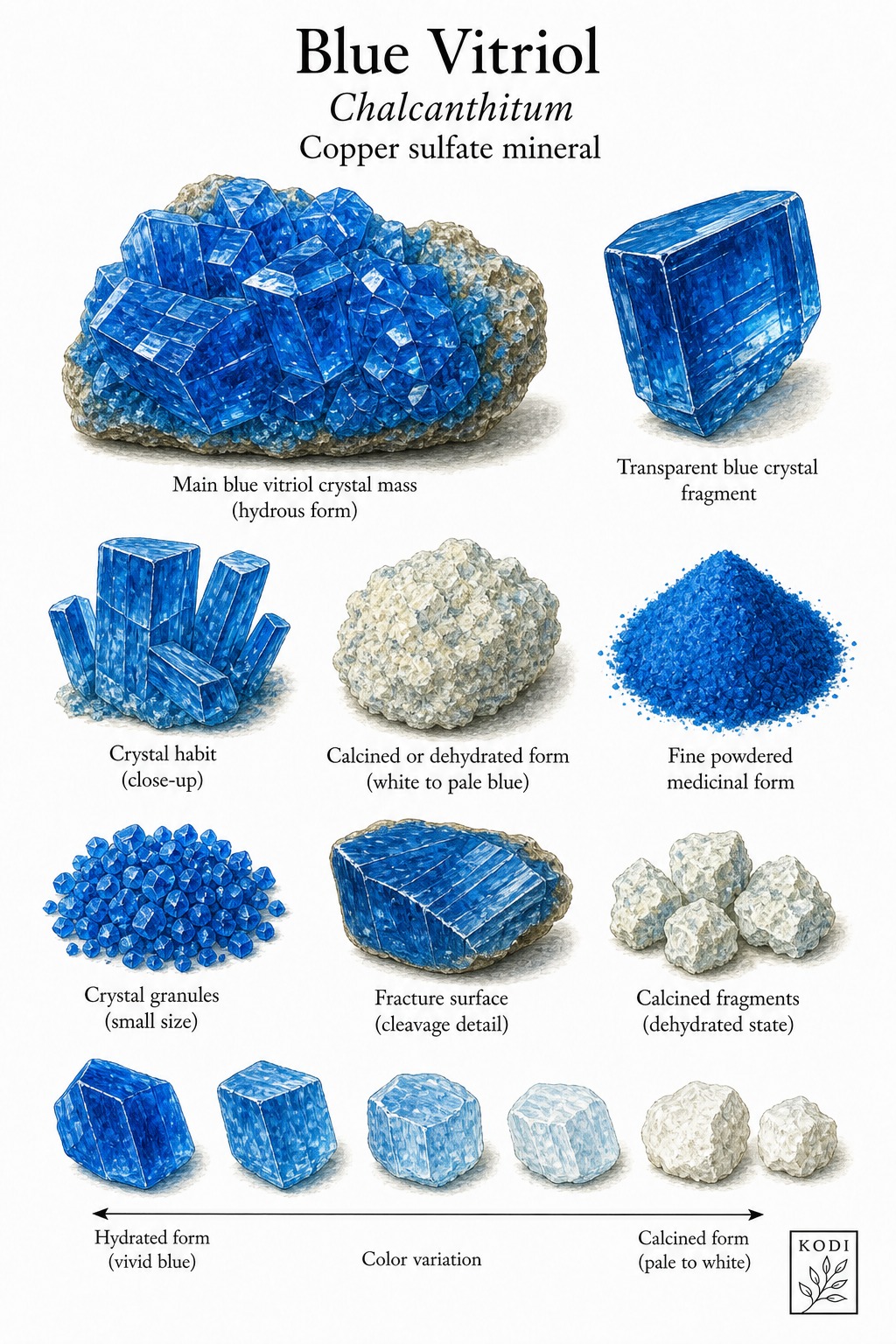
Known in TCM as Dan Fan (胆矾), this sour and acrid, cold herb enters the Liver and Gallbladder. Traditionally, it induces vomiting to expel thick phlegm or recently ingested toxins - a drastic emergency use reserved for severe phlegm obstruction of the throat, chest, or upper body, most often applied for pharyngitis, mouth sores, and epilepsy. Modern research has identified Copper among its active constituents.
Also Known As
Latin: Chalcanthitum | Pinyin: Dan Fan | Chinese: 胆矾
TCM Properties
- Taste
- sour, acrid
- Temperature
- cold
- Channels
- Liver, Gallbladder
Traditional Use
Primary Actions
- Induces vomiting to expel thick phlegm or recently ingested toxins - a drastic emergency use reserved for severe phlegm obstruction of the throat, chest, or upper body.
- Resolves toxicity and clears putrid tissue - traditionally applied to mouth sores, severe gum disease, throat lesions, and toxic swellings.
- Dries dampness and corrodes pathological accumulations - especially in external preparations for ulcers, erosions, and stubborn local lesions.
- Promotes tissue regeneration after removing necrotic or infected material - a classical logic behind its inclusion in throat and oral powders despite its harsh nature.
Secondary Actions
- Dan Fan is the mineral copper sulfate pentahydrate and is far more often discussed in modern practice as an external or emergency-use substance than as a routine decoction ingredient.
- Calcined Dan Fan is traditionally preferred for many external indications because processing changes its harshness and handling characteristics.
Classic Formulas
- Dan Fan San (胆矾散) - classical powder traditions using minute amounts of Dan Fan for severe gum, mouth, or throat lesions where corrosive toxin-clearing action is desired.
- Er Sheng San (二圣散) - a throat-obstruction formula tradition pairing Dan Fan with Bai Jiang Can to expel phlegm and relieve acute blockage.
Classical References
- Me & Qi describes Dan Fan as sour, acrid, and cold, entering the Liver and Gallbladder channels to induce vomiting, resolve toxicity, dry dampness, remove putridity, and promote tissue regeneration.
- Shen Nong Ben Cao Jing historically records this mineral under the name Shi Dan, while later materia medica identify it with copper-bearing blue crystals from ore oxidation.
- Yi Lin Zuan Yao states that Dan Fan moves Liver wind, drains Liver fire, and removes toxins, while later commentators warn against using it for cold-constrained throat presentations.
Modern Research
Active Compounds
- Copper sulfate pentahydrate (CuSO4·5H2O) - the principal chalcanthite compound that defines Dan Fan
- Cupric ions (Cu2+) - the bioactive and toxic ionic fraction responsible for corrosive, oxidative, and antimicrobial effects
- Sulfate ions - the paired inorganic anion within the crystal lattice
- Hydrated copper crystal matrix - the water-containing mineral structure that changes during calcination and processing
Studied Effects
- Modern literature on copper sulfate emphasizes poisoning, hemolysis, hepatic injury, renal failure, methemoglobinemia, and other multi-organ toxic effects rather than safe internal medicinal use (PMID 18407869; PMID 28119268; PMID 39743299)
- Separate mechanistic literature on copper-containing antimicrobial materials helps explain why topical Dan Fan was historically used against infected or putrid lesions, although this does not make the crude mineral safe for routine self-use (PMID 35990090)
PubMed References
- Severe acute copper sulphate poisoning: a case report (2008)
- Greenish-blue gastric content: Literature review and case report on acute copper sulphate poisoning (2017)
- Copper-containing nanoparticles: Mechanism of antimicrobial effect and application in dentistry-a narrative review (2022)
- Residual hyperglycemia after successful treatment of a patient with severe copper sulfate poisoning (2024)
Safety & Interactions
Contraindications
- Pregnancy
- Body deficiency or frailty
- Pre-existing liver or kidney disease
- Any unsupervised internal use beyond emergency-style microdosing
Cautions
- Dan Fan is a toxic copper sulfate mineral with a very narrow therapeutic window; internal use is historical, highly restricted, and generally avoided outside expert-supervised emergency contexts
- External preparations can also be corrosive, so dilution, calcination status, and application site matter greatly
- MSK page not found - drug interaction data not available from Memorial Sloan Kettering integrative medicine database
Conditions
- Pharyngitis Traditional ★★★☆☆ JSON
- Mouth Sores Traditional ★★★☆☆ JSON
- Epilepsy Traditional ★★☆☆☆ JSON
Frequently Asked Questions
What is Blue Vitriol used for?
Blue Vitriol is traditionally used to Induces vomiting to expel thick phlegm or recently ingested toxins - a drastic emergency use reserved for severe phlegm obstruction of the throat, chest, or upper body., Resolves toxicity and clears putrid tissue - traditionally applied to mouth sores, severe gum disease, throat lesions, and toxic swellings., Dries dampness and corrodes pathological accumulations - especially in external preparations for ulcers, erosions, and stubborn local lesions., Promotes tissue regeneration after removing necrotic or infected material - a classical logic behind its inclusion in throat and oral powders despite its harsh nature.. Research has investigated its effects on: Modern literature on copper sulfate emphasizes poisoning, hemolysis, hepatic injury, renal failure, methemoglobinemia, and other multi-organ toxic effects rather than safe internal medicinal use (PMID 18407869; PMID 28119268; PMID 39743299); Separate mechanistic literature on copper-containing antimicrobial materials helps explain why topical Dan Fan was historically used against infected or putrid lesions, although this does not make the crude mineral safe for routine self-use (PMID 35990090).
What are other names for Blue Vitriol?
Blue Vitriol is also known as Chalcanthitum. In TCM: 胆矾 (Dan Fan); Chalcanthitum.
Is Blue Vitriol safe during pregnancy?
Blue Vitriol is not recommended during pregnancy.
What are the contraindications for Blue Vitriol?
Blue Vitriol should not be used in: Pregnancy; Body deficiency or frailty; Pre-existing liver or kidney disease; Any unsupervised internal use beyond emergency-style microdosing. Consult a qualified practitioner before use.