Calcined Gypsum
- Chinese
- 煅石膏
- Pinyin
- Duan Shi Gao
- Latin
- Gypsum Fibrosum Praeparata
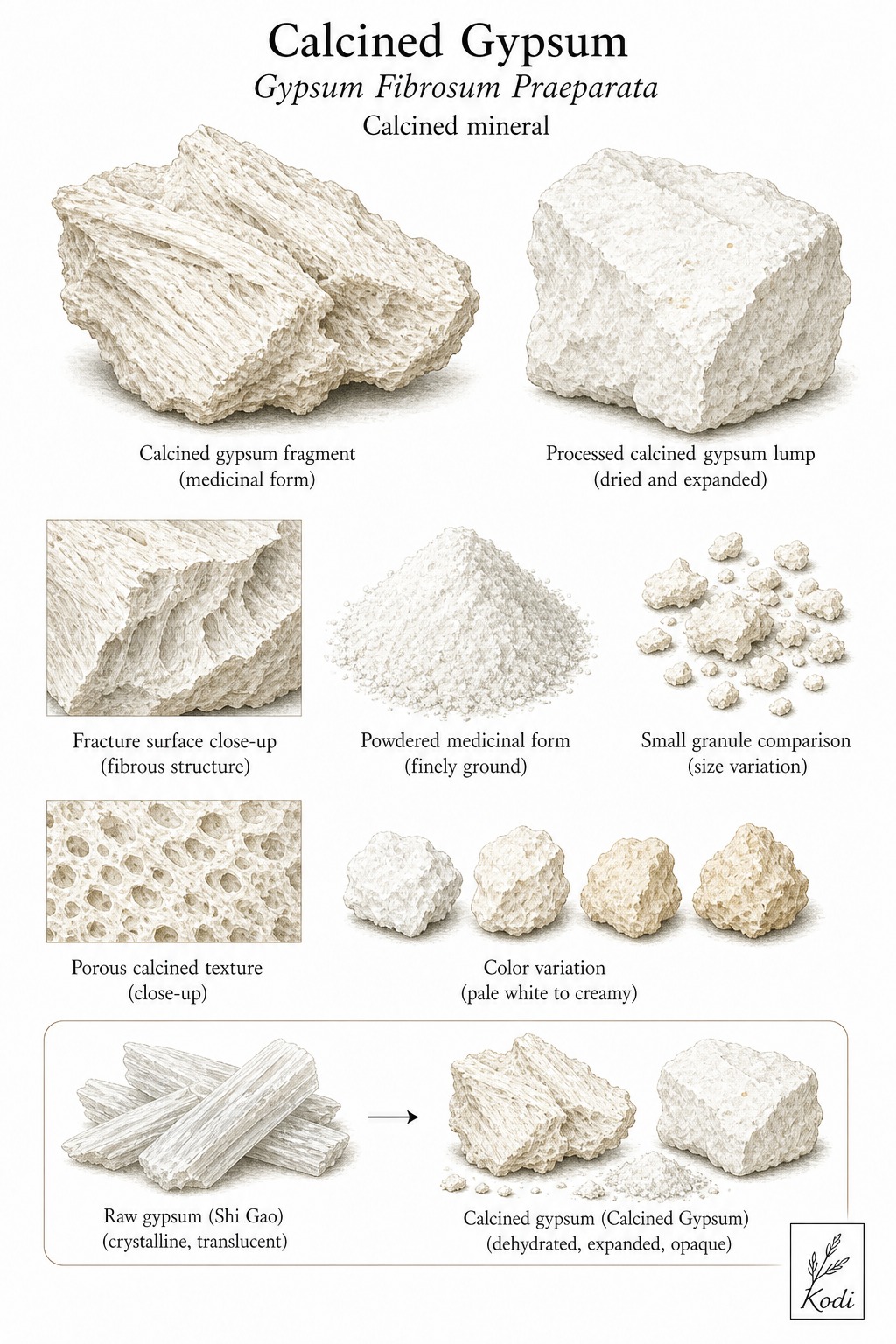
Known in TCM as Duan Shi Gao (煅石膏), this sweet and astringent, neutral herb enters the Lung and Stomach. Traditionally, it generates flesh and heals sores - the processed form is classically dusted on ulcers, difficult wounds, and erosive lesions that need drying plus tissue regeneration, most often applied for eczema, skin burns, and oral ulcers. Modern research has identified Calcium among its active constituents.
Part used: Gypsum
Also Known As
Latin: Gypsum Fibrosum Praeparata | Pinyin: Duan Shi Gao | Chinese: 煅石膏
TCM Properties
- Taste
- sweet, astringent
- Temperature
- neutral
- Channels
- Lung, Stomach
Traditional Use
Primary Actions
- Generates flesh and heals sores - the processed form is classically dusted on ulcers, difficult wounds, and erosive lesions that need drying plus tissue regeneration.
- Dries Dampness and closes weeping skin lesions - used externally for eczema, damp erosions, and moist lesions where raw Shi Gao would be the wrong preparation.
- Relieves pain and protects damaged tissue in burns and scalds - applied as an external powder when heat injury has damaged the skin surface and a cooling-drying protective mineral is needed.
Secondary Actions
- Calcination fundamentally changes Shi Gao: it loses the major heat-clearing, fever-reducing role of the raw mineral and becomes an external-use wound powder instead.
- The processed powder is often combined with other external agents rather than prescribed as a major internal decoction ingredient.
Classic Formulas
- Duan Shi Gao with Qing Dai and Huang Bai - external powder style for damp-hot eczema and weeping lesions.
- Duan Shi Gao with Bing Pian or sesame oil - topical burn and scald applications aimed at pain relief and surface protection.
- Duan Shi Gao with Er Cha and related astringent wound powders - used when chronic ulcer beds need both drying and flesh-generation support.
Classical References
- Me & Qi explicitly states that the 'generates flesh and heals sores' action belongs only to the calcined form, Duan Shi Gao, which is applied externally to wounds, burns, eczema, and chronic ulcers.
- The same Me & Qi monograph strongly warns that calcined Shi Gao must not be used internally because it no longer behaves like the raw heat-clearing mineral.
- PREPARATION NOTE: this file is intentionally separate from raw Shi Gao because calcination changes both the therapeutic target and the safety profile.
Modern Research
Active Compounds
- Calcium sulfate hemihydrate and related calcined calcium sulfate phases - the main mineral forms created by roasting gypsum
- Calcium ions - contribute to the processed mineral's tissue-drying and biomaterial relevance
- Reduced trace-element fraction compared with raw gypsum - part of why the calcined form loses much of the original antipyretic identity
- Fine porous mineral powder matrix - helps explain its traditional external absorbent and protective role
Studied Effects
- Research summarized by Me & Qi found that raw gypsum, but not calcined gypsum or pure calcium sulfate, showed meaningful antipyretic activity in LPS-fever models, supporting the classical insistence that Duan Shi Gao should not replace raw Shi Gao internally.
- This same raw-versus-calcined distinction offers a modern rationale for why traditional physicians restricted Duan Shi Gao to external lesion care rather than fever formulas.
- Most contemporary biomedical literature on calcined calcium sulfate focuses on wound and biomaterial applications rather than on direct trials of the traditional herb powder itself.
Safety & Interactions
Contraindications
- Internal use in place of raw Shi Gao
- Dry, non-weeping lesions that do not need an absorbent or astringent mineral powder
Cautions
- Duan Shi Gao is for external use; it should not be substituted into internal formulas that call for raw Shi Gao
- Only medicinal-grade processed gypsum should be used on damaged skin because plaster and industrial gypsum products may contain unsuitable contaminants
- Avoid applying coarse or contaminated powder directly into deep wounds without proper supervision
- MSK page not found - drug interaction data not available from Memorial Sloan Kettering integrative medicine database
Conditions
- Eczema Traditional ★★★★☆ JSON
- Skin Burns Traditional ★★★★☆ JSON
- Oral Ulcers Traditional ★☆☆☆☆ JSON
- Traumatic Injury Traditional ★★☆☆☆ JSON
Frequently Asked Questions
What is Calcined Gypsum used for?
Calcined Gypsum is traditionally used to Generates flesh and heals sores - the processed form is classically dusted on ulcers, difficult wounds, and erosive lesions that need drying plus tissue regeneration., Dries Dampness and closes weeping skin lesions - used externally for eczema, damp erosions, and moist lesions where raw Shi Gao would be the wrong preparation., Relieves pain and protects damaged tissue in burns and scalds - applied as an external powder when heat injury has damaged the skin surface and a cooling-drying protective mineral is needed.. Research has investigated its effects on: Research summarized by Me & Qi found that raw gypsum, but not calcined gypsum or pure calcium sulfate, showed meaningful antipyretic activity in LPS-fever models, supporting the classical insistence that Duan Shi Gao should not replace raw Shi Gao internally.; This same raw-versus-calcined distinction offers a modern rationale for why traditional physicians restricted Duan Shi Gao to external lesion care rather than fever formulas..
What are other names for Calcined Gypsum?
Calcined Gypsum is also known as Fibrosum. In TCM: 煅石膏 (Duan Shi Gao); Gypsum Fibrosum Praeparata.
Is Calcined Gypsum safe during pregnancy?
The safety of Calcined Gypsum during pregnancy has not been established. Consult a qualified healthcare provider before use.
What are the contraindications for Calcined Gypsum?
Calcined Gypsum should not be used in: Internal use in place of raw Shi Gao; Dry, non-weeping lesions that do not need an absorbent or astringent mineral powder. Consult a qualified practitioner before use.