Shiitake Mushroom
- Chinese
- 香菇
- Pinyin
- Xiang Gu
- Latin
- Lentinula edodes
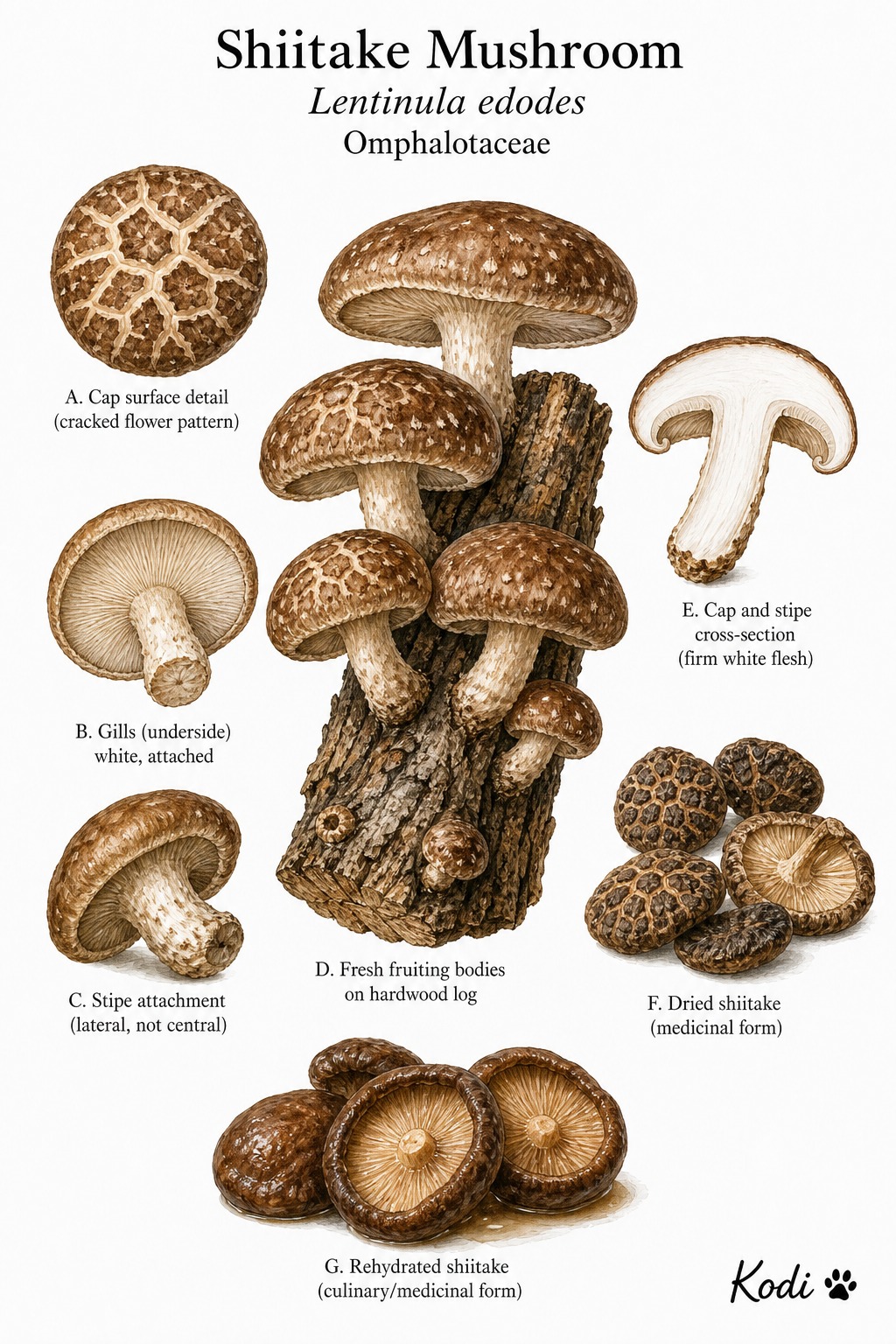
Known in TCM as Xiang Gu (香菇), this sweet, neutral herb enters the Liver and Stomach. Traditionally, it tonifies deficiency and strengthens the middle - Xiang Gu is a food-medicine mushroom used for weakness, poor appetite, and digestive fatigue when a gentle Spleen-and-Stomach-supporting tonic is preferred over a stronger medicinal, most often applied for fatigue, indigestion, and hyperlipidemia. Modern research has identified Lentinan among its active constituents.
Part used: Fruiting body (fungus)
Also Known As
Latin: Lentinula edodes | Pinyin: Xiang Gu | Chinese: 香菇
TCM Properties
- Taste
- sweet
- Temperature
- neutral
- Channels
- Liver, Stomach
Traditional Use
Primary Actions
- Tonifies deficiency and strengthens the middle - Xiang Gu is a food-medicine mushroom used for weakness, poor appetite, and digestive fatigue when a gentle Spleen-and-Stomach-supporting tonic is preferred over a stronger medicinal.
- Stimulates appetite and helps transform stagnation - traditional summaries use it for indigestion, poor food intake, and convalescent weakness where digestive recovery and Qi support need to happen together.
- Resolves Phlegm and regulates Qi - Xiang Gu is also listed for chronic hepatitis, hypertension, edema, and hyperlipidemia-pattern states, reflecting a broader food-therapy role beyond simple nourishment.
- Expels wind, promotes eruption, and removes toxicity - older TCM and diet-therapy sources extend its use to urticaria, incomplete eruptions, and as supportive care after toxic food or mushroom exposure.
Secondary Actions
- As a fragrant edible mushroom, Xiang Gu sits at the border of cuisine and materia medica; it is often taken in soups, porridges, and restorative meals rather than as a heavy standalone decoction drug.
- Traditional trade names such as Dong Gu and Hua Gu refer to especially valued shiitake grades, reinforcing that sourcing and culinary quality matter for this food-grade medicinal.
Classical References
- TCM Wiki identifies Xiang Gu as sweet and neutral, entering the Liver and Stomach channels, and lists actions of tonifying deficiency, strengthening the Spleen, stimulating appetite, resolving Phlegm, regulating Qi, and removing toxicity.
- American Dragon likewise places Xiang Gu among Qi-tonifying medicinals and highlights its use for weakness, indigestion, edema, anemia, hyperlipidemia, chronic hepatitis, and urticaria.
- IMPORT NOTE: the original stub used the French loanword `Champignon` as both slug label and Latin placeholder; this record normalizes the medicinal identity to Xiang Gu / shiitake and corrects the Latin to `Lentinula edodes` while preserving the slug.
Modern Research
Active Compounds
- Lentinan (beta-glucan polysaccharide) - the best-known shiitake immunomodulatory constituent and the core compound behind much of its oncology-adjunct literature
- Eritadenine (adenine-derived alkaloid) - linked to cholesterol-lowering and lipid-regulating research
- Lenthionine (organosulfur aroma compound) - contributes to shiitake's fragrance and some antimicrobial interest
- Beta-glucan-rich polysaccharides beyond lentinan - broader immune and gut-microbiome active fractions
- Ergosterol and related sterols - nutritionally relevant mushroom sterols connected to functional-food interest
Studied Effects
- A double-blind randomized clinical trial using shiitake bars in adults with borderline high cholesterol reported favorable effects on lipid and antioxidant profiles, supporting Xiang Gu's longstanding metabolic-food reputation (PMID 34375514).
- In hypercholesterolemic rats, shiitake supplementation altered the gut microbiome and corrected dyslipidemia, providing a modern mechanism-oriented complement to the traditional hyperlipidemia indication (PMID 30806258).
- A recent review of shiitake's medicinal and therapeutic potential summarizes bioactive constituents such as lentinan, eritadenine, and lenthionine along with immune, metabolic, and anticancer research directions (PMID 40825148).
PubMed References
- Effects of Shiitake Culinary-Medicinal Mushroom, Lentinus edodes (Agaricomycetes), Bars on Lipid and Antioxidant Profiles in Individuals with Borderline High Cholesterol: A Double-Blind Randomized Clinical Trial (2021)
- Shiitake Culinary-Medicinal Mushroom, Lentinus edodes (Agaricomycetes), Supplementation Alters Gut Microbiome and Corrects Dyslipidemia in Rats (2019)
- Holistic Evaluation of Shiitake mushrooms (Lentinula edodes): Unraveling Its Medicinal and Therapeutic Potentials (2024)
Safety & Interactions
Contraindications
- Known mushroom allergy
- History of shiitake dermatitis or shiitake-related hypersensitivity
Cautions
- MSK reports cases of shiitake dermatitis, flagellate erythema, eosinophilia, gastrointestinal upset, and hypersensitivity pneumonitis from spores or heavy exposure
- Raw or insufficiently cooked shiitake appears more likely to provoke the classic flagellate dermatitis reaction in susceptible people
- MSK reviewed shiitake and did not list specific herb-drug interactions, but noted that chronic heavy consumption may increase eosinophil count
Conditions
- Fatigue Traditional ★★★☆☆ JSON
- Indigestion Traditional ★★★☆☆ JSON
- Hyperlipidemia Research ★★★☆☆ JSON
- Hypertension Traditional ★★☆☆☆ JSON
- Hepatitis Traditional ★★☆☆☆ JSON
- Urticaria Traditional ★★☆☆☆ JSON
Frequently Asked Questions
What is Shiitake Mushroom used for?
Shiitake Mushroom is traditionally used to Tonifies deficiency and strengthens the middle - Xiang Gu is a food-medicine mushroom used for weakness, poor appetite, and digestive fatigue when a gentle Spleen-and-Stomach-supporting tonic is preferred over a stronger medicinal., Stimulates appetite and helps transform stagnation - traditional summaries use it for indigestion, poor food intake, and convalescent weakness where digestive recovery and Qi support need to happen together., Resolves Phlegm and regulates Qi - Xiang Gu is also listed for chronic hepatitis, hypertension, edema, and hyperlipidemia-pattern states, reflecting a broader food-therapy role beyond simple nourishment., Expels wind, promotes eruption, and removes toxicity - older TCM and diet-therapy sources extend its use to urticaria, incomplete eruptions, and as supportive care after toxic food or mushroom exposure.. Research has investigated its effects on: A double-blind randomized clinical trial using shiitake bars in adults with borderline high cholesterol reported favorable effects on lipid and antioxidant profiles, supporting Xiang Gu's longstanding metabolic-food reputation (PMID 34375514).; In hypercholesterolemic rats, shiitake supplementation altered the gut microbiome and corrected dyslipidemia, providing a modern mechanism-oriented complement to the traditional hyperlipidemia indication (PMID 30806258)..
What are other names for Shiitake Mushroom?
Shiitake Mushroom is also known as Lentinula. In TCM: 香菇 (Xiang Gu); Lentinula edodes.
Is Shiitake Mushroom safe during pregnancy?
The safety of Shiitake Mushroom during pregnancy has not been established. Consult a qualified healthcare provider before use.
What are the contraindications for Shiitake Mushroom?
Shiitake Mushroom should not be used in: Known mushroom allergy; History of shiitake dermatitis or shiitake-related hypersensitivity. Consult a qualified practitioner before use.