Chick Fetus
- Chinese
- 鸡胎
- Pinyin
- Ji Tai
- Latin
- Embryo Gallus Domesticus
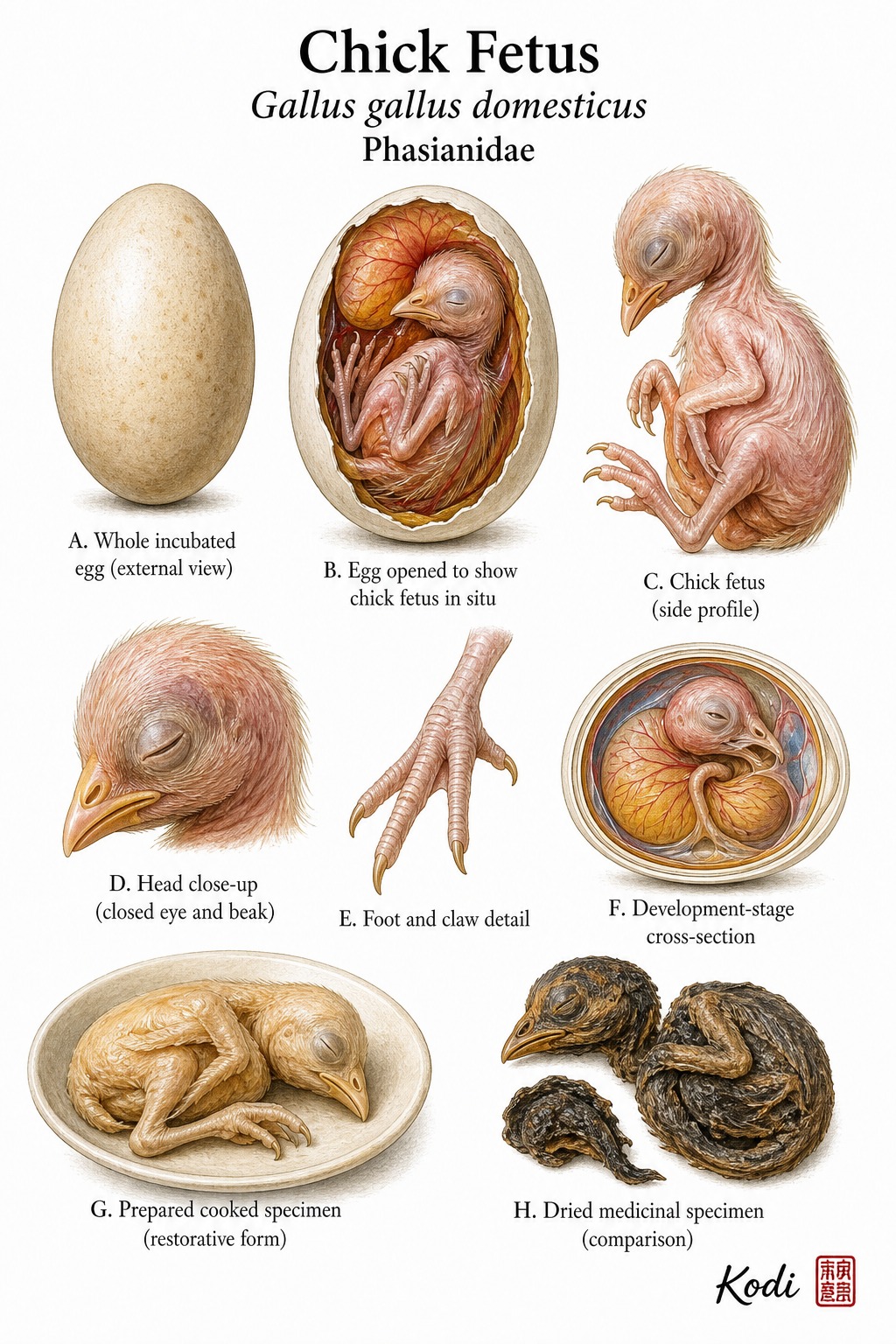
Known in TCM as Ji Tai (鸡胎), this sweet, warm herb enters the Spleen and Kidney. Traditionally, it tonifies weakness and supports recovery - Ji Tai is chiefly a regional food-medicine substance used for fatigue, post-illness depletion, and constitution weakness when a blood-and-flesh nutritive is preferred over a strongly medicinal tonic, most often applied for fatigue and poor appetite. Modern research has identified Protein among its active constituents.
Part used: Embryo
Also Known As
Latin: Embryo Gallus Domesticus | Pinyin: Ji Tai | Chinese: 鸡胎
TCM Properties
- Taste
- sweet
- Temperature
- warm
- Channels
- Spleen, Kidney
Traditional Use
Primary Actions
- Tonifies weakness and supports recovery - Ji Tai is chiefly a regional food-medicine substance used for fatigue, post-illness depletion, and constitution weakness when a blood-and-flesh nutritive is preferred over a strongly medicinal tonic.
- Warms the middle and improves appetite - late folk and dietetic descriptions use it for poor intake, digestive weakness, and cold-deficiency lassitude rather than for acute disease patterns.
- Nourishes essence and supports the Spleen-Kidney axis - popular modern vernacular sources describe Ji Tai as a warming restorative for weakness of the lower back, legs, and general constitution, especially when qi-blood depletion and poor appetite occur together.
- Assists postpartum or convalescent rebuilding in regional diet therapy - it is more often prepared as a cooked restorative food than prescribed as a classic dispensary herb.
Secondary Actions
- Ji Tai is much more a folk and dietetic material than a standard Chinese Pharmacopoeia staple, so its traditional profile is less standardized than better-attested animal tonics or food medicinals.
- Practical use centers on thorough cooking and nutritive restoration, not on powdered pharmacy dispensing or large canonical formula traditions.
Classical References
- Mainstream herb dictionaries provide little standardized monograph detail for Ji Tai, and even broad English-language TCM herb lists often record the name without a developed action summary.
- Modern Chinese consumer-health and regional food references describe chick embryo as a warming nutritive food used for weakness, postpartum recovery, and poor appetite, but this is better understood as folk-dietetic usage than as a major classical materia medica identity.
- EVIDENCE NOTE: because canonical coverage is sparse, this record is intentionally conservative and avoids stronger claims that are common in commercial tonic marketing.
Modern Research
Active Compounds
- Protein and peptide fractions - the dominant nutritive component in late descriptions of Ji Tai as a restorative food-tonic
- Essential amino acid mixtures - commonly cited as the basis for its convalescent and strength-supporting reputation
- Phospholipid-rich embryonic lipids - nutrient-dense fractions more relevant to food therapy than to targeted phytopharmacology
- Trace minerals such as iron and zinc - supportive nutritional constituents rather than standardized medicinal markers
Safety & Interactions
Contraindications
- Improperly sourced, spoiled, or undercooked material
- Known poultry or egg allergy
- Use in highly immunocompromised individuals without rigorous food-safety control
Cautions
- Ji Tai is better viewed as a regional restorative food than a well-validated clinical herb, so expectations should remain modest and medically serious fatigue or weight loss still require evaluation
- Food-safety risk is the main modern concern: poorly handled or inadequately cooked chick-embryo products may carry bacterial contamination and should never be treated as inherently safe simply because they are sold as tonics
- Commercial or folk claims for broad anti-aging, fertility, or cosmetic benefit far exceed the quality of accessible evidence
- MSK page not found - drug interaction data not available from Memorial Sloan Kettering integrative medicine database
Conditions
- Fatigue Traditional ★★☆☆☆ JSON
- Poor Appetite Traditional ★★☆☆☆ JSON
Frequently Asked Questions
What is Chick Fetus used for?
Chick Fetus is traditionally used to Tonifies weakness and supports recovery - Ji Tai is chiefly a regional food-medicine substance used for fatigue, post-illness depletion, and constitution weakness when a blood-and-flesh nutritive is preferred over a strongly medicinal tonic., Warms the middle and improves appetite - late folk and dietetic descriptions use it for poor intake, digestive weakness, and cold-deficiency lassitude rather than for acute disease patterns., Nourishes essence and supports the Spleen-Kidney axis - popular modern vernacular sources describe Ji Tai as a warming restorative for weakness of the lower back, legs, and general constitution, especially when qi-blood depletion and poor appetite occur together., Assists postpartum or convalescent rebuilding in regional diet therapy - it is more often prepared as a cooked restorative food than prescribed as a classic dispensary herb..
What are other names for Chick Fetus?
Chick Fetus is also known as Gallus. In TCM: 鸡胎 (Ji Tai); Embryo Gallus Domesticus.
Is Chick Fetus safe during pregnancy?
The safety of Chick Fetus during pregnancy has not been established. Consult a qualified healthcare provider before use.
What are the contraindications for Chick Fetus?
Chick Fetus should not be used in: Improperly sourced, spoiled, or undercooked material; Known poultry or egg allergy; Use in highly immunocompromised individuals without rigorous food-safety control. Consult a qualified practitioner before use.