Chicken Bile
- Chinese
- 鸡胆
- Pinyin
- Ji Dan
- Latin
- Fel Gallus Domesticus
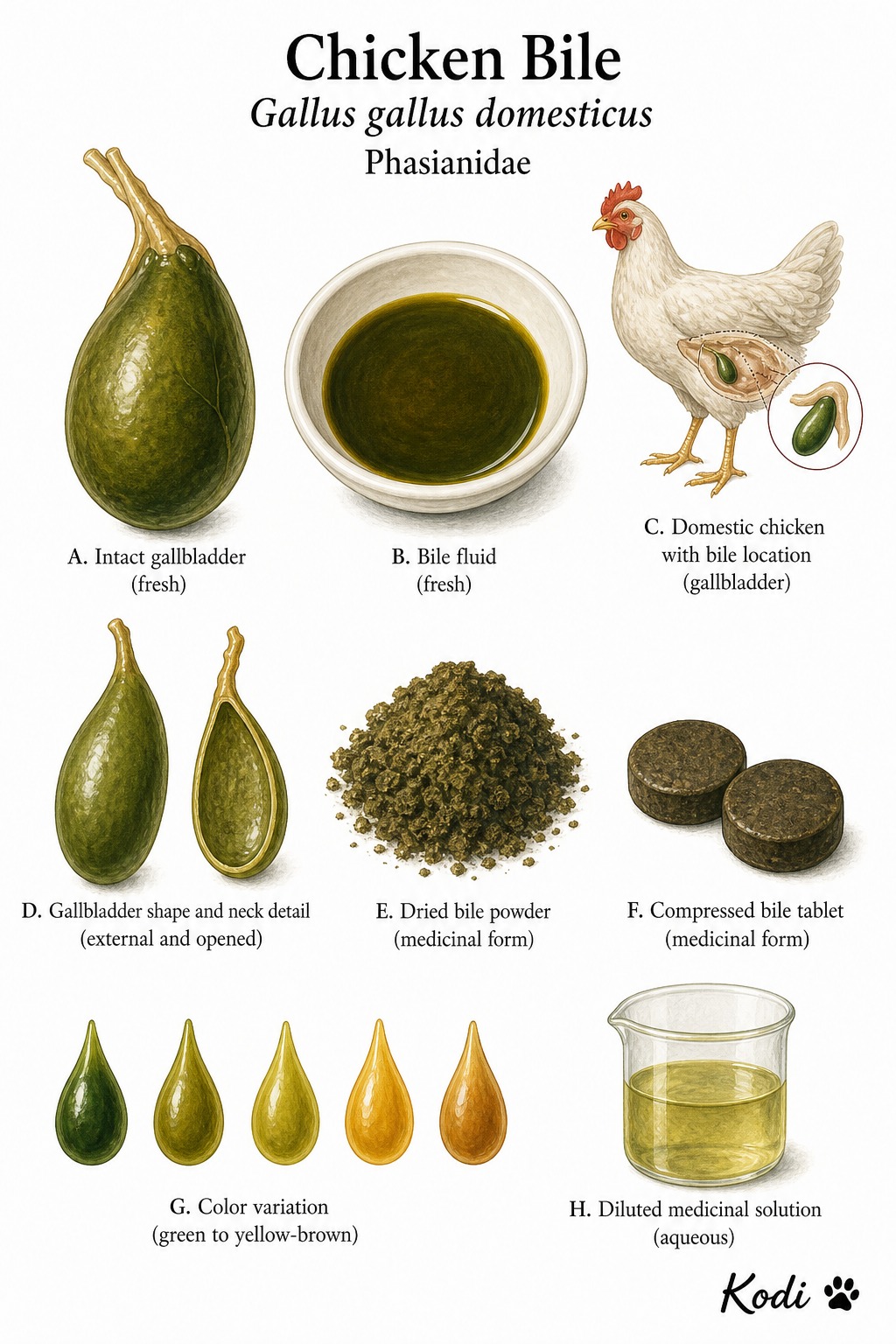
Known in TCM as Ji Dan (鸡胆), this bitter, cold herb enters the Liver. Traditionally, it clears heat and brightens the eyes - Ji Dan is traditionally applied for red, hot, tearing, or obstructed eyes, especially when toxic heat or superficial inflammation affects the eye surface, most often applied for cough, bronchitis, and dysentery. Modern research has identified Chenodeoxycholic among its active constituents.
Part used: Bile
Also Known As
Latin: Fel Gallus Domesticus | Pinyin: Ji Dan | Chinese: 鸡胆
TCM Properties
- Taste
- bitter
- Temperature
- cold
- Channels
- Liver
Traditional Use
Primary Actions
- Clears heat and brightens the eyes - Ji Dan is traditionally applied for red, hot, tearing, or obstructed eyes, especially when toxic heat or superficial inflammation affects the eye surface.
- Stops cough and transforms phlegm - older materia medica and later clinical use emphasize chicken bile for pertussis-type spasmodic cough, chronic bronchitis, and thick difficult sputum, often given as fresh bile juice with sugar or as processed tablets.
- Resolves toxicity and reduces inflammatory sores - topical use extends to damp-toxic lesions around the ear root, hemorrhoids, and superficial erosive or suppurative skin conditions.
- Benefits strangury and urinary gravel - although less famous for this than its respiratory use, classical records include Ji Dan for sand strangury and difficult urination linked to gravel or heat obstruction.
Secondary Actions
- Ji Dan belongs more to the specialized tradition of animal-bile medicinals than to ordinary food therapy, so it is usually used fresh, as dried powder, or in prepared tablets rather than as a standard kitchen decoction ingredient.
- The respiratory indication became especially prominent in twentieth-century Chinese practice, where chicken-bile tablets and related preparations were used for chronic bronchitis and whooping-cough-type illness.
Classic Formulas
- Wu Ji Dan topical application (乌鸡胆外用) - bedtime application of black-hen bile for blurred vision and tearing, recorded in Qian Jin Fang lineage.
- Ji Dan with Wu Bei Zi and Man Jing Zi wash - classical eye-heat method in which the eyes are first washed with decoction and then touched with chicken bile for hot tearing and ocular irritation.
- Gan Ji Dan with Ji Shi Bai powder in warm wine - old formula pattern for sand strangury and urinary gravel from Shi Bian Liang Fang.
Classical References
- The Zhong Yao Da Ci Dian entry on Ji Dan describes it as bitter and cold and attributes actions of anti-inflammatory use, cough relief, phlegm transformation, detoxification, and eye-brightening, with indications including pertussis, chronic bronchitis, pediatric dysentery, strangury, red tearing eyes, ear-root sores, and hemorrhoids.
- Bie Lu records Ji Dan for poor vision and skin sores, while later texts such as Ben Cao Gang Mu preserve topical eye and hemorrhoid applications.
- Zhonghua Bencao continues the same medicinal identity and notes that the gallbladder or fresh bile is collected directly from domestic chicken for medicinal use.
Modern Research
Active Compounds
- Chenodeoxycholic acid (primary bile acid) - the dominant identified bile-acid fraction in chicken bile and the best modern bridge between traditional use and pharmacology
- Cholic acid (primary bile acid) - a major companion bile acid involved in digestive and biliary effects
- Allocholic acid and related minor bile acids - lower-abundance bile-acid fractions that contribute to the overall detergent and signaling profile
- Taurine-conjugated bile acids - the principal conjugated bile-salt form identified in chicken bile chemistry
- Bile pigments and phospholipid-associated fractions - supportive constituents discussed in broader animal-bile pharmacology reviews
Studied Effects
- A major review of animal biles in traditional Chinese medicine summarizes the long medicinal history of chicken bile and relates its ophthalmic, respiratory, biliary, and toxic-heat applications to the chemical behavior of bile acids and associated amphiphilic constituents (PMID 25110425).
- Chicken bile powder protected mice against alpha-naphthylisothiocyanate-induced cholestatic liver injury, with reported effects on bile-acid transport and metabolic pathways, showing that traditional Ji Dan remains pharmacologically active in modern hepatobiliary models (PMID 29228599).
- Because chenodeoxycholic acid is the major identified bile acid in chicken bile, modern CDCA research is also relevant: a recent study found CDCA activates TGR5/TRPA1/5-HT signaling to regulate intestinal motility, helping explain why animal-bile medicines can have strong digestive and bowel-moving effects as well as GI side effects (PMID 40688229).
PubMed References
- Therapeutic uses of animal biles in traditional Chinese medicine: an ethnopharmacological, biophysical chemical and medicinal review (2014)
- Chicken bile powder protects against α-naphthylisothiocyanate-induced cholestatic liver injury in mice (2017)
- Chenodeoxycholic acid activates the TGR5/TRPA1-5-HT pathway to regulate intestinal motility in breastfed infants and mouse models (2025)
Safety & Interactions
Contraindications
- Known poultry allergy or hypersensitivity to bile-based preparations
- Active peptic ulcer, severe reflux, or fragile gastrointestinal mucosa
- Chronic diarrhea or marked digestive weakness without heat or phlegm accumulation
Cautions
- Chicken-bile preparations can irritate the digestive tract and have been reported to cause abdominal pain, diarrhea, heartburn, nausea, and oral numbness in some users
- Fresh animal bile requires strict sourcing and hygiene; this is not a casual home remedy ingredient
- Its respiratory and eye uses are historical or regional and should not replace modern evaluation for persistent cough, dysentery, cholestatic disease, or ocular inflammation
- MSK page not found - drug interaction data not available from Memorial Sloan Kettering integrative medicine database
Conditions
- Cough Traditional ★★★☆☆ JSON
- Bronchitis Clinical ★★☆☆☆ JSON
- Dysentery Clinical ★★☆☆☆ JSON
- Conjunctivitis Traditional ★★★☆☆ JSON
Frequently Asked Questions
What is Chicken Bile used for?
Chicken Bile is traditionally used to Clears heat and brightens the eyes - Ji Dan is traditionally applied for red, hot, tearing, or obstructed eyes, especially when toxic heat or superficial inflammation affects the eye surface., Stops cough and transforms phlegm - older materia medica and later clinical use emphasize chicken bile for pertussis-type spasmodic cough, chronic bronchitis, and thick difficult sputum, often given as fresh bile juice with sugar or as processed tablets., Resolves toxicity and reduces inflammatory sores - topical use extends to damp-toxic lesions around the ear root, hemorrhoids, and superficial erosive or suppurative skin conditions., Benefits strangury and urinary gravel - although less famous for this than its respiratory use, classical records include Ji Dan for sand strangury and difficult urination linked to gravel or heat obstruction.. Research has investigated its effects on: A major review of animal biles in traditional Chinese medicine summarizes the long medicinal history of chicken bile and relates its ophthalmic, respiratory, biliary, and toxic-heat applications to the chemical behavior of bile acids and associated amphiphilic constituents (PMID 25110425).; Chicken bile powder protected mice against alpha-naphthylisothiocyanate-induced cholestatic liver injury, with reported effects on bile-acid transport and metabolic pathways, showing that traditional Ji Dan remains pharmacologically active in modern hepatobiliary models (PMID 29228599)..
What are other names for Chicken Bile?
Chicken Bile is also known as Gallus. In TCM: 鸡胆 (Ji Dan); Fel Gallus Domesticus.
Is Chicken Bile safe during pregnancy?
The safety of Chicken Bile during pregnancy has not been established. Consult a qualified healthcare provider before use.
What are the contraindications for Chicken Bile?
Chicken Bile should not be used in: Known poultry allergy or hypersensitivity to bile-based preparations; Active peptic ulcer, severe reflux, or fragile gastrointestinal mucosa; Chronic diarrhea or marked digestive weakness without heat or phlegm accumulation. Consult a qualified practitioner before use.