Chinese Honeylocust Abnormal Fruit (Ya Zao - Synonym)
- Chinese
- 牙皂
- Pinyin
- Ya Zao
- Latin
- Gleditsiae Fructus Abnormalis
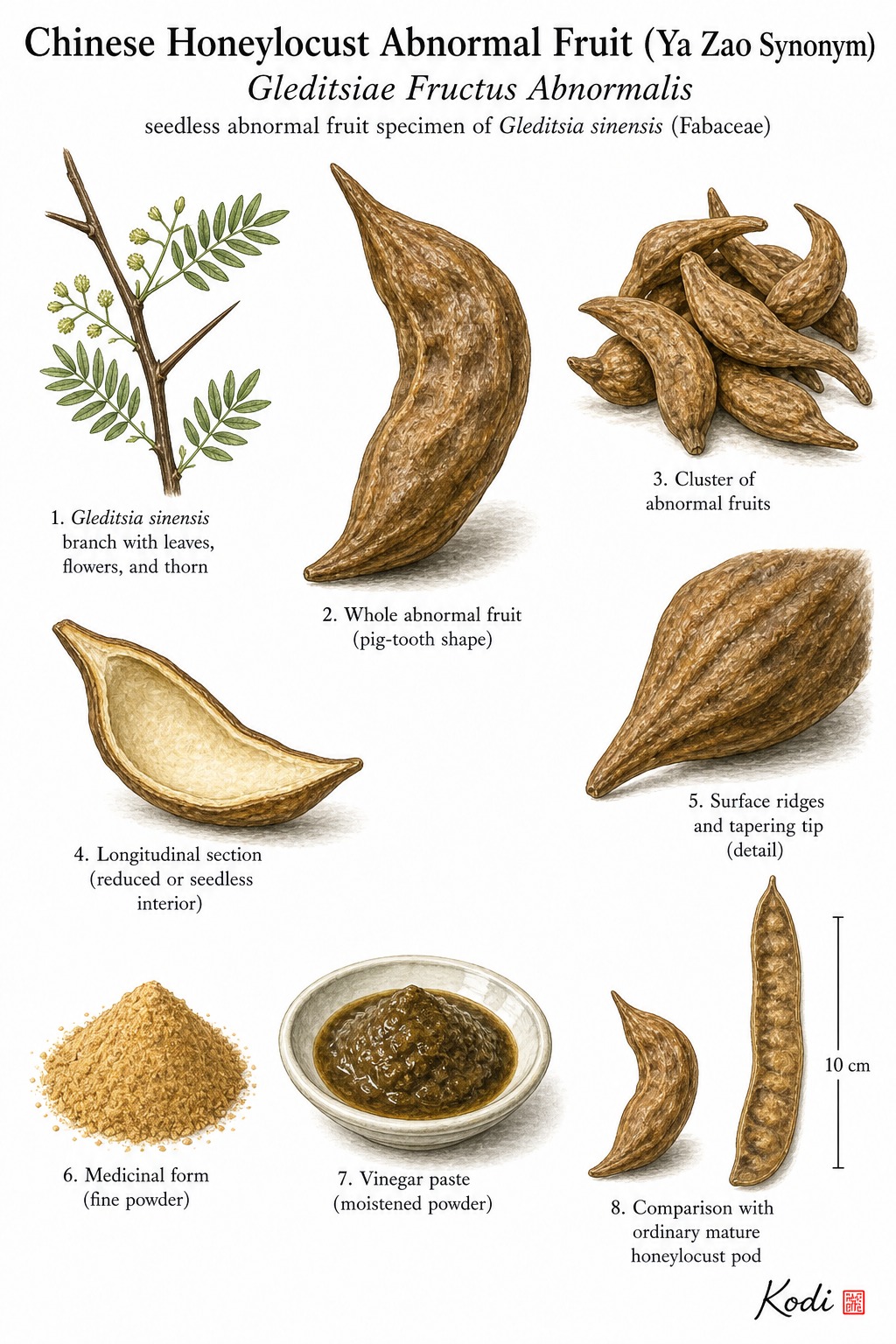
Known in TCM as Ya Zao (牙皂), this acrid and salty, warm herb enters the Lung and Large Intestine. Traditionally, it expels phlegm and opens the orifices in acute excess obstruction patterns - Ya Zao is used for thick phlegm blocking the throat and clear orifices, especially when loss of consciousness, lockjaw, seizures, or severe phlegm surging require a harsh opening herb, most often applied for stroke, epilepsy, and productive cough. Modern research has identified Gleditsioside among its active constituents.
Part used: Fruit
Also Known As
Latin: Gleditsiae Fructus Abnormalis | Pinyin: Ya Zao | Chinese: 牙皂
TCM Properties
- Taste
- acrid, salty
- Temperature
- warm
- Channels
- Lung, Large Intestine
Traditional Use
Primary Actions
- Expels phlegm and opens the orifices in acute excess obstruction patterns - Ya Zao is used for thick phlegm blocking the throat and clear orifices, especially when loss of consciousness, lockjaw, seizures, or severe phlegm surging require a harsh opening herb.
- Dissipates swelling and resolves toxic accumulations - powdered or pasted preparations are used externally for unruptured abscesses, boils, and stubborn swollen lesions.
- Opens blocked passages above and below - classical use also includes severe constipation, abdominal fullness, and other thick, fixed obstruction patterns where milder phlegm herbs are not enough.
Secondary Actions
- This entry represents a naming duplicate rather than a distinct herb: Ya Zao is a short or alternate name for Zhu Ya Zao (猪牙皂, herb #218), the seedless abnormal fruit of Gleditsia sinensis.
- Because it is slightly toxic and highly irritating, it is usually used in very small internal doses, as powder or pills, or externally rather than as a standard decoction herb.
Classical References
- SYNONYM NOTE: Ya Zao (牙皂) is a common alias for Zhu Ya Zao (猪牙皂), not a separate medicinal substance. The source spreadsheet imported the alias as its own row, so this entry preserves the duplicate name while pointing to the same medicinal identity.
- Me & Qi's historical notes on Zhu Ya Zao list Ya Zao among the alternate names for the same abnormal honeylocust fruit.
- The medicinal item is the dried sterile abnormal fruit of Gleditsia sinensis and shares the same classical actions, cautions, and modern research base as herb #218.
Modern Research
Active Compounds
- Gleditsioside B and related triterpenoid saponins - the best-known bioactive constituents of the abnormal fruit
- Oleanane-type and echinocystic-acid-related triterpenes - structural families repeatedly isolated from Gleditsia sinensis fruit material
- Saponin-rich fruit fractions - the broad chemical basis for the herb's harsh expectorant, irritant, and experimental antiproliferative effects
Studied Effects
- SYNONYM NOTE: Ya Zao is not a separate pharmacologic entity from Zhu Ya Zao. The anomalous-fruit literature on gleditsioside B, inflammatory airway models, and saponin cytotoxicity applies to the same medicinal item represented fully in herb #218.
PubMed References
- Gleditsioside B, a triterpene saponin isolated from the anomalous fruits of Gleditsia sinensis Lam., abrogates bFGF-induced endothelial cell migration through preventing the activation of MMP-2 and FAK via inhibiting ERK and PI3K/AKT signaling pathways (2013)
- Gleditsia sinensis Lam. aqueous extract attenuates nasal inflammation in allergic rhinitis by inhibiting MUC5AC production through suppression of the STAT3/STAT6 pathway (2023)
- Structure-activity relationships of saponins from Gleditsia sinensis in cytotoxicity and induction of apoptosis (2004)
Safety & Interactions
Contraindications
- Pregnancy
- Active hemoptysis or hematemesis
- Qi deficiency or Yin deficiency without substantial phlegm obstruction
Cautions
- This entry is a synonym of Zhu Ya Zao (herb #218) and shares the same slight toxicity and strong mucosal irritation profile
- Internal use requires very small doses because overdose can cause intense nausea, vomiting, abdominal pain, and profuse diarrhea
- Use cautiously in bleeding tendency or when combined with drugs that increase bleeding or gastric irritation
Drug Interactions
- Anticoagulant and antiplatelet drugs: theoretical increased bleeding or blood-related risk because irritating saponins may aggravate fragile mucosa and hemolytic effects are reported at high concentrations
- Mucosal-irritant medications such as NSAIDs: concurrent use may increase gastrointestinal irritation
- Sedatives and CNS depressants: theoretical conflict when the herb is used as an acute stimulating orifice-opening intervention
Conditions
- Stroke Traditional ★★★★☆ JSON
- Epilepsy Traditional ★★★☆☆ JSON
- Productive Cough Traditional ★★★☆☆ JSON
- Constipation Traditional ★★☆☆☆ JSON
- Abscess Traditional ★★☆☆☆ JSON
Frequently Asked Questions
What is Chinese Honeylocust Abnormal Fruit (Ya Zao - Synonym) used for?
Chinese Honeylocust Abnormal Fruit (Ya Zao - Synonym) is traditionally used to Expels phlegm and opens the orifices in acute excess obstruction patterns - Ya Zao is used for thick phlegm blocking the throat and clear orifices, especially when loss of consciousness, lockjaw, seizures, or severe phlegm surging require a harsh opening herb., Dissipates swelling and resolves toxic accumulations - powdered or pasted preparations are used externally for unruptured abscesses, boils, and stubborn swollen lesions., Opens blocked passages above and below - classical use also includes severe constipation, abdominal fullness, and other thick, fixed obstruction patterns where milder phlegm herbs are not enough.. Research has investigated its effects on: SYNONYM NOTE: Ya Zao is not a separate pharmacologic entity from Zhu Ya Zao. The anomalous-fruit literature on gleditsioside B, inflammatory airway models, and saponin cytotoxicity applies to the same medicinal item represented fully in herb #218..
What are other names for Chinese Honeylocust Abnormal Fruit (Ya Zao - Synonym)?
Chinese Honeylocust Abnormal Fruit (Ya Zao - Synonym) is also known as Gleditsia. In TCM: 牙皂 (Ya Zao); Gleditsiae Fructus Abnormalis.
Is Chinese Honeylocust Abnormal Fruit (Ya Zao - Synonym) safe during pregnancy?
Chinese Honeylocust Abnormal Fruit (Ya Zao - Synonym) is not recommended during pregnancy.
What are the contraindications for Chinese Honeylocust Abnormal Fruit (Ya Zao - Synonym)?
Chinese Honeylocust Abnormal Fruit (Ya Zao - Synonym) should not be used in: Pregnancy; Active hemoptysis or hematemesis; Qi deficiency or Yin deficiency without substantial phlegm obstruction. Consult a qualified practitioner before use.
Does Chinese Honeylocust Abnormal Fruit (Ya Zao - Synonym) interact with any medications?
Chinese Honeylocust Abnormal Fruit (Ya Zao - Synonym) may interact with: Anticoagulant and antiplatelet drugs: theoretical increased bleeding or blood-related risk because irritating saponins may aggravate fragile mucosa and hemolytic effects are reported at high concentrations; Mucosal-irritant medications such as NSAIDs: concurrent use may increase gastrointestinal irritation; Sedatives and CNS depressants: theoretical conflict when the herb is used as an acute stimulating orifice-opening intervention. Always inform your healthcare provider of any herbal supplements you are taking.