Chlorpheniramine Maleate
- Chinese
- 扑尔敏
- Pinyin
- Pu Er Min
- Latin
- Chlorpheniramini Maleas
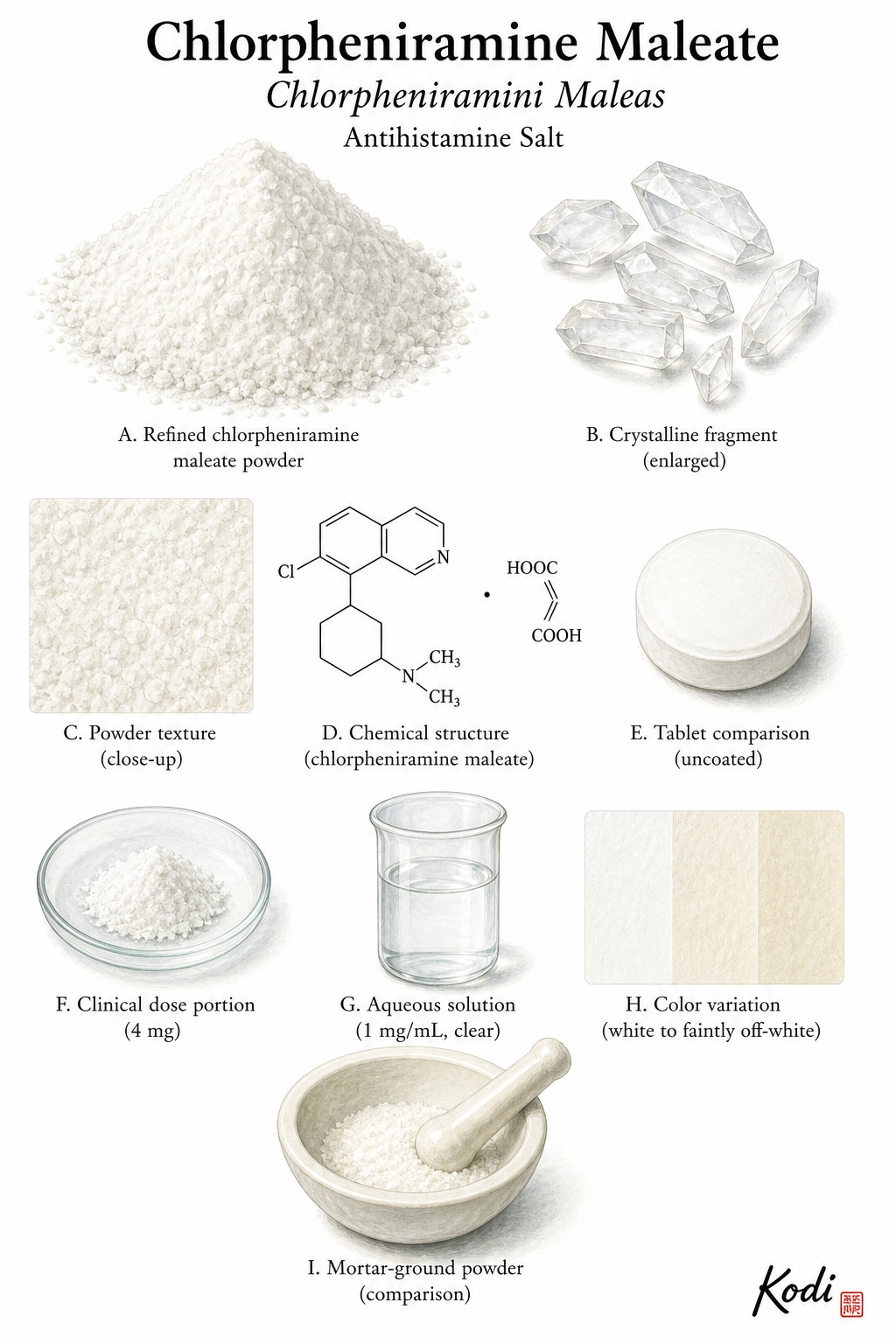
Known in TCM as Pu Er Min (扑尔敏). Traditionally, it import-variant modern drug record rather than a classical herb - chlorpheniramine maleate is a first-generation H1-antihistamine used in modern medicine, not a traditional decoction herb, most often applied for urticaria and common cold. Modern research has identified Chlorpheniramine among its active constituents.
Also Known As
Latin: Chlorpheniramini Maleas | Pinyin: Pu Er Min | Chinese: 扑尔敏
Traditional Use
Primary Actions
- Import-variant modern drug record rather than a classical herb - chlorpheniramine maleate is a first-generation H1-antihistamine used in modern medicine, not a traditional decoction herb.
- Relieves histamine-mediated allergic symptoms - its practical role is the reduction of sneezing, rhinorrhea, itching, urticaria, and related allergic irritation through H1-receptor blockade.
- Provides short-term symptomatic relief - it has long been used in oral, injectable, and topical or intranasal formulations for allergic rhinitis, urticaria, and common-cold combinations.
- Carries sedating anticholinergic effects - unlike non-sedating second-generation antihistamines, chlorpheniramine retains central and anticholinergic activity that shapes both its usefulness and its limitations.
Secondary Actions
- In integrated East Asian datasets, chlorpheniramine sometimes appears because it has been incorporated into modern combined remedies and hospital practice rather than because it belongs to classical materia medica.
- This file should therefore be read as a modern pharmacology entry retained for library completeness, not as a replacement for traditional pattern-based allergy or wind-heat treatment.
Classic Formulas
- No classical formulas - chlorpheniramine maleate belongs to modern pharmaceutical practice rather than traditional Chinese formula lineage.
Classical References
- IMPORT NOTE: The source XLSX imported this record as the modern drug chlorpheniramine maleate with the pinyin Pu Er Min. This is not a canonical Chinese materia-medica item.
- Its appearance in this library reflects modern crossover prescribing and compound import datasets rather than classical herb usage.
- Interpret this file as a contemporary antihistamine profile that coexists with, but does not replace, traditional herb-based management of allergy-related patterns.
Modern Research
Active Compounds
- Chlorpheniramine maleate - the maleate salt used in most oral and injectable pharmaceutical formulations
- Chlorpheniramine - the active first-generation alkylamine H1-antihistamine base
- Dexchlorpheniramine - the dextrorotatory isomer associated with much of the antihistaminic activity
- Desmethylchlorpheniramine and other metabolites - pharmacokinetic products relevant to duration and clearance
- Maleate counterion - formulation component important to stability but not the primary therapeutic driver
Studied Effects
- A modern review summarized chlorpheniramine's pharmacokinetic, bioavailability, and formulation considerations across species, reinforcing its long-standing role as a widely used but older-generation antihistamine (PMID 41458965).
- An intranasal chlorpheniramine maleate pilot trial improved allergic-rhinitis symptoms, illustrating continued interest in alternative delivery systems for an established drug (PMID 33816038).
- Earlier randomized controlled work supported chlorpheniramine's efficacy in chronic idiopathic urticaria, especially in combination antihistamine strategies (PMID 3307890).
- Safety literature includes rare but real chlorpheniramine-induced anaphylaxis, reminding clinicians that even common antihistamines can provoke severe hypersensitivity in susceptible patients (PMID 31852144).
PubMed References
- Relevant pharmacokinetics, bioavailability, and bioequivalence studies on Chlorpheniramine maleate (various species): a review (2025)
- A Randomized Controlled Pilot Trial to Test the Efficacy of Intranasal Chlorpheniramine Maleate With Xylitol for the Treatment of Allergic Rhinitis (2021)
- Cimetidine and chlorpheniramine in the treatment of chronic idiopathic urticaria: a multi-centre randomized double-blind study (1987)
- Chlorpheniramine-induced anaphylaxis: Two case reports and a retrospective review of pharmacovigilance database (2019)
Safety & Interactions
Contraindications
- Known hypersensitivity to chlorpheniramine or related antihistamines
- Narrow-angle glaucoma
- Urinary retention or severe prostatic obstruction
- Concurrent monoamine oxidase inhibitor use
Cautions
- Sedation, slowed reaction time, and impaired concentration are common enough that driving and alcohol co-use deserve explicit caution
- As a first-generation antihistamine, chlorpheniramine can produce anticholinergic adverse effects such as dry mouth, constipation, blurred vision, and urinary retention
- Older adults and young children are more vulnerable to paradoxical CNS effects, confusion, or excessive sedation
- Rare severe hypersensitivity reactions, including anaphylaxis, have been reported despite the drug's common routine use
Drug Interactions
- Alcohol and other CNS depressants … Additive sedation and psychomotor impairment may occur (Major) Source: Chlorpheniramine pharmacology and prescribing literature
- Monoamine oxidase inhibitors … MAO inhibitors can prolong and intensify anticholinergic and CNS effects (Major) Source: Chlorpheniramine pharmacology and prescribing literature
Conditions
- Urticaria Research ★★★☆☆ JSON
- Common Cold Clinical ★★☆☆☆ JSON
Frequently Asked Questions
What is Chlorpheniramine Maleate used for?
Chlorpheniramine Maleate is traditionally used to Import-variant modern drug record rather than a classical herb - chlorpheniramine maleate is a first-generation H1-antihistamine used in modern medicine, not a traditional decoction herb., Relieves histamine-mediated allergic symptoms - its practical role is the reduction of sneezing, rhinorrhea, itching, urticaria, and related allergic irritation through H1-receptor blockade., Provides short-term symptomatic relief - it has long been used in oral, injectable, and topical or intranasal formulations for allergic rhinitis, urticaria, and common-cold combinations., Carries sedating anticholinergic effects - unlike non-sedating second-generation antihistamines, chlorpheniramine retains central and anticholinergic activity that shapes both its usefulness and its limitations.. Research has investigated its effects on: A modern review summarized chlorpheniramine's pharmacokinetic, bioavailability, and formulation considerations across species, reinforcing its long-standing role as a widely used but older-generation antihistamine (PMID 41458965).; An intranasal chlorpheniramine maleate pilot trial improved allergic-rhinitis symptoms, illustrating continued interest in alternative delivery systems for an established drug (PMID 33816038)..
What are other names for Chlorpheniramine Maleate?
Chlorpheniramine Maleate is also known as Chlorpheniramini. In TCM: 扑尔敏 (Pu Er Min); Chlorpheniramini Maleas.
Is Chlorpheniramine Maleate safe during pregnancy?
The safety of Chlorpheniramine Maleate during pregnancy has not been established. Consult a qualified healthcare provider before use.
What are the contraindications for Chlorpheniramine Maleate?
Chlorpheniramine Maleate should not be used in: Known hypersensitivity to chlorpheniramine or related antihistamines; Narrow-angle glaucoma; Urinary retention or severe prostatic obstruction; Concurrent monoamine oxidase inhibitor use. Consult a qualified practitioner before use.
Does Chlorpheniramine Maleate interact with any medications?
Chlorpheniramine Maleate may interact with: Alcohol and other CNS depressants - Additive sedation and psychomotor impairment may occur - (Major severity); Monoamine oxidase inhibitors - MAO inhibitors can prolong and intensify anticholinergic and CNS effects - (Major severity). Always inform your healthcare provider of any herbal supplements you are taking.