Chrysanthemum Flower
- Chinese
- 菊花
- Pinyin
- Ju Hua
- Latin
- Flos Chrysanthemi
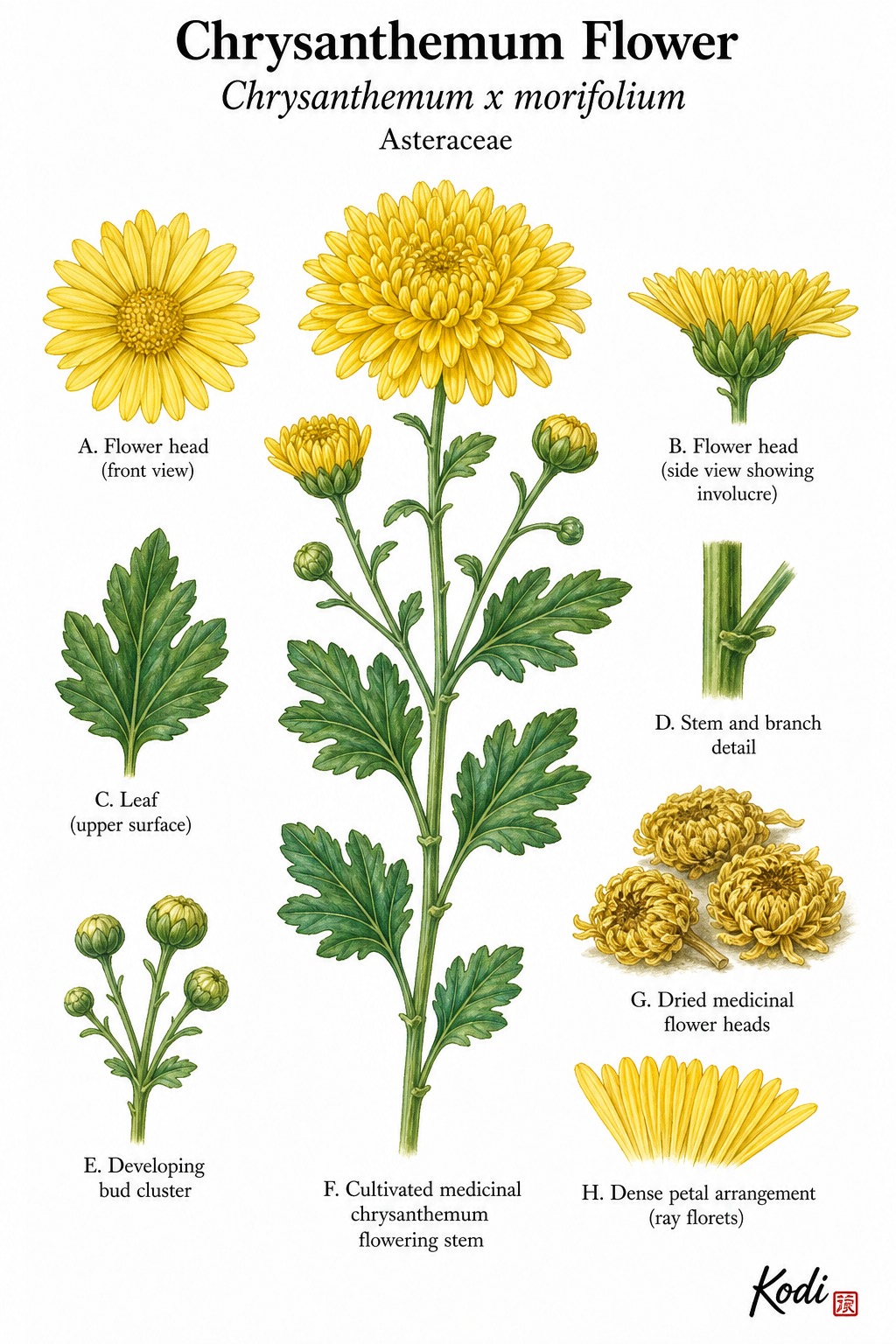
Known in TCM as Ju Hua (菊花), this sweet and bitter, cool herb enters the Liver and Lung. Traditionally, it disperses wind-heat and relieves the exterior - Ju Hua is classically used for early wind-heat patterns with fever, headache, sore throat, and especially cough or red-eye involvement, most often applied for conjunctivitis, migraine, and common cold. Modern research has identified Luteolin among its active constituents.
Part used: Flower
Also Known As
Latin: Flos Chrysanthemi | Pinyin: Ju Hua | Chinese: 菊花
TCM Properties
- Taste
- sweet, bitter
- Temperature
- cool
- Channels
- Liver, Lung
Traditional Use
Primary Actions
- Disperses wind-heat and relieves the exterior - Ju Hua is classically used for early wind-heat patterns with fever, headache, sore throat, and especially cough or red-eye involvement.
- Clears Liver heat and brightens the eyes - it is one of the foundational TCM flowers for red, swollen, painful, dry, or blurry eyes arising from Liver heat or wind-heat.
- Calms ascending Liver Yang - traditional use includes dizziness, headache, and visual disturbance when Yang rises upward and disturbs the head and sense organs.
- Clears heat and resolves toxicity - beyond eye disease, Ju Hua is applied to sores, carbuncles, and hot inflammatory swellings in formulas that combine cooling and dispersing methods.
Secondary Actions
- Ju Hua is gentle enough for teas and food-medicine use, which helps explain its unusually broad everyday presence compared with many stronger exterior-releasing herbs.
- Flower type matters in practice: white and yellow chrysanthemum preparations overlap heavily, but source, cultivar, and processing can subtly shift emphasis toward eye, wind-heat, or detoxifying uses.
Classic Formulas
- Sang Ju Yin (桑菊饮) - the classic wind-heat cough formula in which Ju Hua vents the exterior while helping protect the Lung and eyes.
- Ling Jiao Gou Teng Tang (羚角钩藤汤) - Ju Hua helps cool the Liver and quell wind in warm-disease patterns with tremor, irritability, and headache.
- Qi Ju Di Huang Wan (杞菊地黄丸) - one of the best-known formulas pairing Ju Hua with Gou Qi Zi and Liu Wei Di Huang Wan logic for Liver-Kidney deficiency with visual disturbance.
Classical References
- Shen Nong Ben Cao Jing and later materia-medica traditions classify Ju Hua as an upper-grade herb associated with longevity, eye health, and wind-heat relief.
- Ben Cao Gang Mu details the flower's use for eye disorders, dizziness, and wind patterns, helping anchor its long classical identity.
- Warm-disease formula literature, especially Sang Ju Yin traditions, cements Ju Hua as one of the signature flowers for early wind-heat with cough and eye symptoms.
Modern Research
Active Compounds
- Luteolin - one of the best-studied anti-inflammatory flavonoids in chrysanthemum flowers
- Luteolin-7-O-glucoside (luteoloside) - a major glycoside strongly associated with anti-inflammatory and vascular effects
- Chlorogenic acid and isochlorogenic acids - phenolic acids contributing antioxidant and metabolic activity
- Apigenin-7-O-glucoside and acacetin - additional flavonoids relevant to anti-inflammatory and vascular research
- Quercetin derivatives - supporting antioxidant constituents within the broader polyphenol profile
Studied Effects
- Chrysanthemum flavonoids, including luteolin and luteoloside, reduced total cholesterol, triglycerides, and LDL while increasing HDL in hyperlipidemia models, supporting a broader cardiometabolic research profile (PMID 34439559).
- Cultivar studies of Chrysanthemum morifolium documented strong antioxidant and antibacterial activity alongside substantial variation in major polyphenolic compounds (PMID 33746281).
- Flavonoids from chrysanthemum flowers demonstrated cytotoxic activity against human colon-cancer cells in preclinical work, illustrating an additional research direction beyond traditional wind-heat use (PMID 20183323).
- Memorial Sloan Kettering also notes CYP3A4 and P-glycoprotein interaction potential, which is particularly relevant for concentrated extracts or heavy tea use around narrow-therapeutic-index drugs.
PubMed References
- Hypolipidemic Effects and Preliminary Mechanism of Chrysanthemum Flavonoids, Its Main Components Luteolin and Luteoloside in Hyperlipidemia Rats (2021)
- Variation in bioactive compounds, antioxidant and antibacterial activity of Iranian Chrysanthemum morifolium cultivars and determination of major polyphenolic compounds based on HPLC analysis (2021)
- Cytotoxic activity of flavonoids from the flowers of Chrysanthemum morifolium on human colon cancer Colon205 cells (2010)
Safety & Interactions
Contraindications
- Ragweed or Asteraceae family allergy
- Patients with clear cold deficiency patterns aggravated by cool herbs
Cautions
- Chrysanthemum can trigger cross-reactive allergy in people sensitive to ragweed and related Asteraceae plants
- Large amounts of cool chrysanthemum tea may aggravate chronic loose stools, poor appetite, or cold middle-burner patterns
- Concentrated extracts may interact more strongly than ordinary tea-level intake
- A documented transplant case and in-vitro work support caution around CYP3A4 and P-glycoprotein substrate drugs
Drug Interactions
- CYP3A4 substrate drugs … Chrysanthemum extracts may alter CYP3A4 activity and change blood levels of susceptible drugs (Moderate) Source: Memorial Sloan Kettering Integrative Medicine - Chrysanthemum
- P-glycoprotein substrate drugs … Chrysanthemum may inhibit P-gp transport and increase exposure to susceptible medications (Moderate) Source: Memorial Sloan Kettering Integrative Medicine - Chrysanthemum
Conditions
- Conjunctivitis Traditional ★★★★☆ JSON
- Migraine Traditional ★★★☆☆ JSON
- Common Cold Traditional ★★★★☆ JSON
- Hypertension Preclinical ★★☆☆☆ JSON
- High Cholesterol Research ★★★☆☆ JSON
Frequently Asked Questions
What is Chrysanthemum Flower used for?
Chrysanthemum Flower is traditionally used to Disperses wind-heat and relieves the exterior - Ju Hua is classically used for early wind-heat patterns with fever, headache, sore throat, and especially cough or red-eye involvement., Clears Liver heat and brightens the eyes - it is one of the foundational TCM flowers for red, swollen, painful, dry, or blurry eyes arising from Liver heat or wind-heat., Calms ascending Liver Yang - traditional use includes dizziness, headache, and visual disturbance when Yang rises upward and disturbs the head and sense organs., Clears heat and resolves toxicity - beyond eye disease, Ju Hua is applied to sores, carbuncles, and hot inflammatory swellings in formulas that combine cooling and dispersing methods.. Research has investigated its effects on: Chrysanthemum flavonoids, including luteolin and luteoloside, reduced total cholesterol, triglycerides, and LDL while increasing HDL in hyperlipidemia models, supporting a broader cardiometabolic research profile (PMID 34439559).; Cultivar studies of Chrysanthemum morifolium documented strong antioxidant and antibacterial activity alongside substantial variation in major polyphenolic compounds (PMID 33746281)..
What are other names for Chrysanthemum Flower?
Chrysanthemum Flower is also known as Chrysanthemi. In TCM: 菊花 (Ju Hua); Flos Chrysanthemi.
Is Chrysanthemum Flower safe during pregnancy?
The safety of Chrysanthemum Flower during pregnancy has not been established. Consult a qualified healthcare provider before use.
What are the contraindications for Chrysanthemum Flower?
Chrysanthemum Flower should not be used in: Ragweed or Asteraceae family allergy; Patients with clear cold deficiency patterns aggravated by cool herbs. Consult a qualified practitioner before use.
Does Chrysanthemum Flower interact with any medications?
Chrysanthemum Flower may interact with: CYP3A4 substrate drugs - Chrysanthemum extracts may alter CYP3A4 activity and change blood levels of susceptible drugs - (Moderate severity); P-glycoprotein substrate drugs - Chrysanthemum may inhibit P-gp transport and increase exposure to susceptible medications - (Moderate severity). Always inform your healthcare provider of any herbal supplements you are taking.