Clove Leaf
- Chinese
- 丁香叶
- Pinyin
- Ding Xiang Ye
- Latin
- Folium Caryophylli
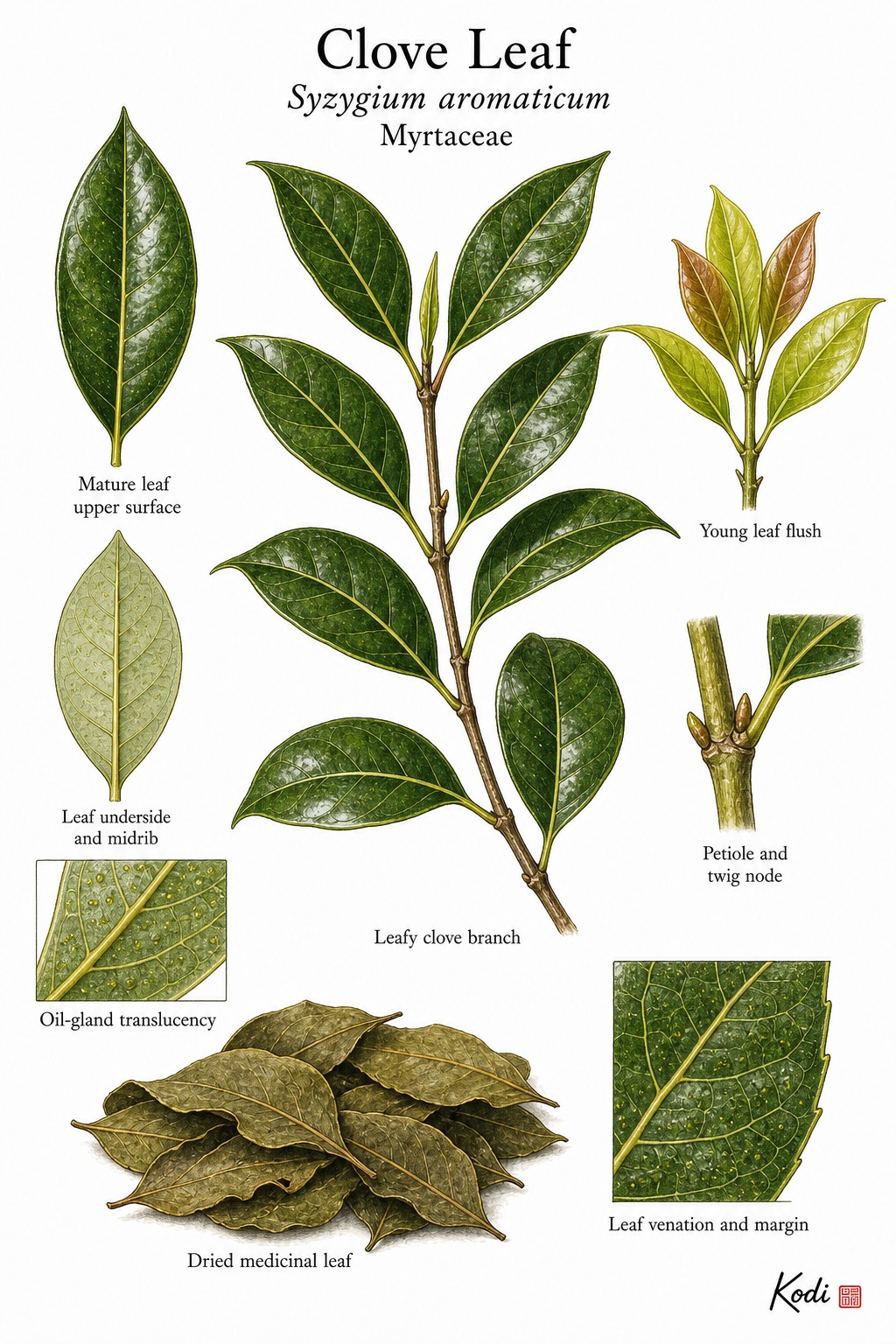
Known in TCM as Ding Xiang Ye (丁香叶), this acrid, warm herb enters the Spleen and Stomach. Traditionally, it provides a warming aromatic clove-leaf derivative for cold in the middle burner - Ding Xiang Ye is used more conservatively than the flower bud but follows the same broad warming and dispersing direction, most often applied for abdominal pain, nausea, and diarrhea. Modern research has identified Eugenol among its active constituents.
Part used: Leaf
Also Known As
Latin: Folium Caryophylli | Pinyin: Ding Xiang Ye | Chinese: 丁香叶
TCM Properties
- Taste
- acrid
- Temperature
- warm
- Channels
- Spleen, Stomach
Traditional Use
Primary Actions
- Provides a warming aromatic clove-leaf derivative for cold in the middle burner - Ding Xiang Ye is used more conservatively than the flower bud but follows the same broad warming and dispersing direction.
- Helps regulate rebellious Stomach Qi in mild cold-type nausea or epigastric discomfort - traditional use is secondary and generally less emphasized than for Ding Xiang proper.
- Acts as an aromatic source material for topical and oil preparations - the leaf's practical medicinal importance often lies in its volatile-oil content rather than in a large standalone decoction tradition.
Secondary Actions
- Compared with the famous flower bud, the leaf occupies a much thinner place in classical Chinese herbology and is often discussed mainly as a source of clove leaf oil or as a substitute material.
- This file therefore keeps the traditional claims modest and avoids overstating an independent formula history that the leaf does not clearly have.
Classic Formulas
- Ding Xiang Ye with Sheng Jiang or Huo Xiang - simple aromatic warming logic for mild cold discomfort in the stomach.
- Leaf-derived clove preparations in topical aromatic use - a practical lineage more than a famous classical decoction tradition.
Classical References
- Modern clove summaries recognize the leaf as part of the same Syzygium aromaticum medicinal system, but classical TCM writing focuses much more on Ding Xiang flower bud and Mu Ding Xiang fruit than on the leaf.
- The leaf is best understood as a warming aromatic derivative with a lighter traditional profile and stronger relevance to essential-oil production.
- Because of this limited independent classical footprint, the evidence and indications here are intentionally restrained.
Modern Research
Active Compounds
- Eugenol - the dominant constituent of clove leaf oil and the main driver of antimicrobial and analgesic interest
- Eugenyl acetate - a supporting aromatic constituent
- Beta-caryophyllene - a sesquiterpene relevant to anti-inflammatory discussions
- Volatile phenylpropanoid-rich essential oil fraction - the clinically relevant modern focus for the leaf
Studied Effects
- A 2017 study found that eugenol from clove leaf essential oil showed antibacterial and antibiofilm activity against Porphyromonas gingivalis, helping explain why leaf-derived clove preparations are relevant to oral and topical use even if they are not major classical decoction herbs (PMID 29101062).
- Broad Syzygium aromaticum reviews consistently describe strong antimicrobial, anti-inflammatory, and antioxidant activity across clove materials, including leaf-derived oil fractions (PMID 32019140).
- Recent essential-oil reviews continue to identify eugenol-rich clove oils from buds and leaves as important antimicrobial and anti-inflammatory materials, though those modern uses should not be mistaken for a robust classical Ding Xiang Ye canon (PMID 38474510).
PubMed References
- Antibacterial and antibiofilm activities of eugenol from essential oil of Syzygium aromaticum (L.) Merr. & L. M. Perry (clove) leaf against periodontal pathogen Porphyromonas gingivalis (2017)
- Syzygium aromaticum L. (Myrtaceae): Traditional Uses, Bioactive Chemical Constituents, Pharmacological and Toxicological Activities (2020)
- Antimicrobial Activity of Syzygium aromaticum Essential Oil in Human Health Treatment (2024)
Safety & Interactions
Contraindications
- Yin deficiency heat patterns
- Use of concentrated leaf oil on damaged mucosa without appropriate dilution
Cautions
- Leaf-derived clove products are often discussed through their essential oil, which is far more irritating than a mild aromatic leaf infusion or decoction.
- The independent classical record for Ding Xiang Ye is limited, so modern topical and antimicrobial discussions should not be projected backward into strong traditional claims.
- Eugenol-rich products may irritate the mouth, stomach, or skin if used too strongly.
Drug Interactions
- Anticoagulants or antiplatelet drugs - concentrated eugenol-rich leaf products may increase bleeding tendency
Conditions
Frequently Asked Questions
What is Clove Leaf used for?
Clove Leaf is traditionally used to Provides a warming aromatic clove-leaf derivative for cold in the middle burner - Ding Xiang Ye is used more conservatively than the flower bud but follows the same broad warming and dispersing direction., Helps regulate rebellious Stomach Qi in mild cold-type nausea or epigastric discomfort - traditional use is secondary and generally less emphasized than for Ding Xiang proper., Acts as an aromatic source material for topical and oil preparations - the leaf's practical medicinal importance often lies in its volatile-oil content rather than in a large standalone decoction tradition.. Research has investigated its effects on: A 2017 study found that eugenol from clove leaf essential oil showed antibacterial and antibiofilm activity against Porphyromonas gingivalis, helping explain why leaf-derived clove preparations are relevant to oral and topical use even if they are not major classical decoction herbs (PMID 29101062).; Broad Syzygium aromaticum reviews consistently describe strong antimicrobial, anti-inflammatory, and antioxidant activity across clove materials, including leaf-derived oil fractions (PMID 32019140)..
What are other names for Clove Leaf?
Clove Leaf is also known as Caryophylli. In TCM: 丁香叶 (Ding Xiang Ye); Folium Caryophylli.
Is Clove Leaf safe during pregnancy?
The safety of Clove Leaf during pregnancy has not been established. Consult a qualified healthcare provider before use.
What are the contraindications for Clove Leaf?
Clove Leaf should not be used in: Yin deficiency heat patterns; Use of concentrated leaf oil on damaged mucosa without appropriate dilution. Consult a qualified practitioner before use.
Does Clove Leaf interact with any medications?
Clove Leaf may interact with: Anticoagulants or antiplatelet drugs - concentrated eugenol-rich leaf products may increase bleeding tendency. Always inform your healthcare provider of any herbal supplements you are taking.