Cochinchinese Asparagus Root
- Chinese
- 天冬
- Pinyin
- Tian Dong
- Latin
- Radix Asparagi
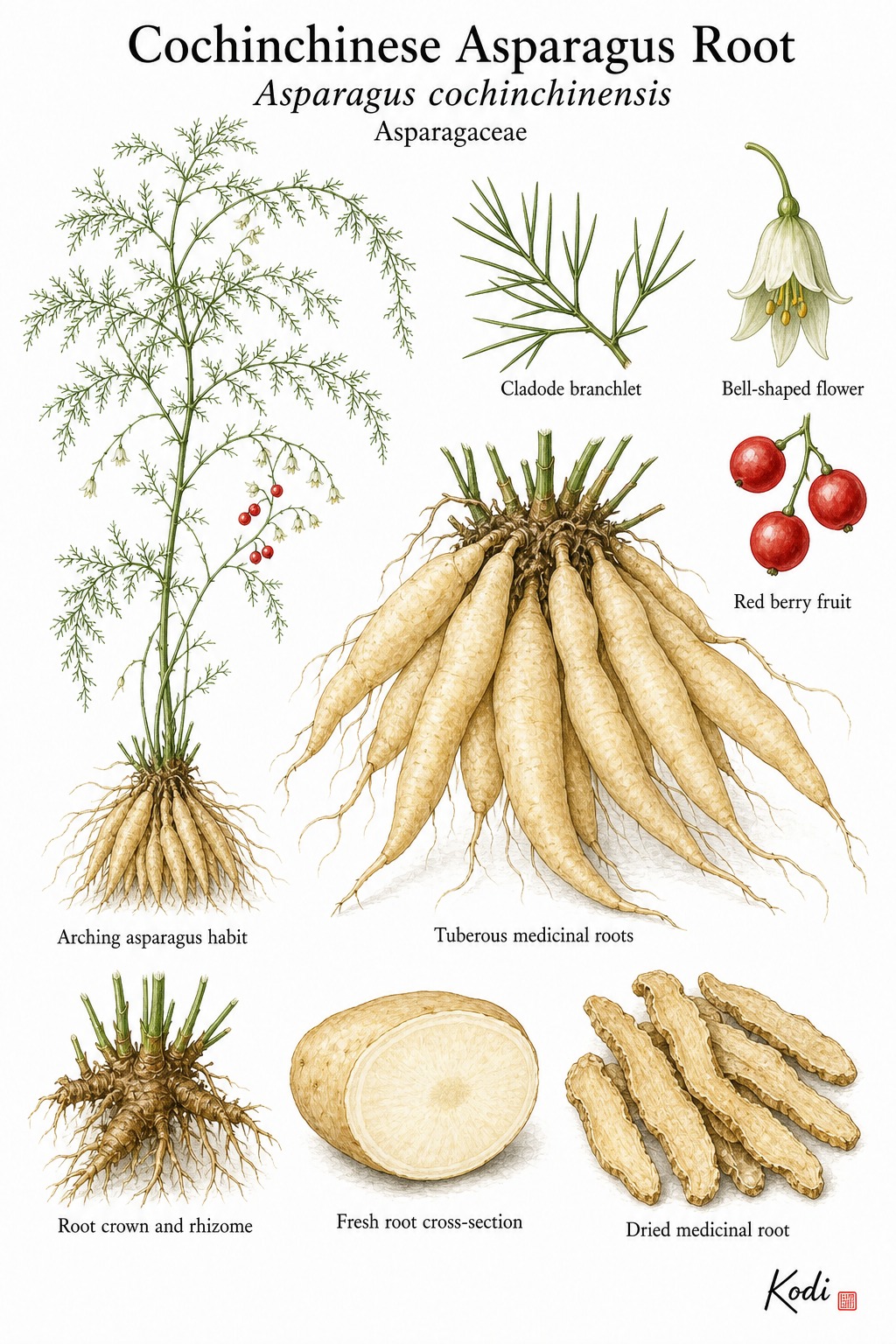
Known in TCM as Tian Dong (天冬), this bitter and sweet, cold herb enters the Kidney and Lung. Traditionally, it nourishes Yin and moistens dryness - Tian Dong is used for depletion of Lung and Kidney Yin with dry throat, chronic dryness, and internal heat from fluid damage, most often applied for dry cough, constipation, and diabetes. Modern research has identified Steroidal among its active constituents.
Part used: Root
Also Known As
Latin: Radix Asparagi | Pinyin: Tian Dong | Chinese: 天冬
TCM Properties
- Taste
- bitter, sweet
- Temperature
- cold
- Channels
- Kidney, Lung
Traditional Use
Primary Actions
- Nourishes Yin and moistens dryness - Tian Dong is used for depletion of Lung and Kidney Yin with dry throat, chronic dryness, and internal heat from fluid damage.
- Clears Lung heat and stops dry cough - it is especially relevant when cough is dry, sticky, irritating, or blood-streaked because heat and dryness are injuring the Lung.
- Generates fluids and addresses wasting-thirst patterns - traditional use includes thirst, dry mouth, and fluid depletion associated with diabetes-like presentations.
- Moistens the Intestines and relieves dry constipation - its moistening nature extends beyond the Lung into dry bowel patterns.
Secondary Actions
- This record represents Tian Men Dong under the shorter import name Tian Dong; the Latin, source plant, and core clinical identity are the same Radix Asparagi medicinal.
- Its cold and cloying Yin-nourishing quality is exactly why it helps dryness but can burden weak digestion if misused.
Classic Formulas
- Er Dong Tang - Tian Dong with Mai Men Dong for severe Yin dryness, thirst, and Lung depletion.
- Tian Wang Bu Xin Dan - Tian Dong serves as one of the Yin-nourishing herbs that moisten and calm deficiency-heat agitation.
- San Cai Tang - Tian Dong with Ren Shen and Sheng Di Huang for combined Qi-Yin depletion after chronic illness.
Classical References
- Shen Nong Ben Cao Jing places Tian Men Dong among superior herbs and later materia medica preserve its identity as a major Lung-Kidney Yin medicinal.
- Traditional summaries describe it as bitter, sweet, and cold, entering the Lung and Kidney to nourish Yin, clear heat, moisten dryness, generate fluids, and unblock the bowels.
- IDENTITY NOTE: this file uses the shorter pinyin Tian Dong, but the medicinal corresponds to the same Radix Asparagi already known in the library as Tian Men Dong.
Modern Research
Active Compounds
- Steroidal saponins including methyl protodioscin and related glycosides - major bioactive constituents in Asparagus cochinchinensis root
- Polysaccharides - high-molecular-weight fractions relevant to gut, immune, and moistening research
- Lignans and C21-steroidal constituents - supporting phytochemical classes discussed in modern reviews
- Amino acids and smaller phenolic compounds - additional constituents contributing to the broader pharmacology profile
Studied Effects
- A 2022 review of Asparagus cochinchinensis summarized anti-inflammatory, anti-asthmatic, antioxidant, neuroprotective, gut-supportive, and metabolic research, while also reviewing the herb's traditional use for cough, constipation, fever, and thirst (PMID 36532772).
- Methyl protodioscin from Asparagus cochinchinensis roots attenuated airway inflammation by inhibiting cytokine production, offering a direct mechanistic bridge to Tian Dong's traditional dry-cough and Lung-heat indications (PMID 26379748).
- Fermented Asparagus cochinchinensis extract improved inflammatory features in an ovalbumin-challenged asthma model, supporting continued respiratory research interest in this Yin-moistening root (PMID 30310406).
- Preclinical work also suggests beneficial effects on gut microbiota and metabolic balance, showing why the herb is now studied beyond its classical respiratory profile (PMID 36313282).
PubMed References
- Asparagus cochinchinensis: A review of its botany, traditional uses, phytochemistry, pharmacology, and applications (2022)
- Methyl Protodioscin from the Roots of Asparagus cochinchinensis Attenuates Airway Inflammation by Inhibiting Cytokine Production (2015)
- Dose dependence and durability of the therapeutic effects of Asparagus cochinchinensis fermented extract in an ovalbumin-challenged asthma model (2018)
- Asparagus cochinchinensis alleviates disturbances of lipid metabolism and gut microbiota in high-fat diet-induced obesity mice (2022)
Safety & Interactions
Cautions
- Tian Dong is cold and somewhat cloying, so it can impair appetite or worsen loose stools in patients with weak Spleen-Yang digestion.
- Its strong moistening action is best matched to dryness and heat, not to damp-cold or already-slippery bowel patterns.
- Pregnancy use should remain practitioner-directed because formal human safety data are limited even though the herb is widely used traditionally.
Conditions
Frequently Asked Questions
What is Cochinchinese Asparagus Root used for?
Cochinchinese Asparagus Root is traditionally used to Nourishes Yin and moistens dryness - Tian Dong is used for depletion of Lung and Kidney Yin with dry throat, chronic dryness, and internal heat from fluid damage., Clears Lung heat and stops dry cough - it is especially relevant when cough is dry, sticky, irritating, or blood-streaked because heat and dryness are injuring the Lung., Generates fluids and addresses wasting-thirst patterns - traditional use includes thirst, dry mouth, and fluid depletion associated with diabetes-like presentations., Moistens the Intestines and relieves dry constipation - its moistening nature extends beyond the Lung into dry bowel patterns.. Research has investigated its effects on: A 2022 review of Asparagus cochinchinensis summarized anti-inflammatory, anti-asthmatic, antioxidant, neuroprotective, gut-supportive, and metabolic research, while also reviewing the herb's traditional use for cough, constipation, fever, and thirst (PMID 36532772).; Methyl protodioscin from Asparagus cochinchinensis roots attenuated airway inflammation by inhibiting cytokine production, offering a direct mechanistic bridge to Tian Dong's traditional dry-cough and Lung-heat indications (PMID 26379748)..
What are other names for Cochinchinese Asparagus Root?
Cochinchinese Asparagus Root is also known as Asparagi. In TCM: 天冬 (Tian Dong); Radix Asparagi.
Is Cochinchinese Asparagus Root safe during pregnancy?
The safety of Cochinchinese Asparagus Root during pregnancy has not been established. Consult a qualified healthcare provider before use.