Black Vinegar
- Chinese
- 黑醋
- Pinyin
- Hei Cu
- Latin
- Acetum Nigrum
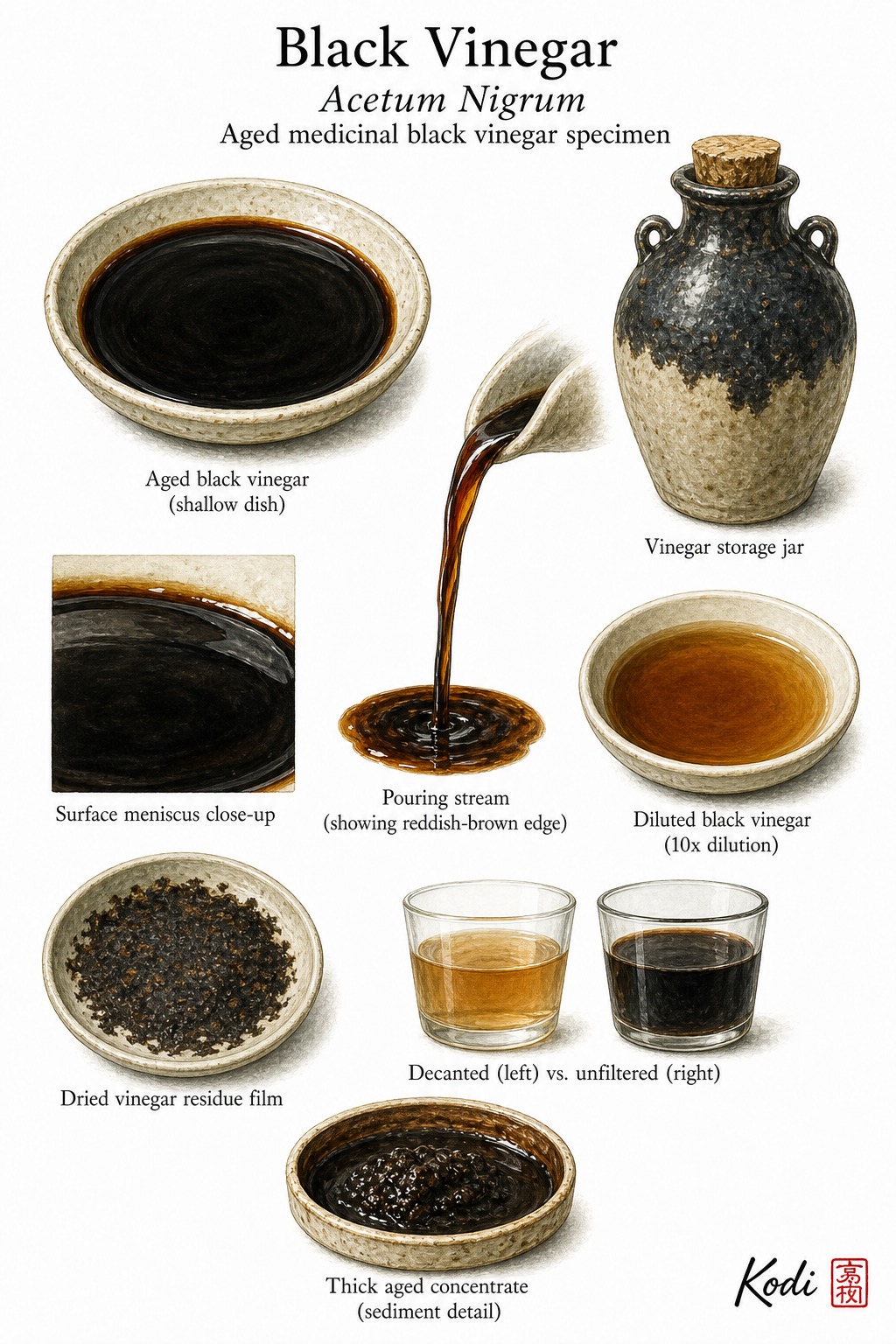
Known in TCM as Hei Cu (黑醋), this sour and bitter, warm herb enters the Liver and Stomach. Traditionally, it moves Blood and relieves pain - dark mature vinegar is used for fixed pain, postpartum stasis, traumatic discomfort, and gynecologic stagnation patterns where sour-warm movement to the Liver is desired, most often applied for blood stasis, hypochondriac pain, and indigestion. Modern research has identified Acetic among its active constituents.
Part used: Vinegar preparation
Also Known As
Latin: Acetum Nigrum | Pinyin: Hei Cu | Chinese: 黑醋
TCM Properties
- Taste
- sour, bitter
- Temperature
- warm
- Channels
- Liver, Stomach
Traditional Use
Primary Actions
- Moves Blood and relieves pain - dark mature vinegar is used for fixed pain, postpartum stasis, traumatic discomfort, and gynecologic stagnation patterns where sour-warm movement to the Liver is desired.
- Softens accumulation and harmonizes the middle - Hei Cu helps food stagnation, abdominal fullness, and rebellious Stomach discomfort when sour transformation and downward movement are needed.
- Acts as a processing adjuvant that guides other herbs to the Liver and Blood level - vinegar-frying is a classic paozhi method used to strengthen the pain-relieving and stasis-moving direction of many medicinals.
Secondary Actions
- Hei Cu is best understood as the mature medicinal black-vinegar form within the broader vinegar category rather than as a separate isolated chemical substance.
- It is used both directly and as an adjuvant in herb processing, so part of its clinical importance lies in how it changes the direction and accessibility of other medicinals.
Classical References
- Traditional processing theory repeatedly states that vinegar guides herbs to the Liver channel and enhances their ability to move Blood and relieve pain.
- Later paozhi literature treats mature black vinegar as especially suitable for formulas directed at constrained Liver patterns, fixed pain, and accumulations below the diaphragm.
- This file preserves the imported typo slug while correcting the content to the medicinal black-vinegar idea conveyed by Hei Cu.
Modern Research
Active Compounds
- Acetic acid - the core active organic acid that defines medicinal vinegar activity
- Polyphenols and phenolic acids - variable antioxidant constituents enriched in some aged dark vinegars
- Melanoidins - fermentation and aging products associated with dark color and antioxidant interest
- Minor organic acids and amino-acid derivatives - supportive constituents that contribute to flavor, acidity, and bioactivity
Studied Effects
- A systematic review and meta-analysis found that dietary acetic acid intake can modestly improve plasma glucose, lipid parameters, and body-mass-related measures, providing a modern metabolic context for long-standing vinegar use in food-medicine traditions (PMID 33436350).
- Acetic acid shows meaningful antibacterial and antibiofilm activity against clinically relevant pathogens, which helps rationalize older topical or preservative-oriented uses of medicinal vinegar (PMID 26155378; PMID 26352256).
- Modern TCM processing research continues to show that vinegar-processing can shift the chemistry and therapeutic emphasis of co-processed herbs, matching the classical claim that vinegar changes medicinal direction toward the Liver and Blood level (PMID 39395324).
PubMed References
- Effect of Dietary Acetic Acid Supplementation on Plasma Glucose, Lipid Profiles, and Body Mass Index in Human Adults: A Systematic Review and Meta-analysis (2021)
- Antibiofilm Properties of Acetic Acid (2015)
- The processing mechanism of vinegar-processed Curcumae Rhizome enhances anti hepatic fibrotic effects through regulation of PI3K/Akt/mTOR signaling pathway (2024)
Safety & Interactions
Contraindications
- Active gastric ulcer or severe acid-sensitive epigastric pain
- Chronic diarrhea from pronounced middle-burner deficiency if large medicinal doses are used
Cautions
- Concentrated vinegar can irritate the teeth, throat, and gastric mucosa, so medicinal use should stay appropriately diluted or embedded in formulas.
- Overuse may worsen acid-sensitive reflux or stomach irritation despite the herb's traditional digestive role in some stagnant patterns.
- MSK page not found - drug interaction data not available from Memorial Sloan Kettering integrative medicine database
Conditions
- Blood Stasis Traditional ★★★☆☆ JSON
- Hypochondriac Pain Traditional ★★★☆☆ JSON
- Indigestion Traditional ★★★☆☆ JSON
- Abdominal Pain Traditional ★★☆☆☆ JSON
Frequently Asked Questions
What is Black Vinegar used for?
Black Vinegar is traditionally used to Moves Blood and relieves pain - dark mature vinegar is used for fixed pain, postpartum stasis, traumatic discomfort, and gynecologic stagnation patterns where sour-warm movement to the Liver is desired., Softens accumulation and harmonizes the middle - Hei Cu helps food stagnation, abdominal fullness, and rebellious Stomach discomfort when sour transformation and downward movement are needed., Acts as a processing adjuvant that guides other herbs to the Liver and Blood level - vinegar-frying is a classic paozhi method used to strengthen the pain-relieving and stasis-moving direction of many medicinals.. Research has investigated its effects on: A systematic review and meta-analysis found that dietary acetic acid intake can modestly improve plasma glucose, lipid parameters, and body-mass-related measures, providing a modern metabolic context for long-standing vinegar use in food-medicine traditions (PMID 33436350).; Acetic acid shows meaningful antibacterial and antibiofilm activity against clinically relevant pathogens, which helps rationalize older topical or preservative-oriented uses of medicinal vinegar (PMID 26155378; PMID 26352256)..
What are other names for Black Vinegar?
Black Vinegar is also known as Nigrum. In TCM: 黑醋 (Hei Cu); Acetum Nigrum.
Is Black Vinegar safe during pregnancy?
The safety of Black Vinegar during pregnancy has not been established. Consult a qualified healthcare provider before use.
What are the contraindications for Black Vinegar?
Black Vinegar should not be used in: Active gastric ulcer or severe acid-sensitive epigastric pain; Chronic diarrhea from pronounced middle-burner deficiency if large medicinal doses are used. Consult a qualified practitioner before use.