Green Vitriol
- Chinese
- 皂矾
- Pinyin
- Zao Fan
- Latin
- Melanteritum
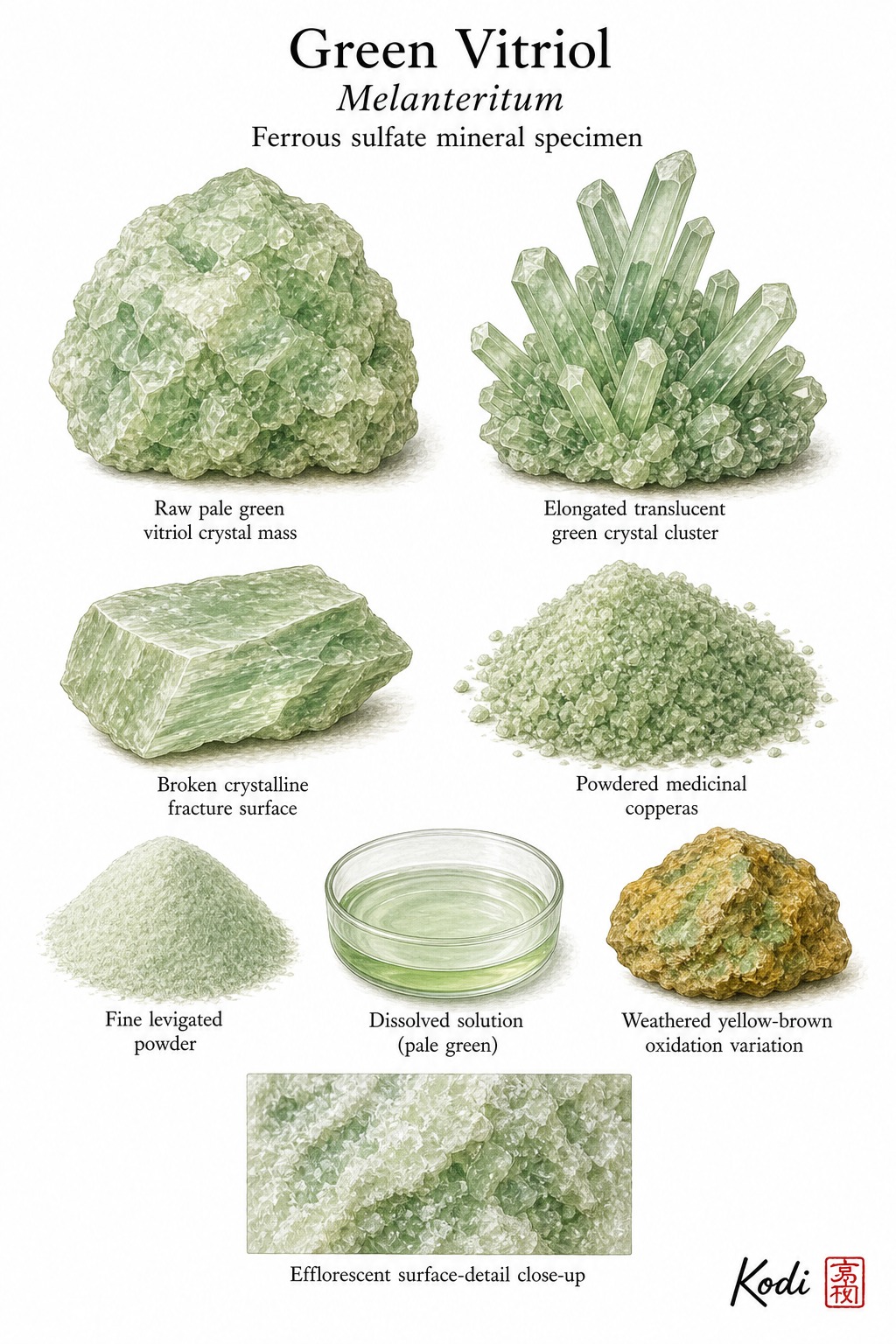
Known in TCM as Zao Fan (皂矾), this sour and astringent, cool herb enters the Spleen, Liver, and Lung. Traditionally, it dries Dampness and resolves Phlegm - Zao Fan is used for chronic damp obstruction with diarrhea, dysentery, edema, or jaundice where a drying mineral approach is desired, most often applied for anemia, diarrhea, and dysentery. Modern research has identified Ferrous among its active constituents.
Part used: Melanterite
TCM Properties
- Taste
- sour, astringent
- Temperature
- cool
- Channels
- Spleen, Liver, Lung
Traditional Use
Primary Actions
- Dries Dampness and resolves Phlegm - Zao Fan is used for chronic damp obstruction with diarrhea, dysentery, edema, or jaundice where a drying mineral approach is desired.
- Kills parasites and reduces toxic accumulations - classical uses include malnutrition with parasites, chronic sores, eczema, scabies, and other stubborn damp-toxic skin presentations.
- Stops bleeding and supports Blood repletion in older practice - because it is an iron salt, it was historically used in pill or powder form for hematochezia, chronic bleeding states, and deficiency-related pallor rather than as a decocted daily tonic.
Secondary Actions
- Zao Fan belongs more to the mineral and external-use edge of Chinese medicine than to the mainstream decoction center, and many traditions prefer it in pills, powders, or topical preparations.
- Its traditional range is broad, but internal use is reserved for selected cases because the same astringent iron chemistry that gives it utility can also make it harsh on the stomach.
Classical References
- Traditional herb manuals classify Zao Fan among specialized external or harsh mineral agents, describing a sour, astringent, cooling substance that dries dampness, controls chronic bowel disorders, and checks bleeding.
- Later practical guides emphasize that it is usually taken as a pill or powder rather than boiled in ordinary decoction, which reflects both its mineral nature and its tendency to irritate the stomach.
- Historic usage also linked Zao Fan with blood-deficiency pallor and chronic intestinal bleeding, an observation that fits its identity as a ferrous sulfate mineral.
Modern Research
Active Compounds
- Ferrous sulfate heptahydrate - the principal iron salt traditionally identified as green vitriol or copperas
- Ferrous iron - the physiologically relevant iron form responsible for the mineral's antianemic potential
- Sulfate salts - the acidic astringent matrix that contributes to local irritant and drying effects
Studied Effects
- Modern pharmacology recognizes ferrous sulfate as a well-established oral iron source for iron-deficiency anemia, which helps explain older Chinese medical uses of Zao Fan in pallor and chronic deficiency-bleeding contexts.
- The same iron-salt chemistry that supports blood repletion also explains why the substance is locally astringent and potentially irritating to the stomach and mucosa when used improperly.
Safety & Interactions
Contraindications
- Pregnancy
- Active gastritis, peptic ulcer, or severe stomach irritation
- Large unsupervised internal doses
- Use as an ordinary decocted supplement
Cautions
- Internal Zao Fan can cause nausea, abdominal pain, vomiting, constipation, or diarrhea if the dose is excessive or the stomach is weak.
- Traditional practice generally prefers pills, powders, or external use rather than long boiled decoctions.
- Because it is fundamentally an iron salt, modern medication-style absorption issues matter when it is taken internally.
- MSK page not found - drug interaction data not available from Memorial Sloan Kettering integrative medicine database
Drug Interactions
- Tetracycline or fluoroquinolone antibiotics - ferrous iron can reduce drug absorption
- Levothyroxine - ferrous iron can reduce absorption
- Antacids or high-calcium supplements - may reduce iron absorption from internal Zao Fan use
Conditions
Frequently Asked Questions
What is Green Vitriol used for?
Green Vitriol is traditionally used to Dries Dampness and resolves Phlegm - Zao Fan is used for chronic damp obstruction with diarrhea, dysentery, edema, or jaundice where a drying mineral approach is desired., Kills parasites and reduces toxic accumulations - classical uses include malnutrition with parasites, chronic sores, eczema, scabies, and other stubborn damp-toxic skin presentations., Stops bleeding and supports Blood repletion in older practice - because it is an iron salt, it was historically used in pill or powder form for hematochezia, chronic bleeding states, and deficiency-related pallor rather than as a decocted daily tonic.. Research has investigated its effects on: Modern pharmacology recognizes ferrous sulfate as a well-established oral iron source for iron-deficiency anemia, which helps explain older Chinese medical uses of Zao Fan in pallor and chronic deficiency-bleeding contexts.; The same iron-salt chemistry that supports blood repletion also explains why the substance is locally astringent and potentially irritating to the stomach and mucosa when used improperly..
Is Green Vitriol safe during pregnancy?
Green Vitriol is not recommended during pregnancy.
What are the contraindications for Green Vitriol?
Green Vitriol should not be used in: Pregnancy; Active gastritis, peptic ulcer, or severe stomach irritation; Large unsupervised internal doses; Use as an ordinary decocted supplement. Consult a qualified practitioner before use.
Does Green Vitriol interact with any medications?
Green Vitriol may interact with: Tetracycline or fluoroquinolone antibiotics - ferrous iron can reduce drug absorption; Levothyroxine - ferrous iron can reduce absorption; Antacids or high-calcium supplements - may reduce iron absorption from internal Zao Fan use. Always inform your healthcare provider of any herbal supplements you are taking.