Acalypha Herb
- Chinese
- 铁苋菜
- Pinyin
- Tie Xian Cai
- Latin
- Herba Acalyphae
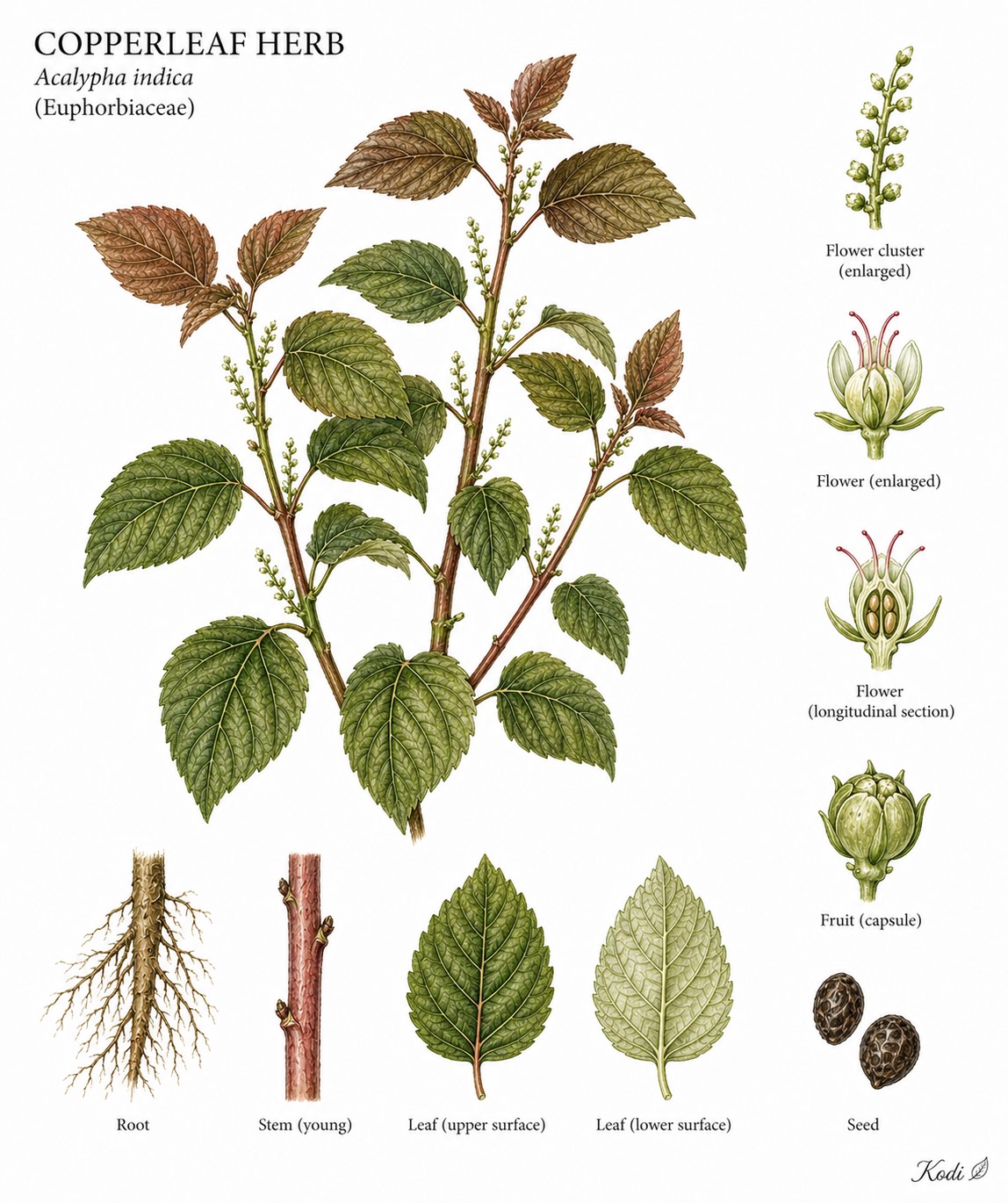
Known in TCM as Tie Xian Cai (铁苋菜), this bitter and astringent, cool herb enters the Heart and Lung. Traditionally, it clears Heat and resolves toxicity - Tie Xian Cai is used for enteritis, dysentery, hepatitis-type heat, sores, boils, and damp-toxic skin lesions where cooling and detoxifying action is needed, most often applied for dysentery, diarrhea, and hematuria. Modern research has identified Acalyphine among its active constituents.
Part used: Whole herb
Also Known As
Latin: Herba Acalyphae | Pinyin: Tie Xian Cai | Chinese: 铁苋菜
TCM Properties
- Taste
- bitter, astringent
- Temperature
- cool
- Channels
- Heart, Lung
Traditional Use
Primary Actions
- Clears Heat and resolves toxicity - Tie Xian Cai is used for enteritis, dysentery, hepatitis-type heat, sores, boils, and damp-toxic skin lesions where cooling and detoxifying action is needed.
- Checks dysentery and stops bleeding - classical indications include bloody stool, hematuria, epistaxis, hematemesis, metrorrhagia, and traumatic bleeding, especially when heat and dampness damage the collaterals.
- Reduces stagnation and damp accumulation - the herb is also used in children for nutritional accumulation and in adults for chronic bowel irritation with heat-damp obstruction.
Secondary Actions
- External use is common for snakebite, eczema, dermatitis, and minor traumatic bleeding because the fresh herb can be pounded directly onto the affected area.
- Its profile overlaps with other heat-clearing whole herbs, but Tie Xian Cai stands out for combining detoxification, bowel-focused use, and a clear hemostatic reputation.
Classical References
- Traditional herb sources describe Tie Xian Cai as bitter, astringent, and cool, entering the Heart and Lung channels while treating dysentery, bleeding, sores, and toxic swellings.
- Regional Chinese practice preserved especially broad use of the whole plant in bowel disorders, hematuria, epistaxis, and externally for eczema or traumatic bleeding.
- Older indications also include infantile malnutrition and malaria-type febrile disorders, reflecting the herb's role as a practical folk and local materia medica drug rather than a narrow elite classic tonic.
Modern Research
Active Compounds
- Acalyphine and related alkaloid-like constituents - marker compounds discussed in older phytochemical literature
- Tannins and phenolic acids - astringent constituents relevant to hemostatic and antimicrobial actions
- Flavonoids and other polyphenols - antioxidant and anti-inflammatory fractions identified in modern extracts
- Antibacterial fractions from the whole herb - bioactive constituents traced through spectrum-effect research
Studied Effects
- Acalypha australis extract suppressed NF-kappaB signaling and reduced inflammatory injury in cell and septic-mouse models, supporting the traditional heat-clearing and detoxifying reputation of Tie Xian Cai (PMID 32014631).
- Bio-affinity ultrafiltration work identified potential hemostatic compounds in Acalypha australis targeting urokinase plasminogen activator, which fits the herb's long-standing role in stopping bleeding (PMID 37571866).
- Modern studies have also traced antibacterial fractions from Acalypha australis and shown benefit in colitis-related inflammatory models, linking the herb's traditional bowel use with contemporary anti-infective and anti-inflammatory research (PMID 23495243; PMID 40049341).
PubMed References
- Anti-inflammatory effect of Acalypha australis L. via suppression of NF-kappaB signaling in LPS-stimulated RAW 264.7 macrophages and LPS-induced septic mice (2020)
- Potential hemostatic compounds targeting urokinase plasminogen activator explored from three Euphorbiaceae species: Euphorbia maculata, Euphorbia humifusa, and Acalypha australis, with bio-affinity ultrafiltration UPLC-MS (2023)
- Proteomic analysis reveals that Acalypha australis L. mitigates chronic colitis by modulating the FABP4/PPARgamma/NF-kappaB signaling pathway (2025)
Safety & Interactions
Contraindications
- Cold-deficiency diarrhea without heat or dampness
- Use as a sole treatment for major hemorrhage
Cautions
- Because Tie Xian Cai can astringe and stop bleeding, it should be matched to the right pattern rather than used indiscriminately in constipation-prone or very dry patients.
- External fresh-herb use can irritate sensitive skin in some people; discontinue if rash worsens.
- MSK page not found - drug interaction data not available from Memorial Sloan Kettering integrative medicine database
Conditions
Frequently Asked Questions
What is Acalypha Herb used for?
Acalypha Herb is traditionally used to Clears Heat and resolves toxicity - Tie Xian Cai is used for enteritis, dysentery, hepatitis-type heat, sores, boils, and damp-toxic skin lesions where cooling and detoxifying action is needed., Checks dysentery and stops bleeding - classical indications include bloody stool, hematuria, epistaxis, hematemesis, metrorrhagia, and traumatic bleeding, especially when heat and dampness damage the collaterals., Reduces stagnation and damp accumulation - the herb is also used in children for nutritional accumulation and in adults for chronic bowel irritation with heat-damp obstruction.. Research has investigated its effects on: Acalypha australis extract suppressed NF-kappaB signaling and reduced inflammatory injury in cell and septic-mouse models, supporting the traditional heat-clearing and detoxifying reputation of Tie Xian Cai (PMID 32014631).; Bio-affinity ultrafiltration work identified potential hemostatic compounds in Acalypha australis targeting urokinase plasminogen activator, which fits the herb's long-standing role in stopping bleeding (PMID 37571866)..
What are other names for Acalypha Herb?
Acalypha Herb is also known as Acalypha. In TCM: 铁苋菜 (Tie Xian Cai); Herba Acalyphae.
Is Acalypha Herb safe during pregnancy?
The safety of Acalypha Herb during pregnancy has not been established. Consult a qualified healthcare provider before use.
What are the contraindications for Acalypha Herb?
Acalypha Herb should not be used in: Cold-deficiency diarrhea without heat or dampness; Use as a sole treatment for major hemorrhage. Consult a qualified practitioner before use.