Japanese Coral
- Chinese
- 珊瑚
- Pinyin
- Shan Hu
- Latin
- Corallium Japonicum
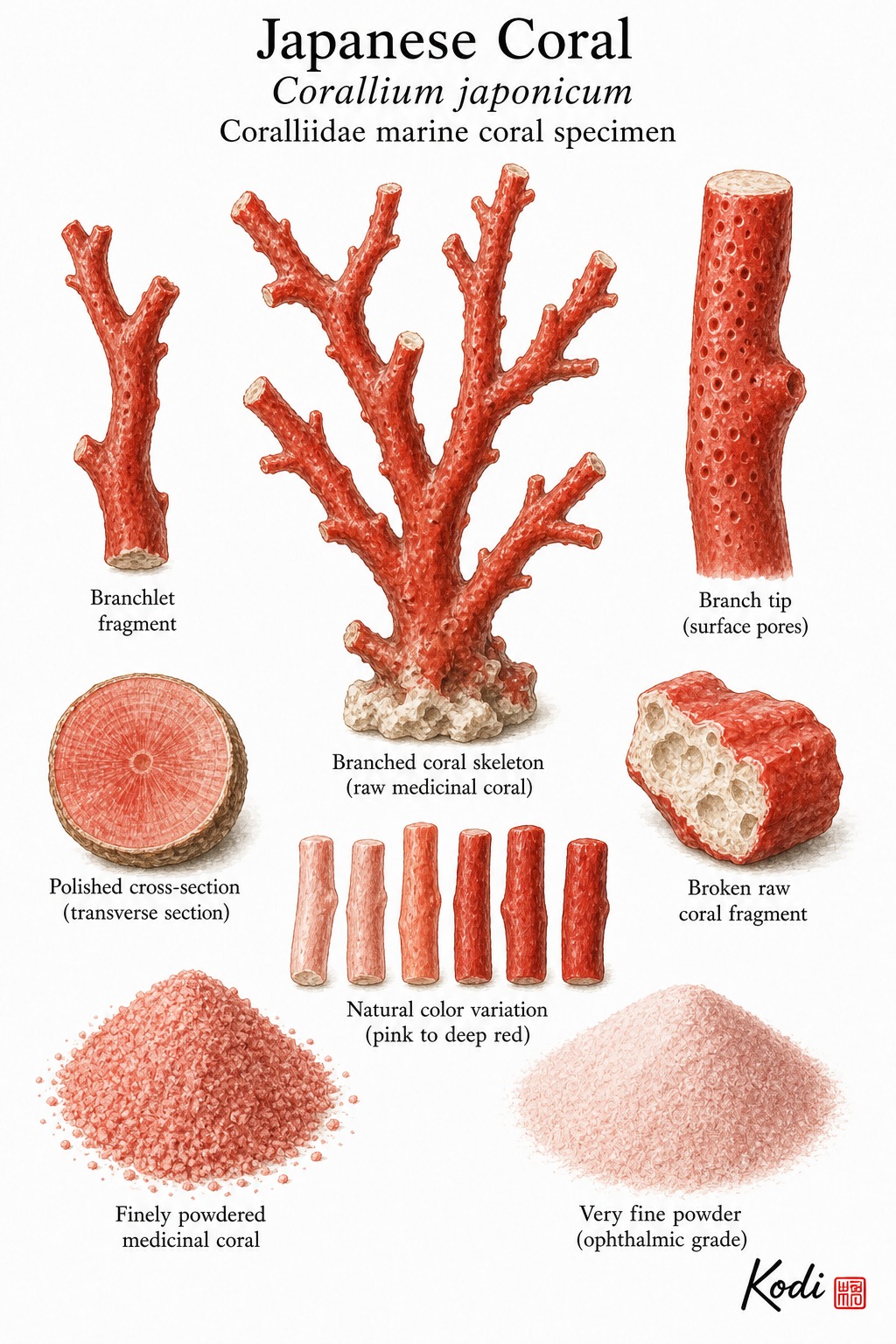
Known in TCM as Shan Hu (珊瑚), this sweet, neutral herb enters the Heart and Liver. Traditionally, it settles the spirit and relieves convulsions - Shan Hu is a niche calming substance used for fright, spasms, epilepsy, and agitation when a heavy marine material is chosen to anchor movement, most often applied for blurred vision, epilepsy, and insomnia. Modern research has identified Calcium among its active constituents.
Part used: Coral
Also Known As
Latin: Corallium Japonicum | Pinyin: Shan Hu | Chinese: 珊瑚
TCM Properties
- Taste
- sweet
- Temperature
- neutral
- Channels
- Heart, Liver
Traditional Use
Primary Actions
- Settles the spirit and relieves convulsions - Shan Hu is a niche calming substance used for fright, spasms, epilepsy, and agitation when a heavy marine material is chosen to anchor movement.
- Removes nebula and improves vision - the classic eye use of coral powder is for corneal opacity, blurred vision, and chronic superficial clouding rather than for acute infectious eye disease.
- Stops bleeding - traditional indications include epistaxis and hematemesis, especially when powdered coral is used in very small internal or external amounts.
Secondary Actions
- This is a specialty powdered substance rather than an everyday decoction herb, and much of its historical value lies in ophthalmic and calming use.
- Shan Hu belongs to the older marine-mineral side of Chinese medicine, where texture, purity, and fine grinding were traditionally considered part of the medicine itself.
Classical References
- Traditional herb summaries describe Shan Hu as sweet and neutral, used to calm fright, stop convulsions, improve eyesight, and control bleeding.
- Older eye-use traditions emphasize very fine powder for nebula and opacity, reflecting the historical role of coral in external or specialty ophthalmic preparations.
- Its small dose and powder-based handling show that Shan Hu was never treated like an ordinary tonic or kitchen herb.
Modern Research
Active Compounds
- Calcium carbonate - the main mineral component of medicinal coral
- Magnesium and trace mineral fractions - minor inorganic constituents that vary by species and source
- Organic coral matrix proteins - structural biomaterial components present in small amounts
- Marine trace elements - source-dependent constituents that make quality control important
Studied Effects
- Modern literature on medicinal coral focuses more on biomineral composition, calcium chemistry, and quality control than on direct validation of the classic TCM indications for seizures, ocular opacity, or bleeding.
- Because contemporary evidence for Shan Hu as a crude medicinal is limited, its modern use is best understood as historically interesting and highly specialized rather than broadly evidence-based.
Safety & Interactions
Contraindications
- Patterns with marked digestive weakness that cannot tolerate mineral powders
- Use as a substitute for urgent seizure, bleeding, or ophthalmology care
Cautions
- Marine mineral materials can vary in purity and may accumulate environmental contaminants, so authenticated sourcing matters.
- Shan Hu should be finely prepared and used in small specialist doses rather than treated like a general calcium supplement.
- MSK page not found - drug interaction data not available from Memorial Sloan Kettering integrative medicine database
Conditions
Frequently Asked Questions
What is Japanese Coral used for?
Japanese Coral is traditionally used to Settles the spirit and relieves convulsions - Shan Hu is a niche calming substance used for fright, spasms, epilepsy, and agitation when a heavy marine material is chosen to anchor movement., Removes nebula and improves vision - the classic eye use of coral powder is for corneal opacity, blurred vision, and chronic superficial clouding rather than for acute infectious eye disease., Stops bleeding - traditional indications include epistaxis and hematemesis, especially when powdered coral is used in very small internal or external amounts.. Research has investigated its effects on: Modern literature on medicinal coral focuses more on biomineral composition, calcium chemistry, and quality control than on direct validation of the classic TCM indications for seizures, ocular opacity, or bleeding.; Because contemporary evidence for Shan Hu as a crude medicinal is limited, its modern use is best understood as historically interesting and highly specialized rather than broadly evidence-based..
What are other names for Japanese Coral?
Japanese Coral is also known as Japonicum. In TCM: 珊瑚 (Shan Hu); Corallium Japonicum.
Is Japanese Coral safe during pregnancy?
The safety of Japanese Coral during pregnancy has not been established. Consult a qualified healthcare provider before use.
What are the contraindications for Japanese Coral?
Japanese Coral should not be used in: Patterns with marked digestive weakness that cannot tolerate mineral powders; Use as a substitute for urgent seizure, bleeding, or ophthalmology care. Consult a qualified practitioner before use.