Turkey Tail Mushroom
- Chinese
- 云芝
- Pinyin
- Yun Zhi
- Latin
- Coriolus versicolor
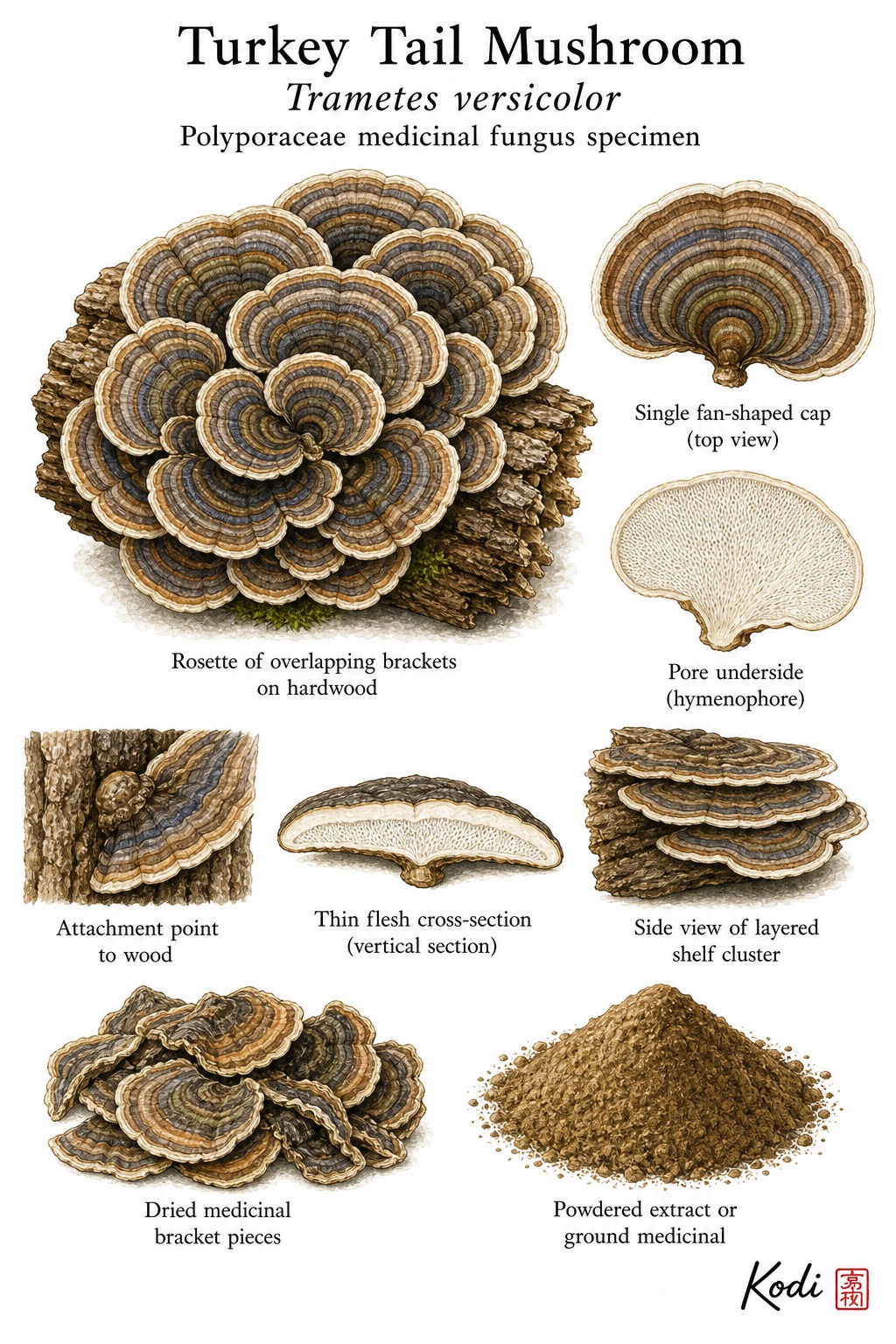
Known in TCM as Yun Zhi (云芝), this sweet, neutral herb enters the Heart, Spleen, Liver, and Kidney. Traditionally, it strengthens the Spleen and improves appetite - Yun Zhi is used for lassitude, weak digestion, and poor appetite when dampness and chronic depletion burden the middle burner, most often applied for poor appetite, jaundice, and hepatitis. Modern research has identified Polysaccharide-K among its active constituents.
Part used: Fruiting body (fungus)
Also Known As
Latin: Coriolus versicolor | Pinyin: Yun Zhi | Chinese: 云芝
TCM Properties
- Taste
- sweet
- Temperature
- neutral
- Channels
- Heart, Spleen, Liver, Kidney
Traditional Use
Primary Actions
- Strengthens the Spleen and improves appetite - Yun Zhi is used for lassitude, weak digestion, and poor appetite when dampness and chronic depletion burden the middle burner.
- Clears Heat and resolves toxicity - traditional use includes damp-heat jaundice, hypochondriac discomfort, and chronic toxic conditions where a tonic-detoifying mushroom is preferred over harsher herbs.
- Supports recovery in chronic illness - modern East Asian practice often extends the classical tonic idea into long recovery periods after major disease, especially where constitutional weakness and impaired resistance are prominent.
Secondary Actions
- Yun Zhi sits at the overlap of traditional tonic mushroom use and modern extract-based adjunct care, which makes product form especially important clinically.
- The crude mushroom, food-like decoction, and standardized PSK or PSP extracts should not be assumed to be interchangeable.
Classical References
- Traditional herb summaries describe Yun Zhi as sweet and neutral, used to strengthen the Spleen, drain dampness, and clear toxin in chronic weak yet burdened presentations.
- Its historical indications for jaundice, poor appetite, and fatigue help explain why later mushroom practice viewed it as both a constitutional tonic and a damp-heat clearing agent.
- The contemporary reputation of Yun Zhi in cancer-support settings is an extension of that traditional tonic-detoifying identity rather than a replacement for it.
Modern Research
Active Compounds
- Polysaccharide-K (PSK) - the best known protein-bound polysaccharide extract used in Japan
- Polysaccharopeptide (PSP) - a related immunomodulatory extract used in Chinese research and supplements
- Beta-glucans and proteoglycans - the main immunologically active macromolecules
- Other mushroom polysaccharides and peptides - supportive fractions that vary by product and extraction method
Studied Effects
- A network meta-analysis suggested that polysaccharide K can improve overall and disease-free survival in gastrointestinal cancers when used as an adjuvant, although study quality and generalizability remain imperfect (PMID 29179503).
- A placebo-controlled trial in advanced non-small cell lung cancer found that Coriolus versicolor polysaccharide peptide improved leukocyte, neutrophil, IgG, and IgM measures and was associated with slower deterioration after conventional treatment (PMID 12814145).
- A clinical study in post-treatment breast cancer patients reported immunomodulatory changes after Yunzhi-Danshen capsules, supporting continued interest in the mushroom's immune effects beyond simple folk use (PMID 16047556).
PubMed References
- Can polysaccharide K improve therapeutic efficacy and safety in gastrointestinal cancer? a systematic review and network meta-analysis (2017)
- Coriolus versicolor polysaccharide peptide slows progression of advanced non-small cell lung cancer (2003)
- Immunomodulatory activities of Yunzhi and Danshen in post-treatment breast cancer patients (2005)
Safety & Interactions
Contraindications
- Pregnancy or breastfeeding due to insufficient safety data for concentrated extracts
Cautions
- MSK notes that coriolus products are generally well tolerated, but over-the-counter extracts are not standardized and different PSK, PSP, or mixed products may not behave the same way.
- Reported side effects include dark stools and nail darkening, and mild hematologic or gastrointestinal effects may occur when extracts are used alongside chemotherapy.
- People using Yun Zhi during cancer care should coordinate with their oncology team rather than self-layering supplements onto treatment.
Conditions
- Poor Appetite Traditional ★★★☆☆ JSON
- Jaundice Traditional ★★★☆☆ JSON
- Hepatitis Traditional ★★☆☆☆ JSON
- Immune Deficiency Research ★★☆☆☆ JSON
Frequently Asked Questions
What is Turkey Tail Mushroom used for?
Turkey Tail Mushroom is traditionally used to Strengthens the Spleen and improves appetite - Yun Zhi is used for lassitude, weak digestion, and poor appetite when dampness and chronic depletion burden the middle burner., Clears Heat and resolves toxicity - traditional use includes damp-heat jaundice, hypochondriac discomfort, and chronic toxic conditions where a tonic-detoifying mushroom is preferred over harsher herbs., Supports recovery in chronic illness - modern East Asian practice often extends the classical tonic idea into long recovery periods after major disease, especially where constitutional weakness and impaired resistance are prominent.. Research has investigated its effects on: A network meta-analysis suggested that polysaccharide K can improve overall and disease-free survival in gastrointestinal cancers when used as an adjuvant, although study quality and generalizability remain imperfect (PMID 29179503).; A placebo-controlled trial in advanced non-small cell lung cancer found that Coriolus versicolor polysaccharide peptide improved leukocyte, neutrophil, IgG, and IgM measures and was associated with slower deterioration after conventional treatment (PMID 12814145)..
What are other names for Turkey Tail Mushroom?
Turkey Tail Mushroom is also known as Coriolus. In TCM: 云芝 (Yun Zhi); Coriolus versicolor.
Is Turkey Tail Mushroom safe during pregnancy?
Turkey Tail Mushroom is not recommended during pregnancy.
What are the contraindications for Turkey Tail Mushroom?
Turkey Tail Mushroom should not be used in: Pregnancy or breastfeeding due to insufficient safety data for concentrated extracts. Consult a qualified practitioner before use.