Chinese Cricket
- Chinese
- 蟋蟀
- Pinyin
- Xi Shuai
- Latin
- Gryllus Chinensis
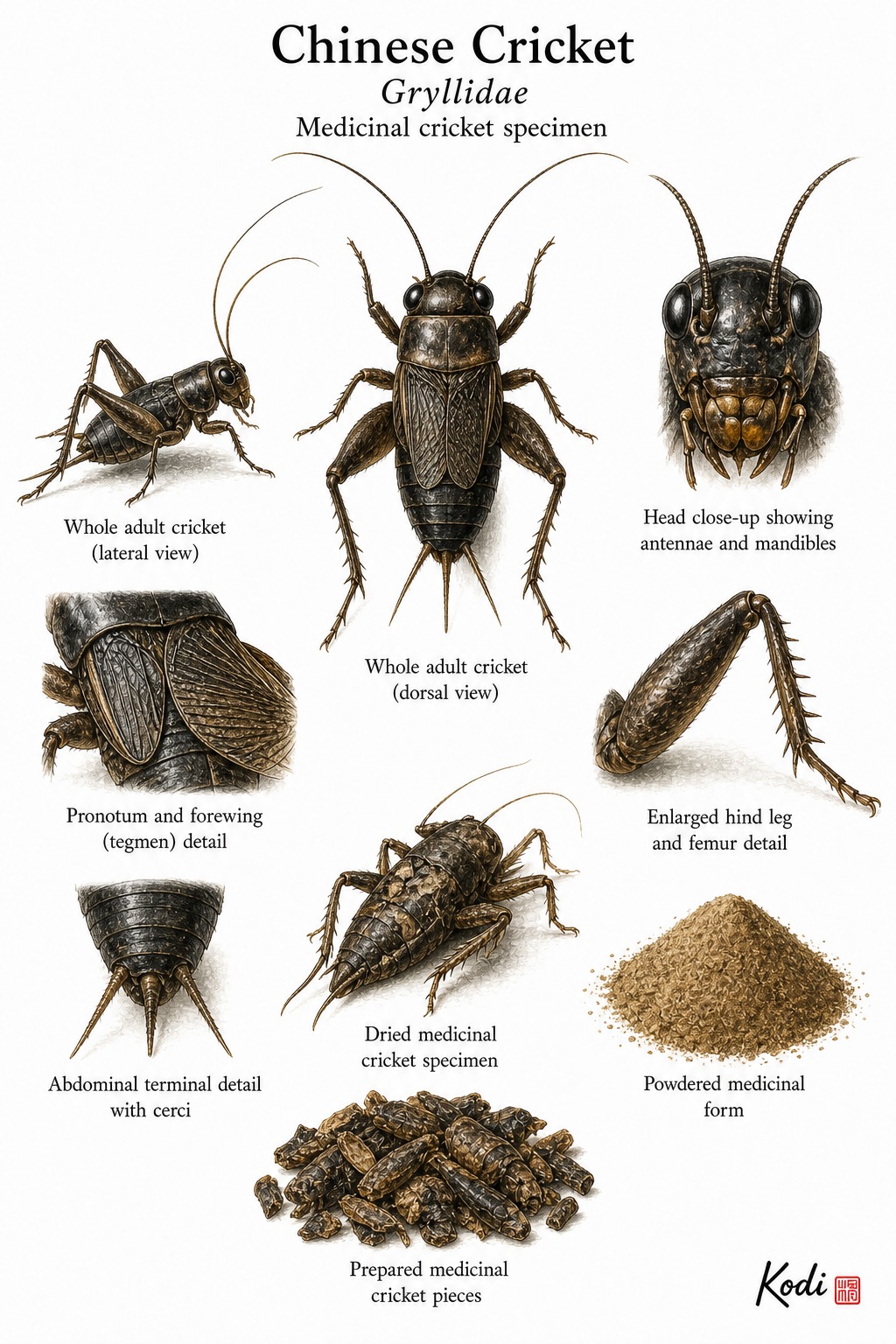
Known in TCM as Xi Shuai (蟋蟀), this acrid and salty, warm herb enters the Kidney and Bladder. Traditionally, it promotes urination and reduces edema - Xi Shuai is used for water retention, difficult urination, and obstructed fluid pathways when a strong insect medicinal is chosen to force movement, most often applied for edema, urolithiasis, and abdominal distension. Modern research has identified Protein among its active constituents.
Also Known As
Latin: Gryllus Chinensis | Pinyin: Xi Shuai | Chinese: 蟋蟀
TCM Properties
- Taste
- acrid, salty
- Temperature
- warm
- Channels
- Kidney, Bladder
Traditional Use
Primary Actions
- Promotes urination and reduces edema - Xi Shuai is used for water retention, difficult urination, and obstructed fluid pathways when a strong insect medicinal is chosen to force movement.
- Treats stone and gravel patterns in the urinary tract - traditional indications include lithangiuria and painful urinary obstruction from concretions or sand-like accumulation.
- Breaks Blood and disperses stubborn retention - older use extends to ascites and severe obstructive fluid conditions rather than to mild routine urinary support.
Secondary Actions
- Xi Shuai is a niche insect medicinal with a much harsher profile than food-grade edible-insect products now discussed in nutrition research.
- Its warm, pungent, and toxic classification means it is reserved for difficult retention patterns and not for casual tonic use.
Classical References
- Traditional herb references describe Xi Shuai as acrid, salty, warm, and toxic, entering the Kidney and Bladder to promote urination and break Blood.
- The standard indications of edema, difficult urination, stone-strangury, and ascites show that this is a forceful obstruction-opening medicinal rather than a general food or supplement.
- Classical cautions against use in pregnancy and weakness remain central because its intended action is to drive movement through severe retention patterns.
Modern Research
Active Compounds
- Protein and peptide fractions - major nutritive and bioactive components studied in Gryllus extracts
- Glycosaminoglycan fractions - specialized cricket-derived macromolecules explored for metabolic and inflammatory effects
- Chitin-related polysaccharides - structural components relevant to immune and gut research
- Lipid fractions including unsaturated fatty acids - supportive components studied in edible-cricket extracts
Studied Effects
- Gryllus bimaculatus extract protected mice against alcohol-induced gut-derived inflammatory responses and liver injury, suggesting broader anti-inflammatory and barrier-protective activity within cricket-derived materials (PMID 30995745).
- Cricket extract suppressed proinflammatory cytokine production and inflammasome formation in lipopolysaccharide and palmitate models, giving a modern mechanistic basis for some of the stronger obstruction-resolving claims attached to insect medicinals (PMID 33495809).
- A 2022 study found that Gryllus bimaculatus water extract stimulated multiple immune responses in experimental systems, showing that modern interest in cricket materials extends beyond protein nutrition alone (PMID 35465112).
PubMed References
- The Edible Insect Gryllus bimaculatus Protects against Gut-Derived Inflammatory Responses and Liver Damage in Mice after Acute Alcohol Exposure (2019)
- Gryllus bimaculatus extract protects against lipopolysaccharide and palmitate-induced production of proinflammatory cytokines and inflammasome formation (2021)
- Evaluation of the Immunological Activity of Gryllus bimaculatus Water Extract (2022)
Safety & Interactions
Contraindications
- Pregnancy
- Weak or depleted patients without severe obstructive retention
- Known crustacean or insect allergy
Cautions
- Traditional references classify Xi Shuai as toxic, so it should not be treated like an ordinary edible-insect supplement.
- Cross-reactivity between cricket proteins and shellfish allergy has been documented, making allergy history especially important.
- MSK page not found - drug interaction data not available from Memorial Sloan Kettering integrative medicine database
Conditions
- Edema Traditional ★★★★☆ JSON
- Urolithiasis Traditional ★★★☆☆ JSON
- Abdominal Distension Traditional ★★☆☆☆ JSON
Frequently Asked Questions
What is Chinese Cricket used for?
Chinese Cricket is traditionally used to Promotes urination and reduces edema - Xi Shuai is used for water retention, difficult urination, and obstructed fluid pathways when a strong insect medicinal is chosen to force movement., Treats stone and gravel patterns in the urinary tract - traditional indications include lithangiuria and painful urinary obstruction from concretions or sand-like accumulation., Breaks Blood and disperses stubborn retention - older use extends to ascites and severe obstructive fluid conditions rather than to mild routine urinary support.. Research has investigated its effects on: Gryllus bimaculatus extract protected mice against alcohol-induced gut-derived inflammatory responses and liver injury, suggesting broader anti-inflammatory and barrier-protective activity within cricket-derived materials (PMID 30995745).; Cricket extract suppressed proinflammatory cytokine production and inflammasome formation in lipopolysaccharide and palmitate models, giving a modern mechanistic basis for some of the stronger obstruction-resolving claims attached to insect medicinals (PMID 33495809)..
What are other names for Chinese Cricket?
Chinese Cricket is also known as Gryllus. In TCM: 蟋蟀 (Xi Shuai); Gryllus Chinensis.
Is Chinese Cricket safe during pregnancy?
Chinese Cricket is not recommended during pregnancy.
What are the contraindications for Chinese Cricket?
Chinese Cricket should not be used in: Pregnancy; Weak or depleted patients without severe obstructive retention; Known crustacean or insect allergy. Consult a qualified practitioner before use.