Cuttlefish Bone, Cuttlebone
- Chinese
- 乌贼骨
- Pinyin
- Wu Zei Gu
- Latin
- Ossa Sepiae
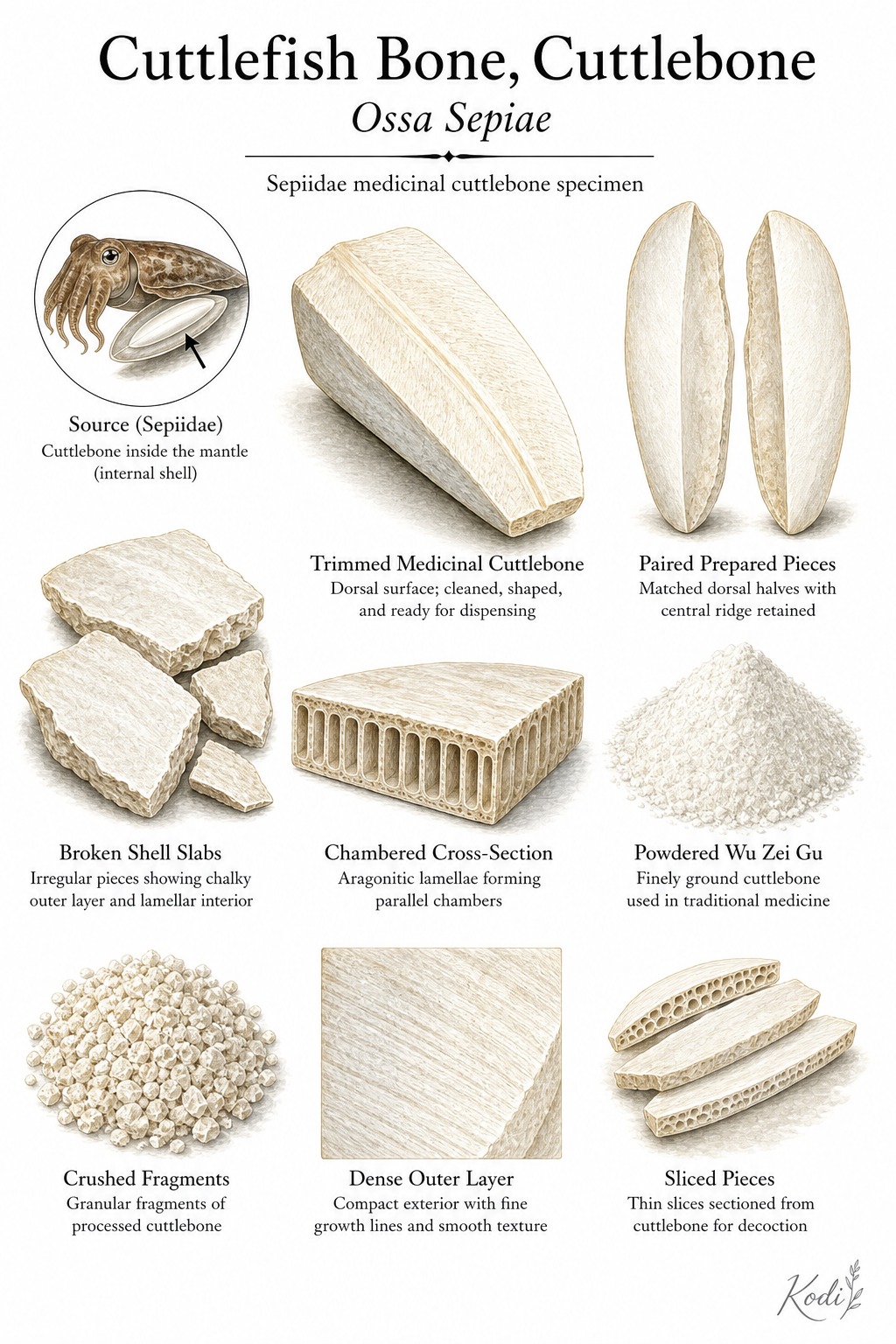
Known in TCM as Wu Zei Gu (乌贼骨), this salty and astringent, slightly warm herb enters the Kidney and Liver. Traditionally, it secures essence and stops chronic leakage - Wu Zei Gu is a classic astringent for spermatorrhea, excessive vaginal discharge, and lower-burner instability patterns, most often applied for acid reflux, gastric ulcer, and uterine bleeding. Modern research has identified Calcium among its active constituents.
Part used: Bone
Also Known As
Latin: Ossa Sepiae | Pinyin: Wu Zei Gu | Chinese: 乌贼骨
TCM Properties
- Taste
- salty, astringent
- Temperature
- slightly warm
- Channels
- Kidney, Liver
Traditional Use
Primary Actions
- Secures essence and stops chronic leakage - Wu Zei Gu is a classic astringent for spermatorrhea, excessive vaginal discharge, and lower-burner instability patterns.
- Stops bleeding while protecting tissue - the powdered shell is used internally for chronic bleeding patterns and externally for wounds, sores, and damp ulcerations.
- Restrains acidity and relieves epigastric pain - like Hai Piao Xiao, this alternate-name record belongs to the cuttlebone tradition used for acid regurgitation and ulcer-type stomach discomfort.
- Dries dampness and promotes healing externally - it can be applied to weeping lesions or traumatic bleeding where an absorbent, protective mineral powder is needed.
Secondary Actions
- Wu Zei Gu and Hai Piao Xiao are usually the same medicated cuttlebone material, but this file preserves the alternate import name used in the source spreadsheet.
- Modern dispensing often uses the shell as a powder for digestive acidity or external application rather than as a simple long-boiled decoction ingredient.
Classic Formulas
- Wu Zei Gu with Qian Shi and Shan Zhu Yu - a traditional lower-burner astringent approach for chronic discharge and essence leakage.
- Wu Zei Gu with Wa Leng Zi - a classic mineral pairing for acid regurgitation and gnawing epigastric discomfort.
- Wu Zei Gu with Bai Ji in powders - a hemostatic and tissue-protective combination for ulcer bleeding and external sores.
Classical References
- Traditional Chinese materia medica texts treat Wu Zei Gu as an alternate name for cuttlebone, emphasizing its ability to secure essence, stop bleeding, and restrain acidity.
- The slightly warm, salty, astringent profile explains why it is used both for lower-burner leakage and for sour regurgitation with Stomach discomfort.
- IMPORT NOTE: this file is intentionally distinct from herb #298 because the historical import kept both Hai Piao Xiao and Wu Zei Gu as separate records even though the medicinal identity substantially overlaps.
Modern Research
Active Compounds
- Calcium carbonate and aragonite - the mineral framework underlying antacid and structural biomaterial effects
- Chitin-associated shell fractions - relevant to wound-healing and hemostatic material research
- Trace minerals and amino-acid residues - measured in Os Sepiae quality studies
Studied Effects
- A rat study found that cuttlebone accelerated healing of indomethacin-induced gastric mucosal lesions, matching the traditional use of Wu Zei Gu for acid injury and ulcer pain (PMID 33082835).
- Marine biomaterial research has shown that cuttlebone can function as a calcium-rich scaffold for bone repair applications, which helps explain its long-standing tissue-supportive reputation (PMID 29616431).
- A newer multifunctional hydrogel study used nano-cuttlebone to improve hemostatic and antibacterial wound care performance, giving a modern parallel to the shell's external bleeding and sore applications (PMID 40245568).
PubMed References
Safety & Interactions
Contraindications
- Constipation from dryness without leakage or acidity patterns
- Heat agitation without a clear astringent indication
Cautions
- As a calcium-rich shell medicine, Wu Zei Gu can reduce absorption of certain medications if taken together.
- Only properly cleaned medicinal shell should be used because crude marine material may contain contaminants or variable mineral quality.
- This is an astringent mineral drug, not a routine calcium supplement.
Drug Interactions
- Fluoroquinolone antibiotics - calcium-rich shell minerals can chelate the drug and reduce absorption; separate by several hours
- Tetracycline antibiotics - concurrent mineral intake can lower antibiotic bioavailability; stagger dosing
- Levothyroxine - calcium-containing minerals may impair thyroid hormone absorption; separate by at least 4 hours
- Iron supplements - calcium can decrease iron absorption when taken together
Conditions
- Acid Reflux Research ★★★★☆ JSON
- Gastric Ulcer Research ★★★★☆ JSON
- Uterine Bleeding Traditional ★★★☆☆ JSON
- Leukorrhea Traditional ★★★☆☆ JSON
Frequently Asked Questions
What is Cuttlefish Bone, Cuttlebone used for?
Cuttlefish Bone, Cuttlebone is traditionally used to Secures essence and stops chronic leakage - Wu Zei Gu is a classic astringent for spermatorrhea, excessive vaginal discharge, and lower-burner instability patterns., Stops bleeding while protecting tissue - the powdered shell is used internally for chronic bleeding patterns and externally for wounds, sores, and damp ulcerations., Restrains acidity and relieves epigastric pain - like Hai Piao Xiao, this alternate-name record belongs to the cuttlebone tradition used for acid regurgitation and ulcer-type stomach discomfort., Dries dampness and promotes healing externally - it can be applied to weeping lesions or traumatic bleeding where an absorbent, protective mineral powder is needed.. Research has investigated its effects on: A rat study found that cuttlebone accelerated healing of indomethacin-induced gastric mucosal lesions, matching the traditional use of Wu Zei Gu for acid injury and ulcer pain (PMID 33082835).; Marine biomaterial research has shown that cuttlebone can function as a calcium-rich scaffold for bone repair applications, which helps explain its long-standing tissue-supportive reputation (PMID 29616431)..
What are other names for Cuttlefish Bone, Cuttlebone?
Cuttlefish Bone, Cuttlebone is also known as Sepia. In TCM: 乌贼骨 (Wu Zei Gu); Ossa Sepiae.
Is Cuttlefish Bone, Cuttlebone safe during pregnancy?
The safety of Cuttlefish Bone, Cuttlebone during pregnancy has not been established. Consult a qualified healthcare provider before use.
What are the contraindications for Cuttlefish Bone, Cuttlebone?
Cuttlefish Bone, Cuttlebone should not be used in: Constipation from dryness without leakage or acidity patterns; Heat agitation without a clear astringent indication. Consult a qualified practitioner before use.
Does Cuttlefish Bone, Cuttlebone interact with any medications?
Cuttlefish Bone, Cuttlebone may interact with: Fluoroquinolone antibiotics - calcium-rich shell minerals can chelate the drug and reduce absorption; separate by several hours; Tetracycline antibiotics - concurrent mineral intake can lower antibiotic bioavailability; stagger dosing; Levothyroxine - calcium-containing minerals may impair thyroid hormone absorption; separate by at least 4 hours; Iron supplements - calcium can decrease iron absorption when taken together. Always inform your healthcare provider of any herbal supplements you are taking.