Datura Flower
- Chinese
- 洋金花
- Pinyin
- Yang Jin Hua
- Latin
- Flos Daturae
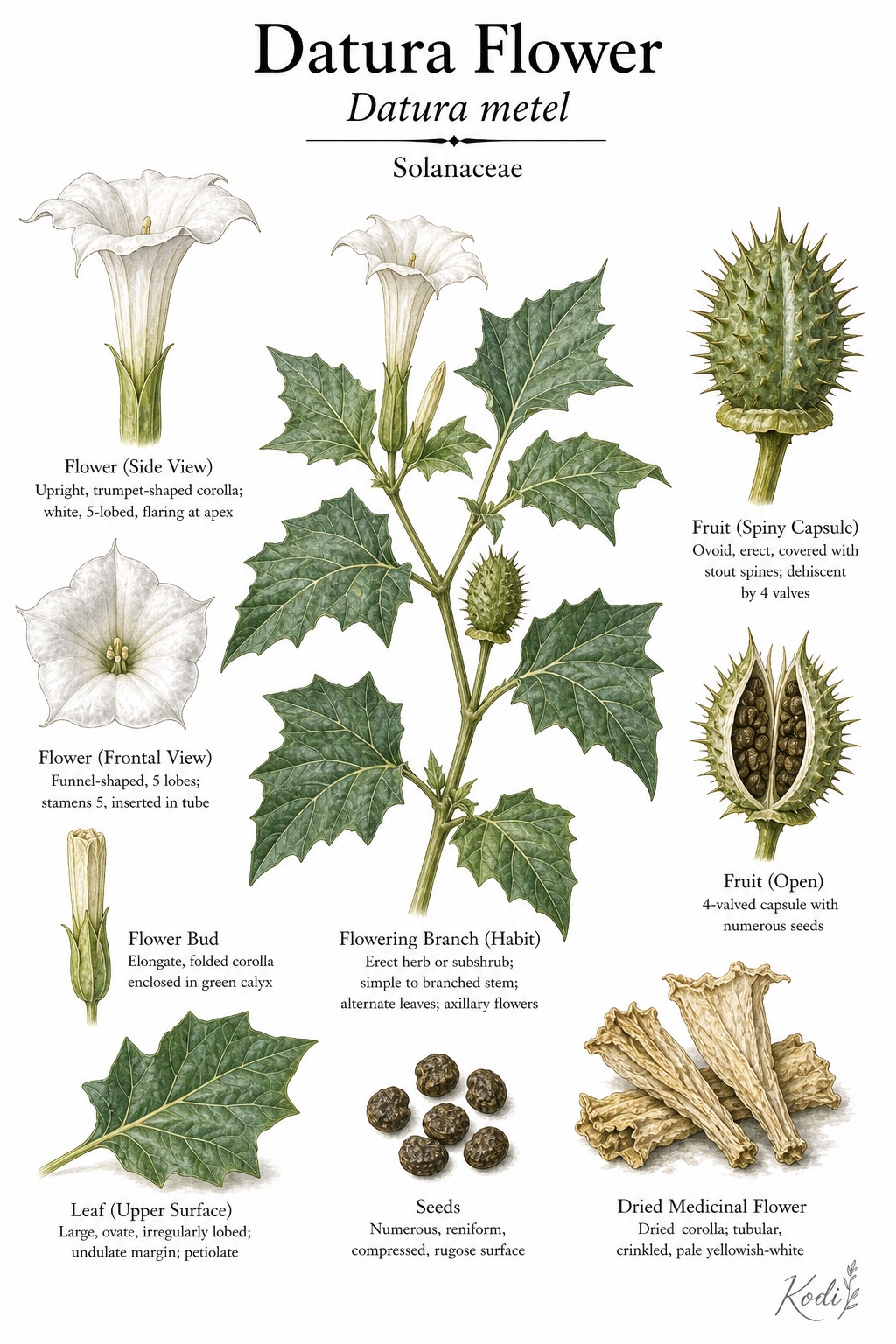
Known in TCM as Yang Jin Hua (洋金花), this acrid, warm herb enters the Lung and Liver. Traditionally, it relieves cough and dyspnea - Yang Jin Hua is used for difficult cough and wheezing, especially when spasm and obstruction make breathing tight and hard to ease with gentler herbs, most often applied for asthma, wheezing, and cough. Modern research has identified Scopolamine among its active constituents.
Part used: Flower
Also Known As
Latin: Flos Daturae | Pinyin: Yang Jin Hua | Chinese: 洋金花
TCM Properties
- Taste
- acrid
- Temperature
- warm
- Channels
- Lung, Liver
Traditional Use
Primary Actions
- Relieves cough and dyspnea - Yang Jin Hua is used for difficult cough and wheezing, especially when spasm and obstruction make breathing tight and hard to ease with gentler herbs.
- Alleviates pain - it has a strong pain-relieving reputation for chest, abdominal, traumatic, and wind-damp pain and was historically valued for its numbing effect.
- Stops spasm - traditional use extends to epilepsy, chronic convulsions, and muscular spasm patterns where a potent antispasmodic herb is required.
Secondary Actions
- Yang Jin Hua is a toxic specialist herb used in extremely small doses, not an everyday respiratory or pain herb.
- Traditional administration includes powder, smoking, and external use, which reflects its strong and fast-acting nature as much as its safety burden.
Classic Formulas
- Zheng Gu Ma Yao Fang - a classic anesthetic and pain-relieving formula in which Yang Jin Hua is paired with strongly moving herbs for traumatic pain.
- Powdered or smoked Yang Jin Hua for stubborn wheezing - traditional minute-dose use when other antitussives have failed to relax the bronchial spasm.
- Yang Jin Hua with Tian Ma, Quan Xie, and Tian Nan Xing - a traditional spasm-stopping combination for convulsive disorders.
Classical References
- Traditional texts describe Yang Jin Hua as acrid, warm, and toxic, entering the Lung and Liver to stop wheezing, relieve pain, and arrest spasm.
- Its long history as an anesthetic-adjacent herb explains both its dramatic clinical reputation and the strict classical emphasis on tiny dosing.
- Older cautions specifically warn against use in pregnancy, weakness, glaucoma, hypertension, tachycardia, and heat-phlegm cough patterns.
Modern Research
Active Compounds
- Scopolamine - a major tropane alkaloid responsible for anticholinergic and antispasmodic effects
- Atropine and hyoscyamine - toxic belladonna-type alkaloids central to the herb's safety profile
- Withanolides - steroidal lactones studied for anti-inflammatory and cytotoxic activity
- Sesquiterpenoids and other phenolic constituents - additional compounds investigated in Datura metel extracts
Studied Effects
- Chemical investigation of Datura metel flowers identified multiple cytotoxic withanolides, showing that the flower is a pharmacologically rich but clearly high-risk plant material rather than a simple folk remedy (PMID 17583953).
- Species-level studies continue to isolate anti-inflammatory withanolides and sesquiterpenoids from Datura metel, supporting mechanistic interest in the plant's spasm-relieving and inflammatory actions (PMID 31927334; PMID 32114039).
- An experimental psoriasis study found Datura metel significantly inhibited inflammatory cytokine production through TLR7/8-MyD88-NF-kappaB-NLRP3 signaling, reinforcing the plant's strong biologic activity while not reducing its toxicity concerns (PMID 31181689).
PubMed References
- Cytotoxic withanolides from the flowers of Datura metel (2007)
- New withanolides with anti-inflammatory activity from the leaves of Datura metel L (2020)
- Datura Metel L. Ameliorates Imiquimod-Induced Psoriasis-Like Dermatitis and Inhibits Inflammatory Cytokines Production through TLR7/8-MyD88-NF-kappaB-NLRP3 Inflammasome Pathway (2019)
Safety & Interactions
Contraindications
- Pregnancy
- Children
- Glaucoma
- Tachyarrhythmia or uncontrolled hypertension
- Any unsupervised internal use
Cautions
- Yang Jin Hua contains potent tropane alkaloids and can cause anticholinergic poisoning with delirium, dry mouth, dilated pupils, urinary retention, rapid pulse, hyperthermia, and dangerous neurologic symptoms.
- Traditional use depends on extremely small doses, and overdose risk is substantial even when the herb is used with medicinal intent.
- This herb should never be confused with a routine cough remedy or general pain herb.
- MSK page not found - drug interaction data not available from Memorial Sloan Kettering integrative medicine database
Conditions
Frequently Asked Questions
What is Datura Flower used for?
Datura Flower is traditionally used to Relieves cough and dyspnea - Yang Jin Hua is used for difficult cough and wheezing, especially when spasm and obstruction make breathing tight and hard to ease with gentler herbs., Alleviates pain - it has a strong pain-relieving reputation for chest, abdominal, traumatic, and wind-damp pain and was historically valued for its numbing effect., Stops spasm - traditional use extends to epilepsy, chronic convulsions, and muscular spasm patterns where a potent antispasmodic herb is required.. Research has investigated its effects on: Chemical investigation of Datura metel flowers identified multiple cytotoxic withanolides, showing that the flower is a pharmacologically rich but clearly high-risk plant material rather than a simple folk remedy (PMID 17583953).; Species-level studies continue to isolate anti-inflammatory withanolides and sesquiterpenoids from Datura metel, supporting mechanistic interest in the plant's spasm-relieving and inflammatory actions (PMID 31927334; PMID 32114039)..
What are other names for Datura Flower?
Datura Flower is also known as Datura. In TCM: 洋金花 (Yang Jin Hua); Flos Daturae.
Is Datura Flower safe during pregnancy?
Datura Flower is not recommended during pregnancy.
What are the contraindications for Datura Flower?
Datura Flower should not be used in: Pregnancy; Children; Glaucoma; Tachyarrhythmia or uncontrolled hypertension; Any unsupervised internal use. Consult a qualified practitioner before use.