Dodder Seed
- Chinese
- 菟丝子
- Pinyin
- Tu Si Zi
- Latin
- Semen Cuscutae
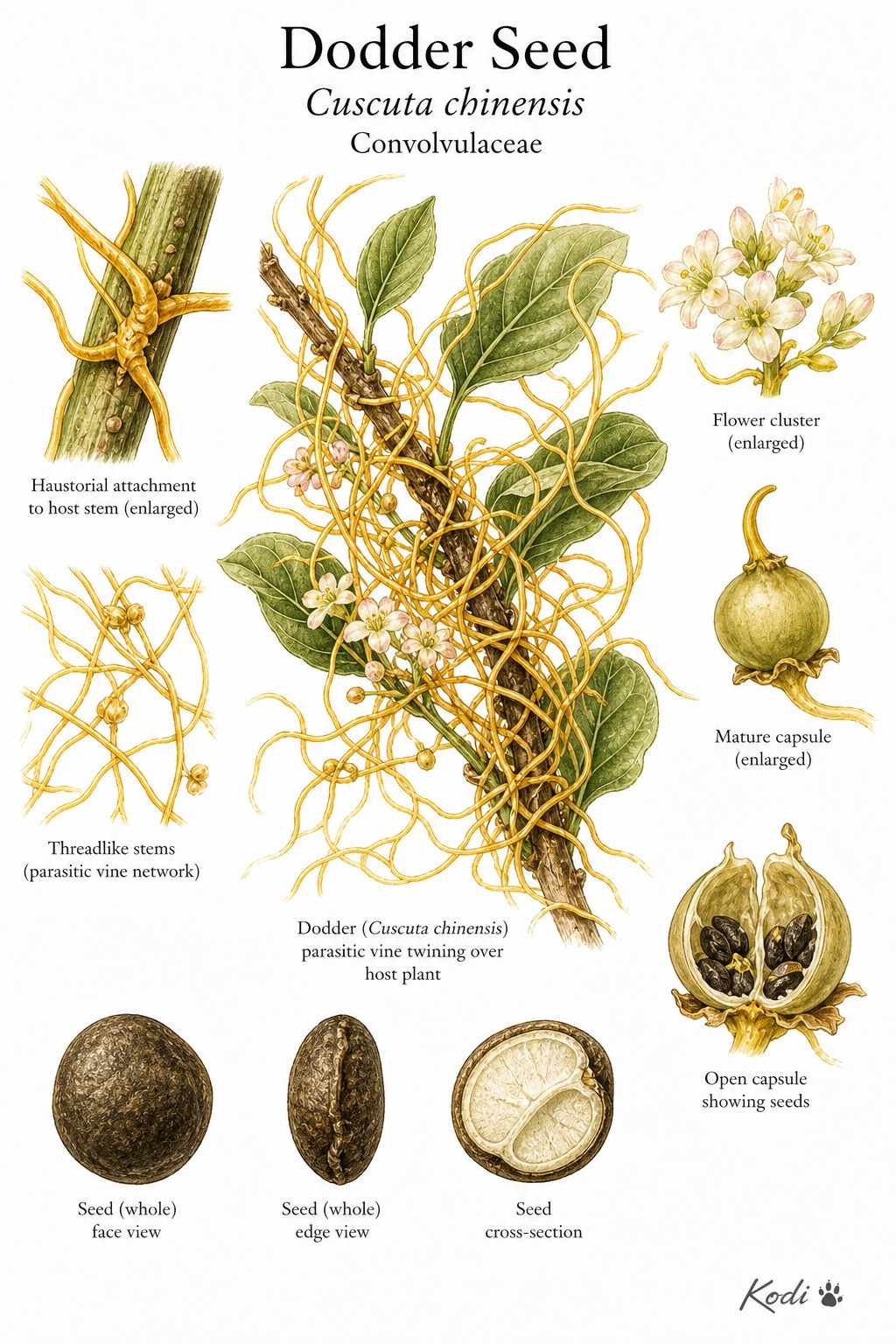
Known in TCM as Tu Si Zi (菟丝子), this acrid and sweet, neutral herb enters the Liver, Kidney, and Spleen. Traditionally, it tonifies Kidney Essence, most often applied for infertility, threatened miscarriage, and frequent urination. Modern research has identified Quercetin among its active constituents.
Part used: Seed
Also Known As
Latin: Semen Cuscutae | Pinyin: Tu Si Zi | Chinese: 菟丝子
TCM Properties
- Taste
- acrid, sweet
- Temperature
- neutral
- Channels
- Liver, Kidney, Spleen
Traditional Use
Primary Actions
- Tonifies Kidney Essence
- Secures Essence and stops excess urination
- Nourishes Liver and brightens the eyes
- Strengthens the Spleen and stops diarrhea
- Calms the fetus
Secondary Actions
- Addresses both Kidney Yang and Yin deficiency without drying or stagnating
Classic Formulas
- Wu Zi Yan Zong Wan … tonifies Kidney Essence and Qi for male infertility and sexual dysfunction
- Shou Tai Wan … secures the Kidneys and calms the fetus for threatened miscarriage
Classical References
- Classical commentaries describe Tu Si Zi as 'warming but not drying, supplementing but not stagnating,' distinguishing it from harsher tonics
Modern Research
Active Compounds
- Quercetin
- Kaempferol
- Hyperoside
- Chlorogenic acid
- Isorhamnetin
Studied Effects
- Systematic review synthesises ethnopharmacology, phytochemistry, and pharmacological mechanisms across Asian traditional uses (PMID 25281912)
- Specific active components promote neural stem cell proliferation via bioassay-guided fractionation (PMID 34771043)
- Hyperoside, a key flavonol glycoside constituent, exhibits anticancer, anti-inflammatory, and neuroprotective activities (PMID 35561084)
PubMed References
- Cuscuta chinensis Lam.: A systematic review on ethnopharmacology, phytochemistry and pharmacology of an important traditional herbal medicine (2014)
- Study on Active Components of Cuscuta chinensis Promoting Neural Stem Cells Proliferation: Bioassay-Guided Fractionation (2021)
- Hyperoside: A review on its sources, biological activities, and molecular mechanisms (2022)
Safety & Interactions
Contraindications
- Yin deficiency with excess Heat
- Constipation with dry stools
- Scanty, dark, painful urination (Bladder Fire)
- Excess Kidney Fire
Cautions
- Standard dose 6–12g; up to 15–20g for severe deficiency under practitioner supervision
- Pinyin in original data stub was transposed ('Si Tu Zi' → corrected to 'Tu Si Zi')
Conditions
- Infertility Traditional ★★★★☆ JSON
- Threatened Miscarriage Traditional ★★★★☆ JSON
- Frequent Urination Traditional ★★★★☆ JSON
- Low Back Pain Traditional ★★★☆☆ JSON
- Blurred Vision Traditional ★★★☆☆ JSON
- Diarrhea Traditional ★★★☆☆ JSON
Frequently Asked Questions
What is Dodder Seed used for?
Dodder Seed is traditionally used to Tonifies Kidney Essence, Secures Essence and stops excess urination, Nourishes Liver and brightens the eyes, Strengthens the Spleen and stops diarrhea. Research has investigated its effects on: Systematic review synthesises ethnopharmacology, phytochemistry, and pharmacological mechanisms across Asian traditional uses (PMID 25281912); Specific active components promote neural stem cell proliferation via bioassay-guided fractionation (PMID 34771043).
What are other names for Dodder Seed?
Dodder Seed is also known as Cuscuta. In TCM: 菟丝子 (Tu Si Zi); Semen Cuscutae.
Is Dodder Seed safe during pregnancy?
The safety of Dodder Seed during pregnancy has not been established. Consult a qualified healthcare provider before use.
What are the contraindications for Dodder Seed?
Dodder Seed should not be used in: Yin deficiency with excess Heat; Constipation with dry stools; Scanty, dark, painful urination (Bladder Fire); Excess Kidney Fire. Consult a qualified practitioner before use.