Dried Tangerine Peel
- Chinese
- 陈皮
- Pinyin
- Chen Pi
- Latin
- Pericarpium Citri Reticulatae
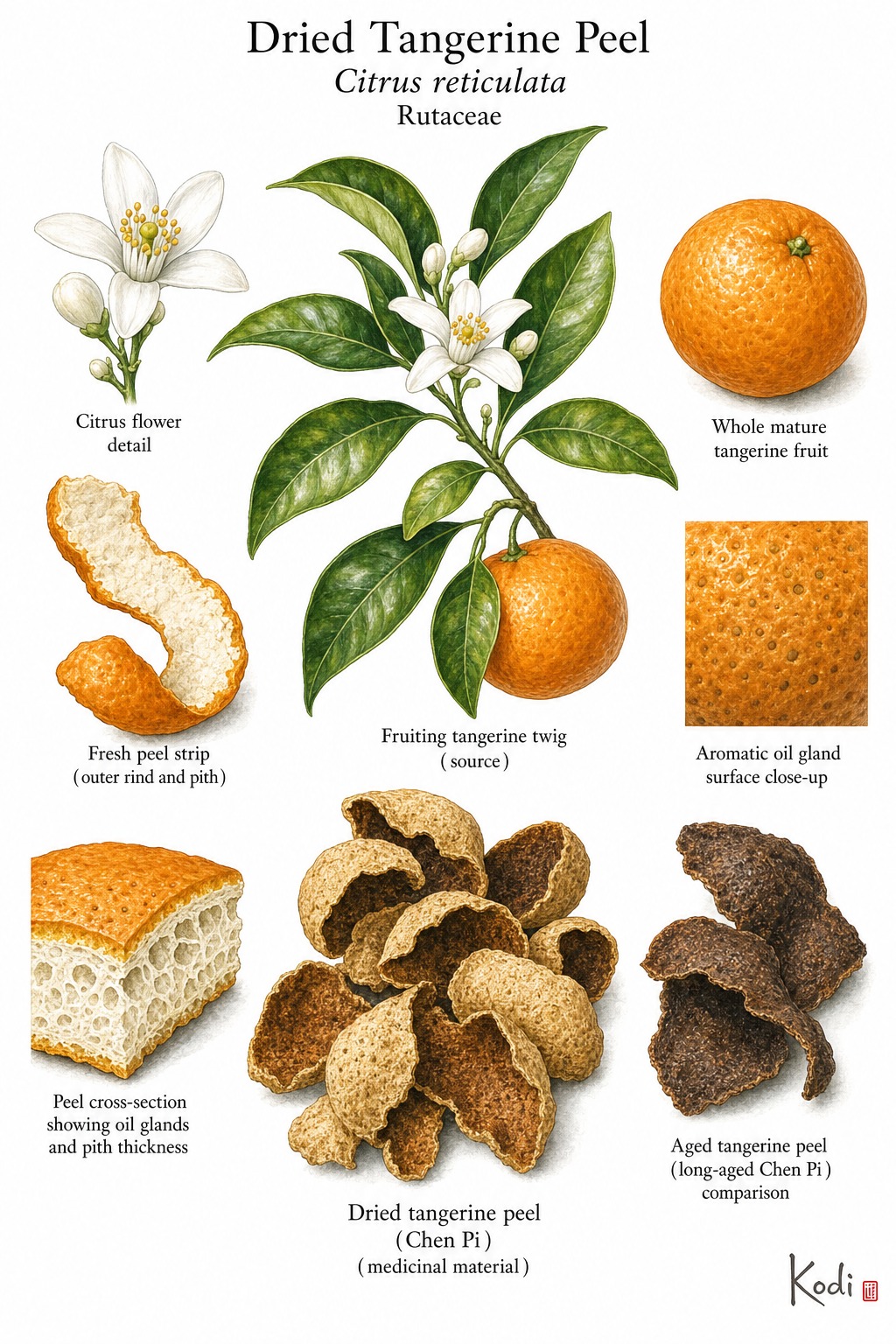
Known in TCM as Chen Pi (陈皮), this acrid and bitter, warm herb enters the Lung, Spleen, and Stomach. Traditionally, it regulates Qi and relieves fullness - Chen Pi is a core herb for abdominal distension, bloating, chest oppression, and stagnation of the middle burner, most often applied for abdominal distension, nausea, and poor appetite. Modern research has identified Hesperidin among its active constituents.
Part used: Peel
Also Known As
Latin: Pericarpium Citri Reticulatae | Pinyin: Chen Pi | Chinese: 陈皮
TCM Properties
- Taste
- acrid, bitter
- Temperature
- warm
- Channels
- Lung, Spleen, Stomach
Traditional Use
Primary Actions
- Regulates Qi and relieves fullness - Chen Pi is a core herb for abdominal distension, bloating, chest oppression, and stagnation of the middle burner.
- Dries dampness and strengthens digestive transformation - it is used when poor appetite, nausea, greasy obstruction, and sluggish digestion reflect dampness and weak Spleen transport.
- Transforms phlegm and harmonizes the Lung - traditional use extends to cough, copious sputum, and phlegm-damp congestion, especially when digestion is also impaired.
Secondary Actions
- Aged peel is traditionally valued more highly because time softens harshness and enhances the peel's harmonizing aromatic quality.
- Chen Pi is one of the most common support herbs in formulas because it helps rich tonics and damp-resolving combinations move smoothly without creating stagnation.
Classic Formulas
- Er Chen Tang - classic phlegm-damp formula in which Chen Pi regulates Qi and helps dry dampness while transforming phlegm.
- Liu Jun Zi Tang - Chen Pi harmonizes the middle and helps prevent tonic ingredients from causing cloying stagnation.
- Ping Wei San - uses Chen Pi to move Qi and support dampness transformation in fullness, poor appetite, and digestive obstruction.
Classical References
- Traditional materia medica describe Chen Pi as acrid, bitter, and warm, entering the Lung and Spleen to regulate Qi, dry dampness, and transform phlegm.
- Its blend of aromatic movement and digestive support explains why Chen Pi appears in so many formulas that address both the gut and the chest.
Modern Research
Active Compounds
- Hesperidin - a signature flavanone glycoside widely used as a quality marker for Chen Pi
- Nobiletin - a polymethoxyflavone studied for anti-inflammatory and metabolic effects
- Tangeretin - another characteristic polymethoxyflavone of citrus peel
- Limonene and other volatile oils - aromatic constituents linked to digestive and antimicrobial actions
Studied Effects
- A 2023 review summarized health benefits, microbial transformations, and authenticity work around Chen Pi bioactive compounds, reinforcing its modern relevance as both a medicinal peel and a functional food ingredient (PMID 37326362).
- In diabetic rats, Chen Pi protected against endothelial dysfunction and vascular inflammation, supporting ongoing cardiovascular and anti-inflammatory research interest in the peel (PMID 36558380).
- Recent flavonoid-profiling and quality studies continue to deepen the chemical map of Chen Pi and help explain how aging and processing influence the herb's activity profile (PMID 38678045).
PubMed References
- Review of recent advances on health benefits, microbial transformations, and authenticity identification of Citri reticulatae Pericarpium bioactive compounds (2023)
- Citri Reticulatae Pericarpium (Chenpi) Protects against Endothelial Dysfunction and Vascular Inflammation in Diabetic Rats (2022)
- Comprehensive identifying flavonoids in Citri Reticulatae Pericarpium and Citri Reticulatae Pericarpium Viride and their antioxidant activity comparison (2024)
Safety & Interactions
Contraindications
- Yin deficiency dry cough without phlegm or dampness
- Qi deficiency without stagnation where drying aromatics worsen depletion
Cautions
- Chen Pi is warm and drying and may aggravate dryness or irritative reflux in some users if used too aggressively.
- Concentrated citrus peel extracts are not equivalent to ordinary culinary citrus zest.
Conditions
- Abdominal Distension Traditional ★★★★☆ JSON
- Nausea Traditional ★★★★☆ JSON
- Poor Appetite Traditional ★★★★☆ JSON
- Cough Traditional ★★★☆☆ JSON
Frequently Asked Questions
What is Dried Tangerine Peel used for?
Dried Tangerine Peel is traditionally used to Regulates Qi and relieves fullness - Chen Pi is a core herb for abdominal distension, bloating, chest oppression, and stagnation of the middle burner., Dries dampness and strengthens digestive transformation - it is used when poor appetite, nausea, greasy obstruction, and sluggish digestion reflect dampness and weak Spleen transport., Transforms phlegm and harmonizes the Lung - traditional use extends to cough, copious sputum, and phlegm-damp congestion, especially when digestion is also impaired.. Research has investigated its effects on: A 2023 review summarized health benefits, microbial transformations, and authenticity work around Chen Pi bioactive compounds, reinforcing its modern relevance as both a medicinal peel and a functional food ingredient (PMID 37326362).; In diabetic rats, Chen Pi protected against endothelial dysfunction and vascular inflammation, supporting ongoing cardiovascular and anti-inflammatory research interest in the peel (PMID 36558380)..
What are other names for Dried Tangerine Peel?
Dried Tangerine Peel is also known as Citri. In TCM: 陈皮 (Chen Pi); Pericarpium Citri Reticulatae.
Is Dried Tangerine Peel safe during pregnancy?
The safety of Dried Tangerine Peel during pregnancy has not been established. Consult a qualified healthcare provider before use.
What are the contraindications for Dried Tangerine Peel?
Dried Tangerine Peel should not be used in: Yin deficiency dry cough without phlegm or dampness; Qi deficiency without stagnation where drying aromatics worsen depletion. Consult a qualified practitioner before use.