Dutchmanspipe Vine
- Chinese
- 天仙藤
- Pinyin
- Tian Xian Teng
- Latin
- Herba Aristolochiae
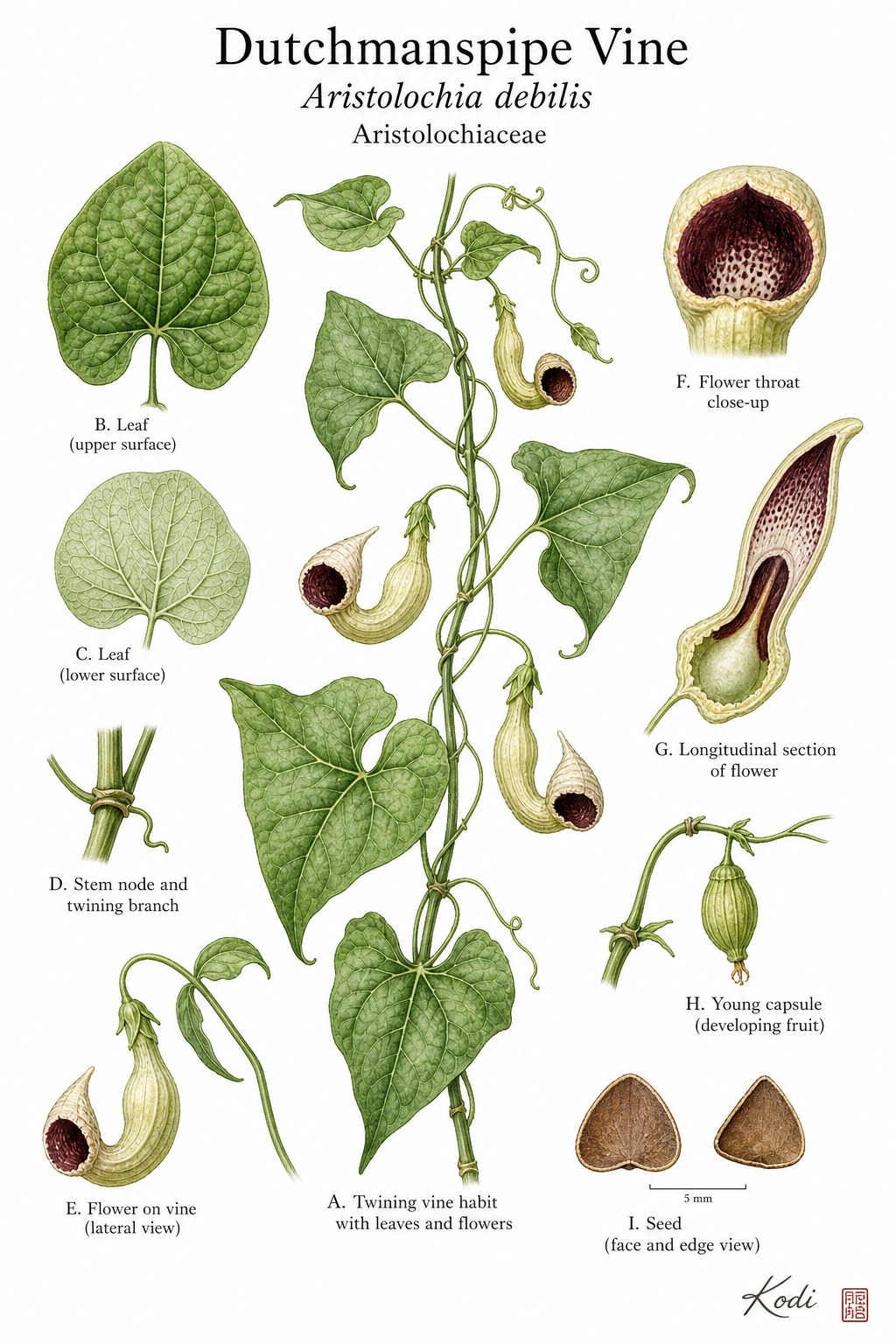
Known in TCM as Tian Xian Teng (天仙藤), this bitter, warm herb enters the Liver, Spleen, and Kidney. Traditionally, it moves Qi and relieves pain - Tian Xian Teng was historically used for stomachache, abdominal pain, hernia-type pain, and postpartum or constrained pain patterns in which Qi and Blood are both obstructed, most often applied for abdominal pain, joint pain, and edema. Modern research has identified Aristolochic among its active constituents.
Part used: Whole herb
Also Known As
Latin: Herba Aristolochiae | Pinyin: Tian Xian Teng | Chinese: 天仙藤
TCM Properties
- Taste
- bitter
- Temperature
- warm
- Channels
- Liver, Spleen, Kidney
Traditional Use
Primary Actions
- Moves Qi and relieves pain - Tian Xian Teng was historically used for stomachache, abdominal pain, hernia-type pain, and postpartum or constrained pain patterns in which Qi and Blood are both obstructed.
- Activates Blood and unblocks the channels - older materia medica apply it to fixed painful obstruction, numbness, and rheumatic or cold-damp patterns affecting the limbs and joints.
- Reduces edema in specialist historical use - the vine is best known in classical formula history for gestational edema and painful swollen legs, though this indication is now overshadowed by major aristolochic acid safety concerns.
Secondary Actions
- Tian Xian Teng belongs to the Aristolochia group and must be read through a modern safety lens rather than treated like an ordinary warm Qi-moving vine.
- In current practice, safer non-Aristolochia herbs are generally preferred whenever they can accomplish the same therapeutic goal.
Classic Formulas
- Tian Xian Teng San - the best-known classical formula association, used historically for edema during pregnancy attributed to Qi stagnation.
- Traditional pain-moving prescriptions paired Tian Xian Teng with Xiang Fu, Wu Yao, Chen Pi, and Mu Gua for abdominal, hernial, or channel pain.
- Historical Aristolochia-containing pain formulas are now mainly of academic interest because nephrotoxicity and carcinogenicity outweigh routine clinical use.
Classical References
- Traditional materia medica describe Tian Xian Teng as bitter and warm, entering the Liver, Spleen, and Kidney to move Qi, activate Blood, and stop pain.
- Older texts emphasize pregnancy edema and painful obstruction, but they predate modern recognition of aristolochic acid nephropathy.
- Its historical indications survive in herbology literature, while its safety profile has made it increasingly unsuitable for modern routine dispensing.
Modern Research
Active Compounds
- Aristolochic acid I and aristolochic acid II - nephrotoxic and carcinogenic nitrophenanthrene carboxylic acids
- Aristolactams - DNA-damaging Aristolochia metabolites related to genotoxicity concerns
- Flavonoids and terpenoids - broader phytochemical classes cataloged in Aristolochia species reviews
- Minor phenolic and volatile constituents - additional compounds investigated in older pharmacology work
Studied Effects
- A 2014 review of Aristolochia species summarized extensive phytochemistry and pharmacology but made clear that aristolochic-acid nephrotoxicity is central to any modern evaluation of the genus (PMID 24716140).
- A 2022 comparative analysis of Aristolochia medicinal herbs showed persistent aristolochic acid analogues and associated cytotoxicity and genotoxicity concerns across medicinal materials from this group (PMID 36548776).
- A 2022 review of detoxication techniques for aristolochic acid-containing traditional medicines underscored how difficult it is to separate historical use from serious toxicologic risk for herbs such as Tian Xian Teng (PMID 35494720).
PubMed References
- Chemical Constituents and Pharmacology of the Aristolochia (mădōu ling) species (2014)
- Comparative Analysis of Aristolochic Acids in Aristolochia Medicinal Herbs and Evaluation of Their Toxicities (2022)
- Recent developments in detoxication techniques for aristolochic acid-containing traditional Chinese medicines (2022)
Safety & Interactions
Contraindications
- Pregnancy
- Kidney disease or prior aristolochic acid nephropathy
- Any unsupervised internal use
- History of urothelial carcinoma or high renal-cancer risk
Cautions
- Tian Xian Teng belongs to the Aristolochia group, and aristolochic acid exposure has been linked to irreversible renal fibrosis, chronic kidney failure, and upper-tract urothelial carcinoma.
- Historical use in pregnancy-related edema should not be taken as a modern safety endorsement because the toxicology concerns are far more serious than the classical indication is important.
- MSK page not found - drug interaction data not available from Memorial Sloan Kettering integrative medicine database
Drug Interactions
- Nephrotoxic medications such as cisplatin, calcineurin inhibitors, or high-risk NSAID exposure - theoretical additive kidney injury risk
Conditions
- Abdominal Pain Traditional ★★★☆☆ JSON
- Joint Pain Traditional ★★☆☆☆ JSON
- Edema Traditional ★★☆☆☆ JSON
- Dysmenorrhea Traditional ★★☆☆☆ JSON
Frequently Asked Questions
What is Dutchmanspipe Vine used for?
Dutchmanspipe Vine is traditionally used to Moves Qi and relieves pain - Tian Xian Teng was historically used for stomachache, abdominal pain, hernia-type pain, and postpartum or constrained pain patterns in which Qi and Blood are both obstructed., Activates Blood and unblocks the channels - older materia medica apply it to fixed painful obstruction, numbness, and rheumatic or cold-damp patterns affecting the limbs and joints., Reduces edema in specialist historical use - the vine is best known in classical formula history for gestational edema and painful swollen legs, though this indication is now overshadowed by major aristolochic acid safety concerns.. Research has investigated its effects on: A 2014 review of Aristolochia species summarized extensive phytochemistry and pharmacology but made clear that aristolochic-acid nephrotoxicity is central to any modern evaluation of the genus (PMID 24716140).; A 2022 comparative analysis of Aristolochia medicinal herbs showed persistent aristolochic acid analogues and associated cytotoxicity and genotoxicity concerns across medicinal materials from this group (PMID 36548776)..
What are other names for Dutchmanspipe Vine?
Dutchmanspipe Vine is also known as Aristolochia. In TCM: 天仙藤 (Tian Xian Teng); Herba Aristolochiae.
Is Dutchmanspipe Vine safe during pregnancy?
Dutchmanspipe Vine is not recommended during pregnancy. Historical use in pregnancy-related edema should not be taken as a modern safety endorsement because the toxicology concerns are far more serious than the classical indication is important.
What are the contraindications for Dutchmanspipe Vine?
Dutchmanspipe Vine should not be used in: Pregnancy; Kidney disease or prior aristolochic acid nephropathy; Any unsupervised internal use; History of urothelial carcinoma or high renal-cancer risk. Consult a qualified practitioner before use.
Does Dutchmanspipe Vine interact with any medications?
Dutchmanspipe Vine may interact with: Nephrotoxic medications such as cisplatin, calcineurin inhibitors, or high-risk NSAID exposure - theoretical additive kidney injury risk. Always inform your healthcare provider of any herbal supplements you are taking.