Hearth Center Earth
- Chinese
- 灶心土
- Pinyin
- Zao Xin Tu
- Latin
- Terra Flava Usta
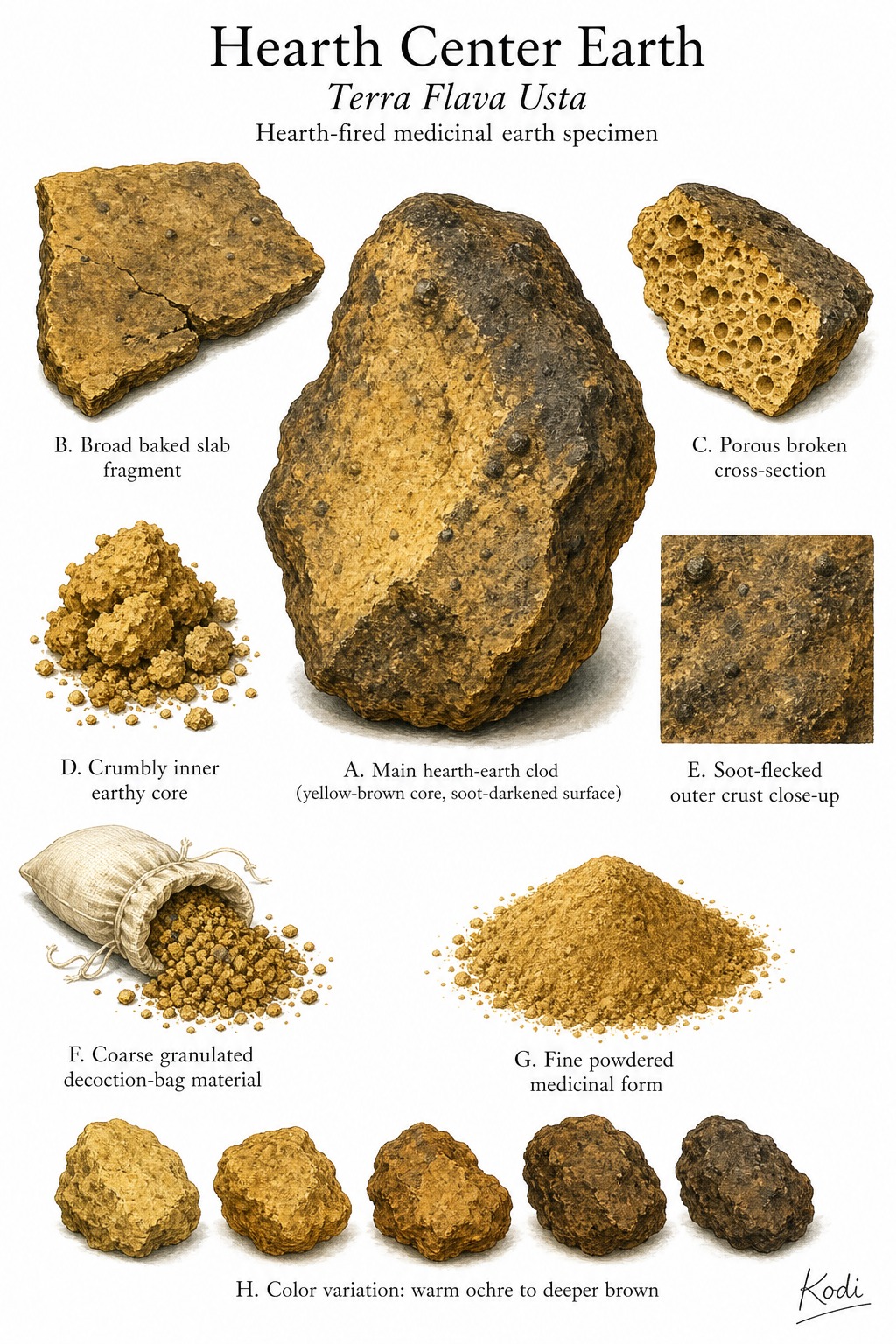
Known in TCM as Zao Xin Tu (灶心土), this acrid, warm herb enters the Spleen and Stomach. Traditionally, it warms the middle and stops vomiting - Zao Xin Tu is classically used for nausea, retching, and chronic vomiting when Stomach cold or middle-burner deficiency is the root pattern, most often applied for abnormal uterine bleeding, diarrhea, and nausea pregnancy. Modern research has identified Silica among its active constituents.
Also Known As
Latin: Terra Flava Usta | Pinyin: Zao Xin Tu | Chinese: 灶心土
TCM Properties
- Taste
- acrid
- Temperature
- warm
- Channels
- Spleen, Stomach
Traditional Use
Primary Actions
- Warms the middle and stops vomiting - Zao Xin Tu is classically used for nausea, retching, and chronic vomiting when Stomach cold or middle-burner deficiency is the root pattern.
- Warms the intestines and stops diarrhea - it is chosen for chronic diarrhea and loose stools arising from Spleen-Stomach deficiency cold rather than from damp-heat or infectious excess.
- Warms blood and arrests bleeding - classical use extends to hematemesis, hemafecia, uterine bleeding, and other bleeding patterns in which cold and deficiency impair the middle burner's ability to hold blood.
Secondary Actions
- Zao Xin Tu is a mineral-earth medicine traditionally decocted in a cloth bag and used for its warming, astringing, and settling qualities rather than for aromatic movement or tonification.
- Its classical niche is narrow but distinctive: cold-type bleeding, cold-type vomiting, and weak digestive transport.
Classic Formulas
- Huang Tu Tang - the defining classical formula for bleeding due to Spleen deficiency cold.
- Traditional pregnancy-vomiting combinations pair Zao Xin Tu with Sheng Jiang, Zhu Ru, or Zi Su Geng when cold and rebellious Stomach Qi are both present.
- Cold-deficiency diarrhea combinations pair it with Bai Zhu, Gan Jiang, Sha Ren, or Ren Shen to stabilize the middle while stopping leakage.
Classical References
- Classical herbology presents Zao Xin Tu or Fu Long Gan as a hearth-derived earth that warms the middle, stops vomiting, and arrests bleeding.
- Its use depends on distinguishing cold-type bleeding from heat-type bleeding; the same herb is considered wrong when bleeding arises from Yin deficiency heat or replete heat.
- Older texts also note its external use for certain sores and blisters, but its main identity remains internal warming and astringing.
Modern Research
Active Compounds
- Silica and aluminosilicate clay matrix - the structural basis of the hearth earth material
- Iron, calcium, and trace mineral fractions - part of the mineral profile associated with long-fired stove earth
- Adsorptive mineral surfaces - a likely material basis for its traditional settling and astringing reputation
Studied Effects
- Direct herb-specific PubMed literature on Zao Xin Tu is extremely sparse, and modern discussion remains far more historical and pharmacognostic than clinical.
- Any modern rationale is largely extrapolated from its mineral, adsorptive, and hemostatic-earth character rather than from controlled human studies on the traditional substance itself.
Safety & Interactions
Contraindications
- Bleeding from heat or Yin deficiency with heat signs
- Nausea or vomiting with clear excess heat rather than cold deficiency
- Unverified or contaminated mineral source
Cautions
- As a mineral earth product, Zao Xin Tu raises more sourcing and contamination questions than ordinary plant herbs and should come from a verified medicinal supplier.
- It is traditionally decocted in a bag because gritty mineral particles are not meant to be consumed directly in large amounts.
- MSK page not found - drug interaction data not available from Memorial Sloan Kettering integrative medicine database
Conditions
- Abnormal Uterine Bleeding Traditional ★★★☆☆ JSON
- Diarrhea Traditional ★★★☆☆ JSON
- Nausea Pregnancy Traditional ★★★☆☆ JSON
- Digestive Weakness Traditional ★★☆☆☆ JSON
Frequently Asked Questions
What is Hearth Center Earth used for?
Hearth Center Earth is traditionally used to Warms the middle and stops vomiting - Zao Xin Tu is classically used for nausea, retching, and chronic vomiting when Stomach cold or middle-burner deficiency is the root pattern., Warms the intestines and stops diarrhea - it is chosen for chronic diarrhea and loose stools arising from Spleen-Stomach deficiency cold rather than from damp-heat or infectious excess., Warms blood and arrests bleeding - classical use extends to hematemesis, hemafecia, uterine bleeding, and other bleeding patterns in which cold and deficiency impair the middle burner's ability to hold blood.. Research has investigated its effects on: Direct herb-specific PubMed literature on Zao Xin Tu is extremely sparse, and modern discussion remains far more historical and pharmacognostic than clinical.; Any modern rationale is largely extrapolated from its mineral, adsorptive, and hemostatic-earth character rather than from controlled human studies on the traditional substance itself..
What are other names for Hearth Center Earth?
Hearth Center Earth is also known as Terra. In TCM: 灶心土 (Zao Xin Tu); Terra Flava Usta.
Is Hearth Center Earth safe during pregnancy?
The safety of Hearth Center Earth during pregnancy has not been established. Consult a qualified healthcare provider before use.
What are the contraindications for Hearth Center Earth?
Hearth Center Earth should not be used in: Bleeding from heat or Yin deficiency with heat signs; Nausea or vomiting with clear excess heat rather than cold deficiency; Unverified or contaminated mineral source. Consult a qualified practitioner before use.