Emblic Leafflower Fruit
- Chinese
- 余甘子
- Pinyin
- Yu Gan Zi
- Latin
- Fructus Phyllanthi
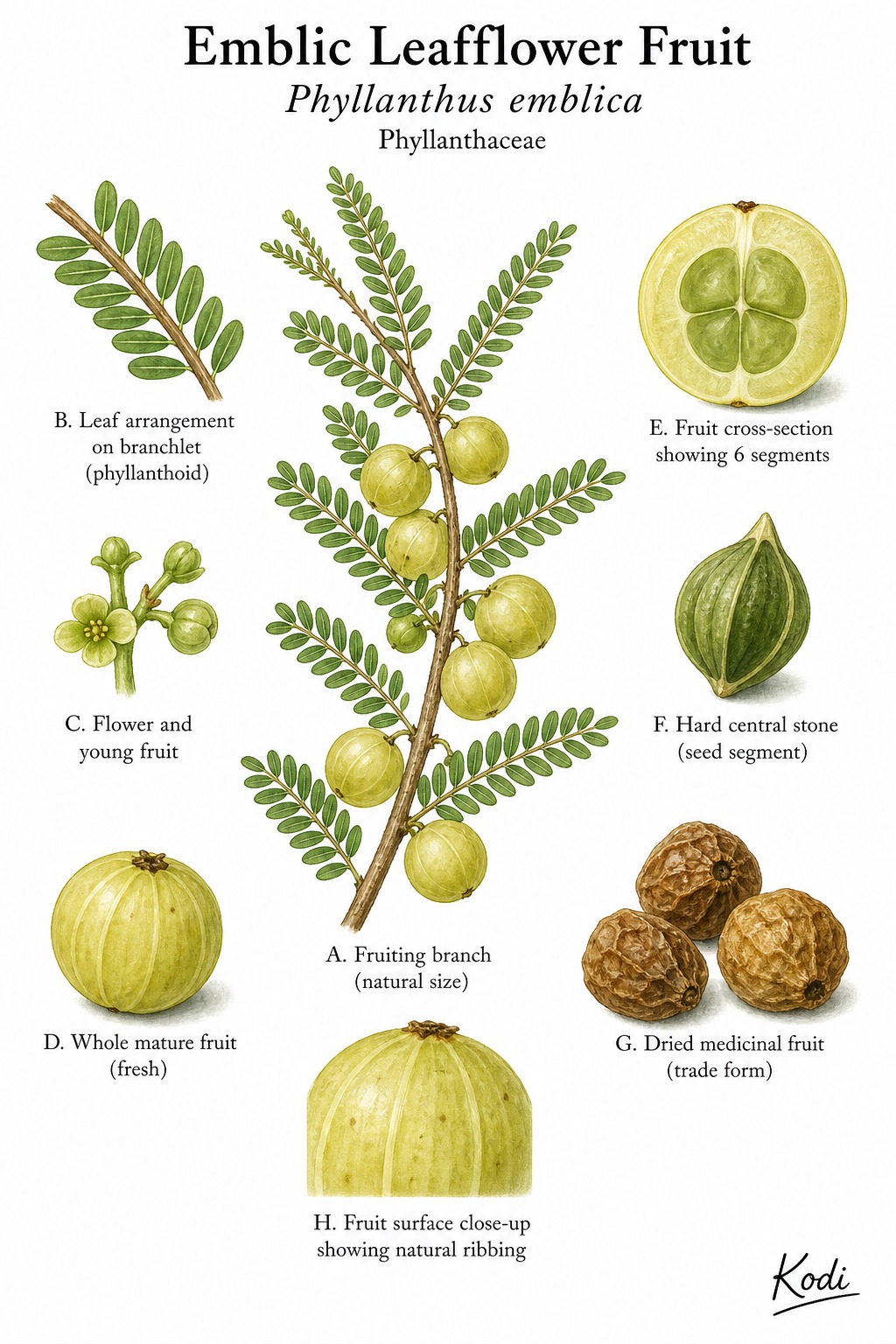
Known in TCM as Yu Gan Zi (余甘子), this sweet and sour and astringent, cool herb enters the Lung and Stomach. Traditionally, it clears heat and benefits the throat - Yu Gan Zi is widely used for sore throat, hoarseness, and inflammatory heat affecting the mouth and upper respiratory tract, most often applied for sore throat, indigestion, and type 2 diabetes. Modern research has identified Hydrolyzable among its active constituents.
Part used: Fruit
Also Known As
Latin: Fructus Phyllanthi | Pinyin: Yu Gan Zi | Chinese: 余甘子
TCM Properties
- Taste
- sweet, sour, astringent
- Temperature
- cool
- Channels
- Lung, Stomach
Traditional Use
Primary Actions
- Clears heat and benefits the throat - Yu Gan Zi is widely used for sore throat, hoarseness, and inflammatory heat affecting the mouth and upper respiratory tract.
- Generates fluids and harmonizes digestion - its sweet-sour profile gives it a dual reputation for quenching dryness while helping nausea, poor appetite, or post-illness digestive weakness.
- Astringes mildly while preserving vitality - traditional use extends to cough, internal heat, and constitutional depletion states where cooling nourishment is preferred over harsh draining.
Secondary Actions
- Yu Gan Zi is used across multiple Asian medical traditions, including Chinese regional practice and Ayurveda, so its literature base is broader than a single pharmacopoeial stream.
- Because it is also a food-like fruit, ordinary culinary use and concentrated extract use should not be treated as interchangeable.
Classic Formulas
- Throat-soothing formulas often pair Yu Gan Zi with Jie Geng, Gan Cao, or cooling fruit herbs for painful swelling and hoarseness.
- Digestive and fluid-generating combinations use Yu Gan Zi when heat, dryness, and mild food stagnation overlap.
- Modern patent formulas and lozenges rely on Yu Gan Zi more often than older fixed canonical formulas do.
Classical References
- Later Chinese materia medica and regional usage record Yu Gan Zi as a sour-sweet cooling fruit that benefits the throat and Stomach.
- Its traditional profile bridges food and medicine, making it milder and more broadly tolerated than many bitter heat-clearing herbs.
- Ayurvedic amla literature strongly reinforces the fruit's reputation for replenishment, cooling, and broad tonic support.
Modern Research
Active Compounds
- Hydrolyzable tannins such as emblicanin-related fractions - major antioxidant constituents
- Gallic acid and ellagic acid derivatives - prominent phenolics tied to anti-inflammatory and metabolic research
- Vitamin C and supportive antioxidant cofactors - part of the fruit's long-standing nutritional reputation
- Flavonoids and other polyphenols - broader phytochemical contributors to vascular and metabolic studies
Studied Effects
- A 2021 comprehensive review summarized the fruit's traditional uses, chemistry, pharmacology, and toxicology, highlighting especially strong interest in antioxidant, metabolic, and anti-inflammatory effects (PMID 34480995).
- A newer review reaffirmed broad pharmacologic promise for Phyllanthus emblica while also underscoring the need to distinguish food use, traditional formulas, and standardized extracts in research claims (PMID 39069705).
- A systematic review of cardiovascular pharmacology found meaningful preclinical and early clinical interest in Emblica officinalis for cardiometabolic support, though study quality and formulation diversity remain limitations (PMID 30386531).
- In a randomized controlled study, Phyllanthus emblica extract improved endothelial dysfunction and oxidative stress biomarkers in patients with type 2 diabetes mellitus, giving this herb more direct human metabolic evidence than many fruits used in traditional medicine (PMID 23935377).
PubMed References
- Traditional uses, bioactive composition, pharmacology, and toxicology of Phyllanthus emblica fruits: A comprehensive review (2021)
- The Phyllanthus emblica Fruits: A Review on Phytochemistry Traditional Uses, Bioactive Composition and Pharmacological Activities (2024)
- A systematic review on the cardiovascular pharmacology of Emblica officinalis Gaertn (2018)
- Effects of Phyllanthus emblica extract on endothelial dysfunction and biomarkers of oxidative stress in patients with type 2 diabetes mellitus: a randomized, double-blind, controlled study (2013)
Safety & Interactions
Contraindications
- Marked cold deficiency digestion with chronic loose stools if taken in large medicinal amounts
Cautions
- Food-level use is usually well tolerated, but concentrated extracts may affect blood sugar or other metabolic markers more noticeably than the whole fruit.
- Sour astringent fruits can aggravate some cold-sensitive digestive patients when overused.
- MSK page not found - drug interaction data not available from Memorial Sloan Kettering integrative medicine database
Drug Interactions
- Antidiabetic medications - theoretical additive glucose-lowering effect with concentrated extract use
Conditions
- Sore Throat Traditional ★★★★☆ JSON
- Indigestion Traditional ★★★☆☆ JSON
- Type 2 Diabetes Research ★★☆☆☆ JSON
- Cough Traditional ★★☆☆☆ JSON
Frequently Asked Questions
What is Emblic Leafflower Fruit used for?
Emblic Leafflower Fruit is traditionally used to Clears heat and benefits the throat - Yu Gan Zi is widely used for sore throat, hoarseness, and inflammatory heat affecting the mouth and upper respiratory tract., Generates fluids and harmonizes digestion - its sweet-sour profile gives it a dual reputation for quenching dryness while helping nausea, poor appetite, or post-illness digestive weakness., Astringes mildly while preserving vitality - traditional use extends to cough, internal heat, and constitutional depletion states where cooling nourishment is preferred over harsh draining.. Research has investigated its effects on: A 2021 comprehensive review summarized the fruit's traditional uses, chemistry, pharmacology, and toxicology, highlighting especially strong interest in antioxidant, metabolic, and anti-inflammatory effects (PMID 34480995).; A newer review reaffirmed broad pharmacologic promise for Phyllanthus emblica while also underscoring the need to distinguish food use, traditional formulas, and standardized extracts in research claims (PMID 39069705)..
What are other names for Emblic Leafflower Fruit?
Emblic Leafflower Fruit is also known as Phyllanthi. In TCM: 余甘子 (Yu Gan Zi); Fructus Phyllanthi.
Is Emblic Leafflower Fruit safe during pregnancy?
The safety of Emblic Leafflower Fruit during pregnancy has not been established. Consult a qualified healthcare provider before use.
What are the contraindications for Emblic Leafflower Fruit?
Emblic Leafflower Fruit should not be used in: Marked cold deficiency digestion with chronic loose stools if taken in large medicinal amounts. Consult a qualified practitioner before use.
Does Emblic Leafflower Fruit interact with any medications?
Emblic Leafflower Fruit may interact with: Antidiabetic medications - theoretical additive glucose-lowering effect with concentrated extract use. Always inform your healthcare provider of any herbal supplements you are taking.