Ephedra
- Chinese
- 麻黄
- Pinyin
- Ma Huang
- Latin
- Herba Ephedrae
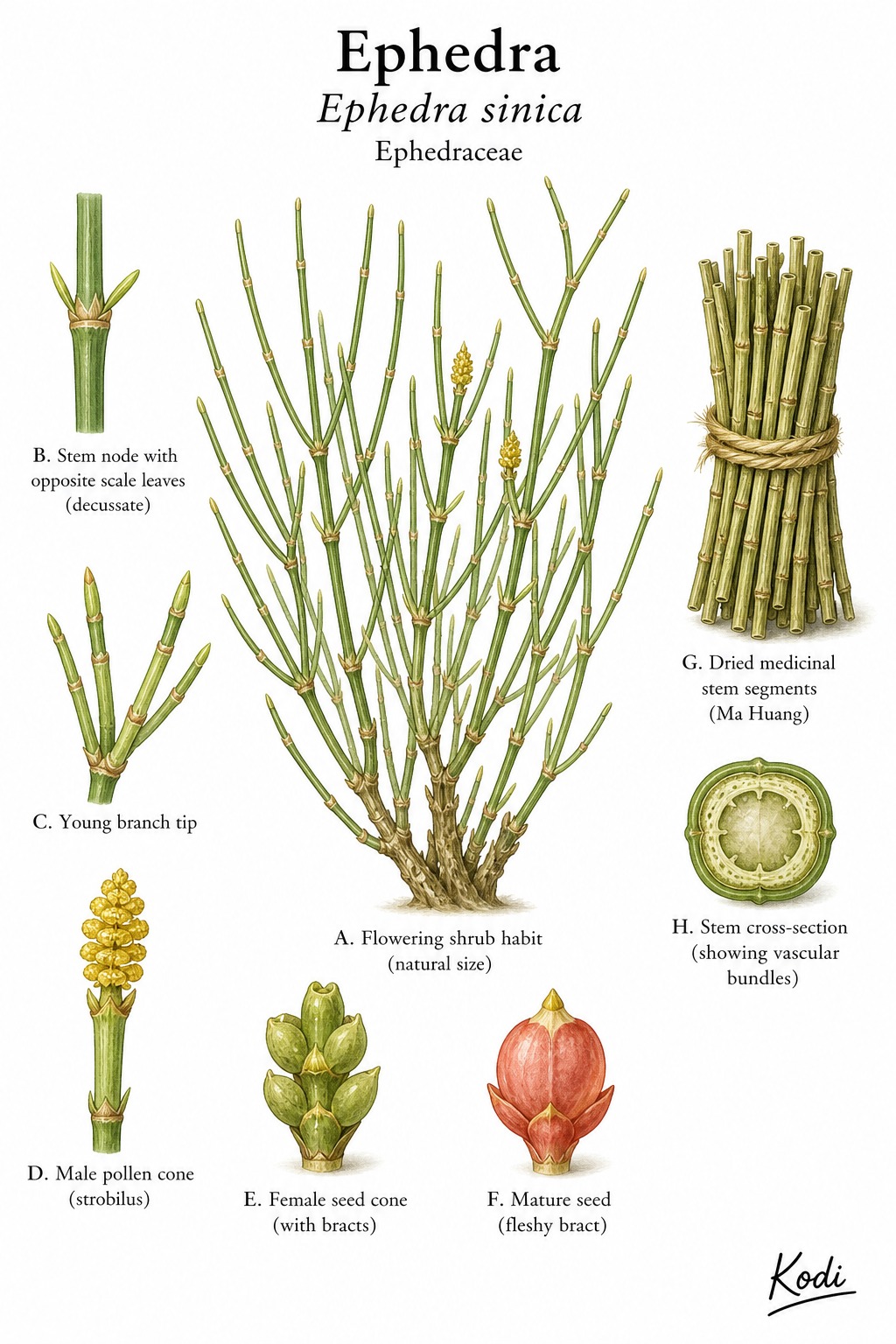
Known in TCM as Ma Huang (麻黄), this acrid and slightly bitter, warm herb enters the Lung and Bladder. Traditionally, it releases the exterior and promotes sweating - Ma Huang is one of the most famous classical herbs for wind-cold exterior excess with chills, fever, body aches, and absence of sweating, most often applied for common cold, asthma, and cough. Modern research has identified Ephedrine among its active constituents.
Part used: Whole herb
TCM Properties
- Taste
- acrid, slightly bitter
- Temperature
- warm
- Channels
- Lung, Bladder
Traditional Use
Primary Actions
- Releases the exterior and promotes sweating - Ma Huang is one of the most famous classical herbs for wind-cold exterior excess with chills, fever, body aches, and absence of sweating.
- Disseminates Lung qi and calms wheezing - it is a major herb for asthma, chest tightness, and cough when the Lung is constrained and the pathogen remains unresolved.
- Promotes urination and reduces edema - classical use extends to superficial swelling and water retention when the exterior and water pathways are both obstructed.
- Warms the channels in selected forms - honey-fried or root-related preparations have distinct traditional uses, but raw Ma Huang remains the strongly dispersing, stimulating form most people mean.
Secondary Actions
- Ma Huang is a cornerstone classical herb but is not a casual wellness stimulant; dose, processing, pairing, and patient selection matter enormously.
- The crude TCM herb used in supervised decoctions is not the same thing as the ephedra-containing weight-loss supplements that caused major safety controversies.
Classic Formulas
- Ma Huang Tang - classic exterior wind-cold excess formula with no sweating.
- Da Qing Long Tang and Xiao Qing Long Tang - important formulas using Ma Huang in stronger exterior or phlegm-fluid patterns.
- She Gan Ma Huang Tang and Yue Bi Tang - traditional strategies for wheezing and edema respectively.
Classical References
- Shang Han Lun gives Ma Huang a central place in exterior cold and wheezing treatment, making it one of the most textually important release-the-exterior herbs.
- Traditional herbology emphasizes that Ma Huang's power comes with risk, so it is matched to excess patterns and avoided in deficiency, spontaneous sweating, or fragility.
- Later commentaries distinguish careful formula-based use from indiscriminate stimulant-style consumption.
Modern Research
Active Compounds
- Ephedrine - the best-known sympathomimetic alkaloid associated with bronchodilatory and stimulant effects
- Pseudoephedrine and methylephedrine - related alkaloids contributing to decongestant and adrenergic activity
- Ephedra polysaccharides - non-alkaloid fractions studied for anti-inflammatory and immunologic effects
- Flavonoids and tannins - supportive constituents explored in broader pharmacologic profiling
Studied Effects
- A 2023 review summarized Ma Huang's phytochemistry, classical applications, pharmacology, and alkaloid toxicity, reinforcing both its traditional importance and its modern risk profile (PMID 36677722).
- FDA adverse-event analysis linked ma huang use to serious cardiovascular events, including stroke and myocardial injury, and remains one of the most important modern safety signals for this herb (PMID 11795249).
- LiverTox notes that ephedra species containing ephedrine alkaloids have been associated with severe adverse effects and that ephedra-containing supplements were banned from sale in the United States (PMID 31644021).
PubMed References
Safety & Interactions
Contraindications
- Hypertension, arrhythmia, coronary artery disease, or prior stroke
- Anxiety, panic disorder, severe insomnia, or agitation
- Hyperthyroidism or uncontrolled glaucoma
- Pregnancy and breastfeeding
- Concurrent use of stimulant-style supplements without direct medical supervision
Cautions
- Memorial Sloan Kettering warns that ephedra is a stimulant associated with heart attack, stroke, and severe blood-pressure effects.
- Ephedra-containing dietary supplements were banned by the FDA in the United States in 2004 because they presented an unreasonable risk of illness or injury.
- Even when Ma Huang has a legitimate traditional indication, it should be used only in trained formula-based practice and not as a self-prescribed energy, weight-loss, or performance product.
Drug Interactions
- MAO inhibitors - risk of severe hypertensive or stimulant reactions
- Other stimulants such as caffeine, amphetamine-like agents, or decongestants - additive cardiovascular and CNS effects
- Beta-agonists, bronchodilators, or blood-pressure medications - unpredictable additive or opposing adrenergic effects
Conditions
Frequently Asked Questions
What is Ephedra used for?
Ephedra is traditionally used to Releases the exterior and promotes sweating - Ma Huang is one of the most famous classical herbs for wind-cold exterior excess with chills, fever, body aches, and absence of sweating., Disseminates Lung qi and calms wheezing - it is a major herb for asthma, chest tightness, and cough when the Lung is constrained and the pathogen remains unresolved., Promotes urination and reduces edema - classical use extends to superficial swelling and water retention when the exterior and water pathways are both obstructed., Warms the channels in selected forms - honey-fried or root-related preparations have distinct traditional uses, but raw Ma Huang remains the strongly dispersing, stimulating form most people mean.. Research has investigated its effects on: A 2023 review summarized Ma Huang's phytochemistry, classical applications, pharmacology, and alkaloid toxicity, reinforcing both its traditional importance and its modern risk profile (PMID 36677722).; FDA adverse-event analysis linked ma huang use to serious cardiovascular events, including stroke and myocardial injury, and remains one of the most important modern safety signals for this herb (PMID 11795249)..
Is Ephedra safe during pregnancy?
Ephedra is not recommended during pregnancy.
What are the contraindications for Ephedra?
Ephedra should not be used in: Hypertension, arrhythmia, coronary artery disease, or prior stroke; Anxiety, panic disorder, severe insomnia, or agitation; Hyperthyroidism or uncontrolled glaucoma; Pregnancy and breastfeeding; Concurrent use of stimulant-style supplements without direct medical supervision. Consult a qualified practitioner before use.
Does Ephedra interact with any medications?
Ephedra may interact with: MAO inhibitors - risk of severe hypertensive or stimulant reactions; Other stimulants such as caffeine, amphetamine-like agents, or decongestants - additive cardiovascular and CNS effects; Beta-agonists, bronchodilators, or blood-pressure medications - unpredictable additive or opposing adrenergic effects. Always inform your healthcare provider of any herbal supplements you are taking.