Fennel Fruit
- Chinese
- 茴香
- Pinyin
- Hui Xiang
- Latin
- Fructus Foeniculi
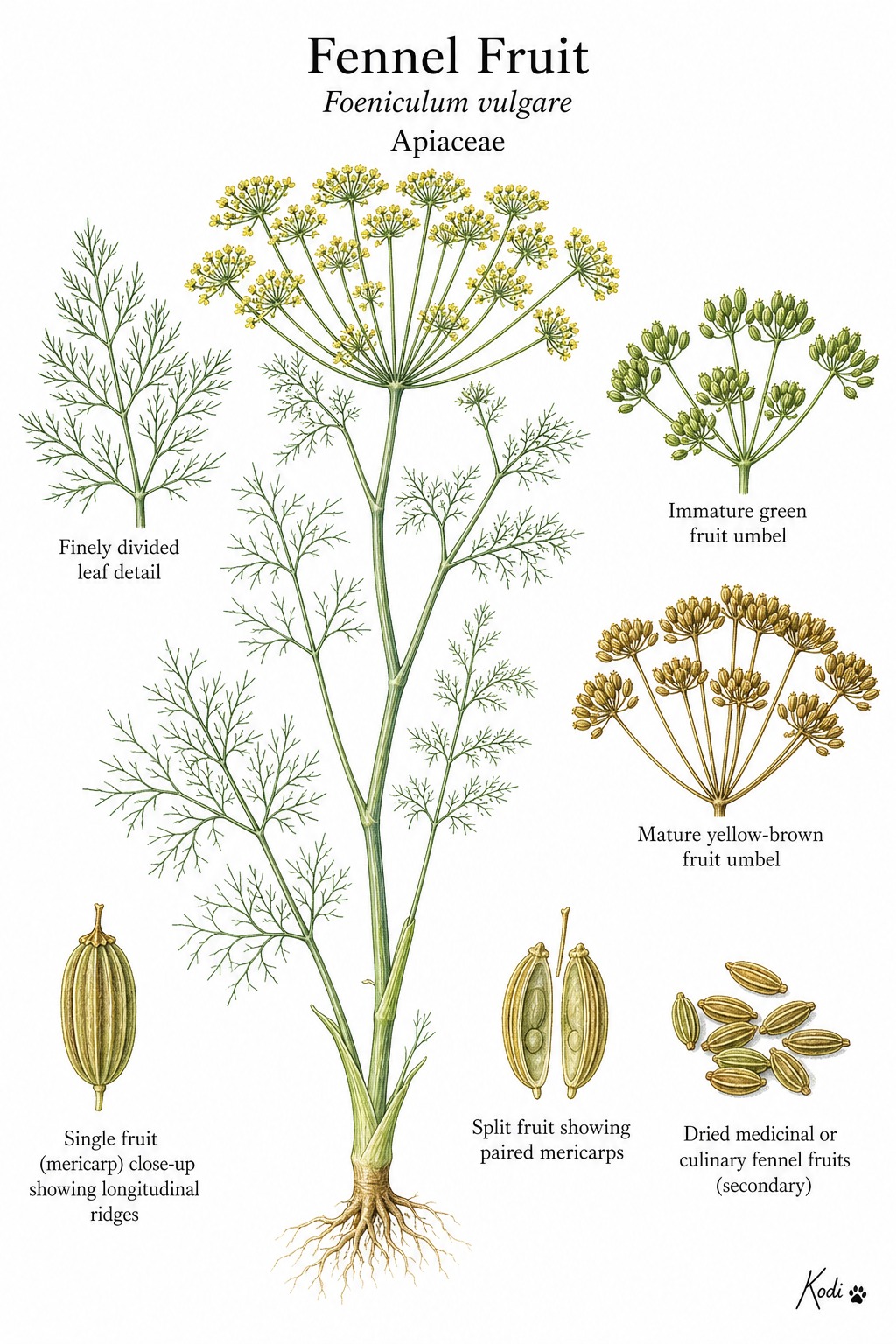
Known in TCM as Hui Xiang (茴香), this acrid, warm herb enters the Liver, Kidney, Spleen, and Stomach. Traditionally, it warms the middle and lower burner and alleviates pain - fennel fruit is used for cold-type abdominal pain, poor digestion, and uncomfortable qi stagnation in the belly, most often applied for abdominal pain, indigestion, and nausea. Modern research has identified Anethole among its active constituents.
Part used: Fruit
Also Known As
Latin: Fructus Foeniculi | Pinyin: Hui Xiang | Chinese: 茴香
TCM Properties
- Taste
- acrid
- Temperature
- warm
- Channels
- Liver, Kidney, Spleen, Stomach
Traditional Use
Primary Actions
- Warms the middle and lower burner and alleviates pain - fennel fruit is used for cold-type abdominal pain, poor digestion, and uncomfortable qi stagnation in the belly.
- Regulates qi and harmonizes the Stomach - it helps with nausea, food stagnation, and digestive discomfort when cold and sluggishness are involved.
- Relieves cramping - both traditional and modern herbal use recognize fennel's usefulness for spasmodic pain, including colic and some menstrual discomfort.
Secondary Actions
- This common-name listing overlaps heavily with the official medicinal herb Xiao Hui Xiang and is best read as the broader fennel-fruit identity rather than a completely separate drug.
- Food-level fennel use is generally gentle, but concentrated extracts and essential oils should not be treated as equivalent to culinary intake.
Classic Formulas
- Warming lower-abdominal formulas such as Tian Tai Wu Yao San provide the closest classical analogue for fennel's cold-dispelling pain-relieving profile.
- Digestive household formulas and spice-herb teas use fennel for bloating, nausea, and cold-food stagnation more often than formal large classical prescriptions do.
- Modern integrative formulations use fennel for digestive spasm and menstrual discomfort in ways that bridge food and medicine.
Classical References
- Hui Xiang is the common shorter name for fennel, while Xiao Hui Xiang is the more explicit TCM medicinal name used in materia medica references.
- Traditional Chinese herbology classifies it as warm and acrid, entering the Liver, Kidney, Spleen, and Stomach to dispel cold and regulate qi.
- Its dual identity as spice and medicine makes it one of the more approachable warming herbs for digestive cold.
Modern Research
Active Compounds
- Anethole - the best-known sweet aromatic constituent linked to antispasmodic effects
- Fenchone - a characteristic volatile contributing digestive and aromatic activity
- Estragole and related essential-oil constituents - relevant to both efficacy and safety discussions
- Flavonoids and phenolic acids - supportive antioxidant and anti-inflammatory compounds
Studied Effects
- A comprehensive 2014 review summarized fennel's botany, chemistry, pharmacology, contemporary application, and toxicology, confirming its unusually broad evidence base for a culinary spice-herb (PMID 25162032).
- A 2021 systematic review and meta-analysis concluded that fennel can improve primary dysmenorrhea symptoms, supporting one of its most common modern women's-health uses (PMID 34187122).
- A randomized placebo-controlled trial found that fennel seed oil emulsion improved infantile colic, consistent with the fruit's longstanding antispasmodic reputation (PMID 12868253).
PubMed References
- Foeniculum vulgare Mill: a review of its botany, phytochemistry, pharmacology, contemporary application, and toxicology (2014)
- Effect of fennel on primary dysmenorrhea: a systematic review and meta-analysis (2021)
- The effect of fennel (Foeniculum Vulgare) seed oil emulsion in infantile colic: a randomized, placebo-controlled study (2003)
Safety & Interactions
Contraindications
- Clear internal heat or yin-deficient heat patterns without cold stagnation
Cautions
- Culinary fennel is usually well tolerated, but concentrated essential oil and extract products are stronger and may irritate sensitive users.
- Patients with significant reflux or aromatic-spice sensitivity may find warm pungent preparations aggravating.
- MSK page not found - drug interaction data not available from Memorial Sloan Kettering integrative medicine database
Conditions
- Abdominal Pain Traditional ★★★★☆ JSON
- Indigestion Traditional ★★★☆☆ JSON
- Nausea Traditional ★★☆☆☆ JSON
- Dysmenorrhea Research ★★☆☆☆ JSON
Frequently Asked Questions
What is Fennel Fruit used for?
Fennel Fruit is traditionally used to Warms the middle and lower burner and alleviates pain - fennel fruit is used for cold-type abdominal pain, poor digestion, and uncomfortable qi stagnation in the belly., Regulates qi and harmonizes the Stomach - it helps with nausea, food stagnation, and digestive discomfort when cold and sluggishness are involved., Relieves cramping - both traditional and modern herbal use recognize fennel's usefulness for spasmodic pain, including colic and some menstrual discomfort.. Research has investigated its effects on: A comprehensive 2014 review summarized fennel's botany, chemistry, pharmacology, contemporary application, and toxicology, confirming its unusually broad evidence base for a culinary spice-herb (PMID 25162032).; A 2021 systematic review and meta-analysis concluded that fennel can improve primary dysmenorrhea symptoms, supporting one of its most common modern women's-health uses (PMID 34187122)..
What are other names for Fennel Fruit?
Fennel Fruit is also known as Foeniculi. In TCM: 茴香 (Hui Xiang); Fructus Foeniculi.
Is Fennel Fruit safe during pregnancy?
The safety of Fennel Fruit during pregnancy has not been established. Consult a qualified healthcare provider before use.
What are the contraindications for Fennel Fruit?
Fennel Fruit should not be used in: Clear internal heat or yin-deficient heat patterns without cold stagnation. Consult a qualified practitioner before use.