Small Fennel Fruit
- Chinese
- 小茴香
- Pinyin
- Xiao Hui Xiang
- Latin
- Fructus Foeniculi
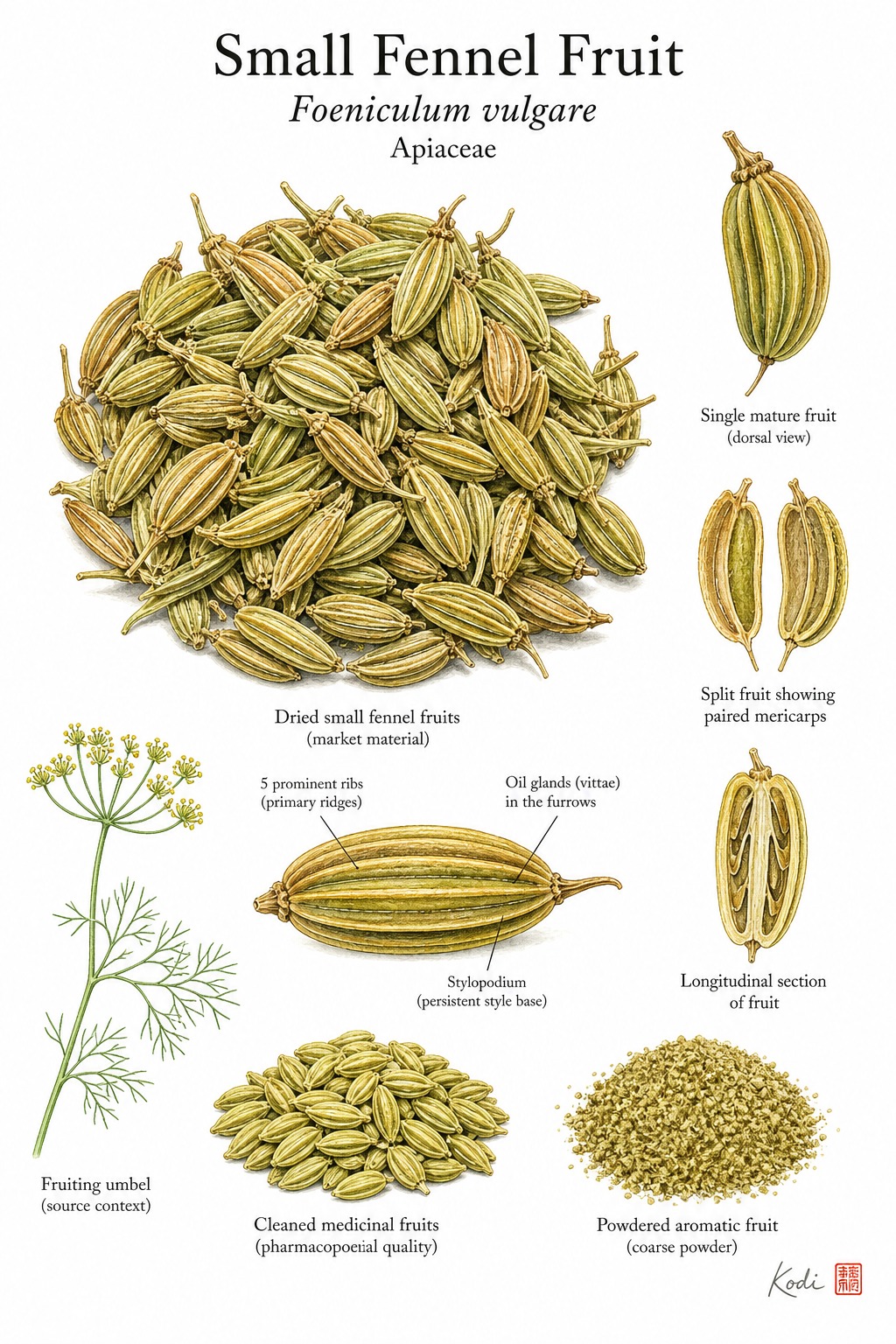
Known in TCM as Xiao Hui Xiang (小茴香), this acrid, warm herb enters the Liver, Kidney, Spleen, and Stomach. Traditionally, it warms the Liver and Kidney and dispels cold - Xiao Hui Xiang is the classical TCM medicinal fennel seed for cold-type lower abdominal pain and cramping, most often applied for abdominal pain, dysmenorrhea, and indigestion. Modern research has identified Anethole among its active constituents.
Part used: Fruit
Also Known As
Latin: Fructus Foeniculi | Pinyin: Xiao Hui Xiang | Chinese: 小茴香
TCM Properties
- Taste
- acrid
- Temperature
- warm
- Channels
- Liver, Kidney, Spleen, Stomach
Traditional Use
Primary Actions
- Warms the Liver and Kidney and dispels cold - Xiao Hui Xiang is the classical TCM medicinal fennel seed for cold-type lower abdominal pain and cramping.
- Moves qi and alleviates pain - it is used for hernia-type discomfort, menstrual cold pain, and stagnation in the lower burner.
- Harmonizes the Stomach - it also helps nausea, poor appetite, and cold-digestive discomfort when the middle burner lacks warmth.
Secondary Actions
- Compared with the broader culinary identity of Hui Xiang, Xiao Hui Xiang is the more explicit medicinal term used in Chinese materia medica.
- Its signature is warmth plus movement, so it is especially useful when pain is relieved by heat and worsened by cold.
Classic Formulas
- Tian Tai Wu Yao San - an important lower-abdominal cold and qi-stagnation formula that illustrates Xiao Hui Xiang's pain-relieving role.
- Nuan Gan Jian - warming-Liver formula that uses Xiao Hui Xiang when cold contracts the lower burner.
- Smaller digestive and menstrual formulas pair Xiao Hui Xiang with Gao Liang Jiang, Wu Zhu Yu, or Yan Hu Suo when cold and pain are tightly linked.
Classical References
- Traditional herbology classifies Xiao Hui Xiang as a warm acrid seed that enters the Liver, Kidney, Spleen, and Stomach.
- Its classical niche is colder, lower, and more pain-focused than many ordinary kitchen spice uses would suggest.
- It is preferred when cold-induced cramping and stagnation dominate rather than damp-heat or food-heat patterns.
Modern Research
Active Compounds
- Anethole - major aromatic constituent linked to antispasmodic and menstrual-comfort effects
- Fenchone - volatile compound contributing digestive and carminative actions
- Estragole and related essential-oil components - important for both efficacy and toxicology discussions
- Flavonoids and phenolics - supportive antioxidant and anti-inflammatory fractions
Studied Effects
- A broad pharmacologic review confirmed fennel's longstanding reputation as a digestive, spasmolytic, and multi-system medicinal plant with substantial modern research interest (PMID 25162032).
- A 2021 systematic review and meta-analysis found that fennel can help relieve primary dysmenorrhea, which matches Xiao Hui Xiang's classical role in cold menstrual pain (PMID 34187122).
- A randomized placebo-controlled study reported benefit from fennel seed oil emulsion in infantile colic, further supporting its antispasmodic digestive action (PMID 12868253).
PubMed References
- Foeniculum vulgare Mill: a review of its botany, phytochemistry, pharmacology, contemporary application, and toxicology (2014)
- Effect of fennel on primary dysmenorrhea: a systematic review and meta-analysis (2021)
- The effect of fennel (Foeniculum Vulgare) seed oil emulsion in infantile colic: a randomized, placebo-controlled study (2003)
Safety & Interactions
Contraindications
- Damp-heat or blazing internal heat patterns without cold
- Pain due to acute surgical abdomen rather than simple cold-type stagnation
Cautions
- Whole-seed use is usually gentle, but concentrated fennel oil is stronger and should not be treated as equivalent to ordinary decoction or culinary use.
- Warm acrid herbs can aggravate heat signs in patients who are not actually cold.
- MSK page not found - drug interaction data not available from Memorial Sloan Kettering integrative medicine database
Conditions
- Abdominal Pain Traditional ★★★★☆ JSON
- Dysmenorrhea Traditional ★★★☆☆ JSON
- Indigestion Traditional ★★★☆☆ JSON
- Nausea Traditional ★★☆☆☆ JSON
Frequently Asked Questions
What is Small Fennel Fruit used for?
Small Fennel Fruit is traditionally used to Warms the Liver and Kidney and dispels cold - Xiao Hui Xiang is the classical TCM medicinal fennel seed for cold-type lower abdominal pain and cramping., Moves qi and alleviates pain - it is used for hernia-type discomfort, menstrual cold pain, and stagnation in the lower burner., Harmonizes the Stomach - it also helps nausea, poor appetite, and cold-digestive discomfort when the middle burner lacks warmth.. Research has investigated its effects on: A broad pharmacologic review confirmed fennel's longstanding reputation as a digestive, spasmolytic, and multi-system medicinal plant with substantial modern research interest (PMID 25162032).; A 2021 systematic review and meta-analysis found that fennel can help relieve primary dysmenorrhea, which matches Xiao Hui Xiang's classical role in cold menstrual pain (PMID 34187122)..
What are other names for Small Fennel Fruit?
Small Fennel Fruit is also known as Foeniculi. In TCM: 小茴香 (Xiao Hui Xiang); Fructus Foeniculi.
Is Small Fennel Fruit safe during pregnancy?
The safety of Small Fennel Fruit during pregnancy has not been established. Consult a qualified healthcare provider before use.
What are the contraindications for Small Fennel Fruit?
Small Fennel Fruit should not be used in: Damp-heat or blazing internal heat patterns without cold; Pain due to acute surgical abdomen rather than simple cold-type stagnation. Consult a qualified practitioner before use.