Chinese Elder Leaf and Stem
- Chinese
- 陆英
- Pinyin
- Lu Ying
- Latin
- Herba Sambuci Chinensis
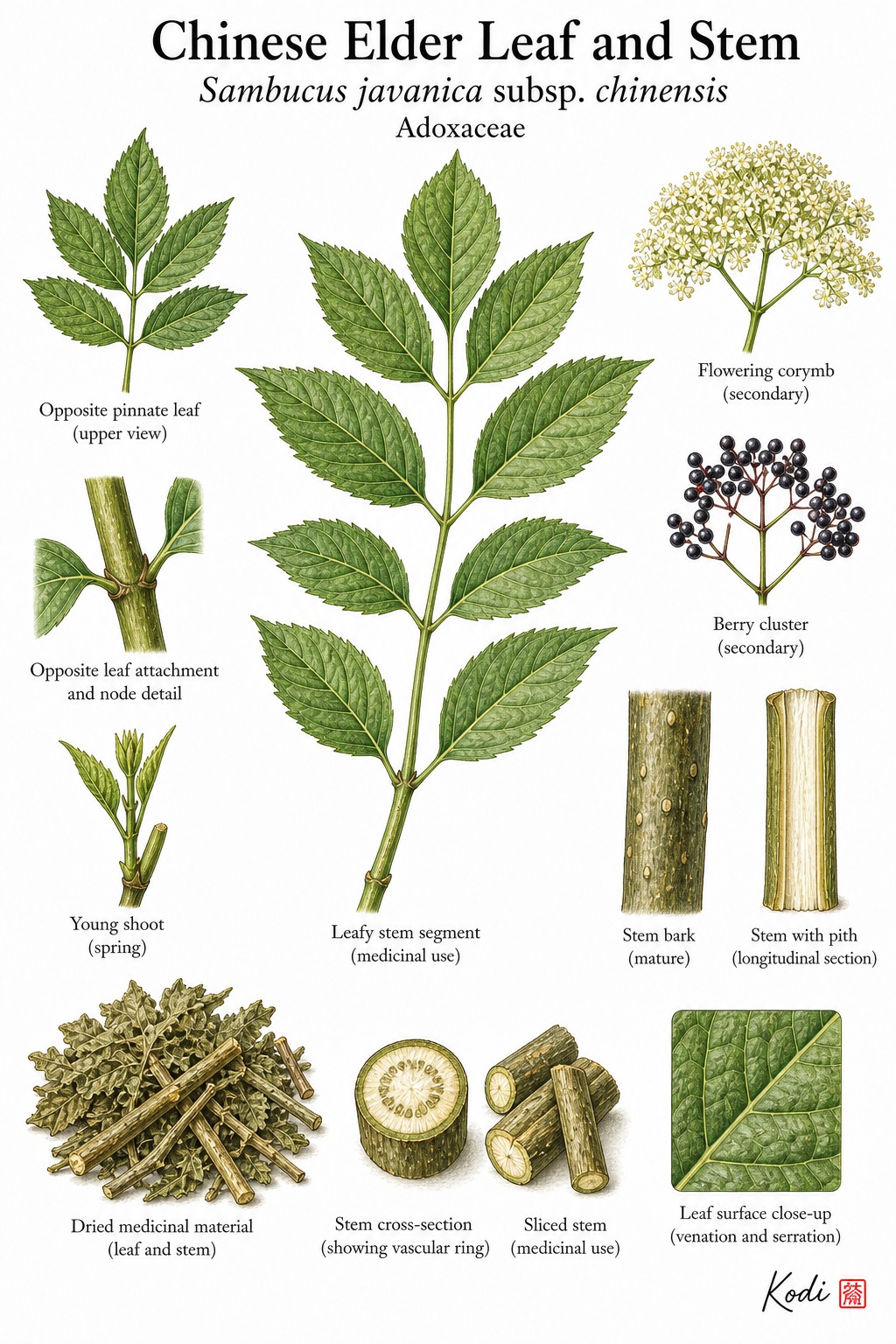
Known in TCM as Lu Ying (陆英), this bitter, neutral herb enters the Liver and Kidney. Traditionally, it dispels wind-damp and relaxes the channels - Lu Ying is traditionally used for rheumatic pain, lower-back and leg pain, and stiffness that worsens with dampness, most often applied for edema, rheumatism, and traumatic injury. Modern research has identified Flavonoids among its active constituents.
Part used: Whole herb
Also Known As
Latin: Herba Sambuci Chinensis | Pinyin: Lu Ying | Chinese: 陆英
TCM Properties
- Taste
- bitter
- Temperature
- neutral
- Channels
- Liver, Kidney
Traditional Use
Primary Actions
- Dispels wind-damp and relaxes the channels - Lu Ying is traditionally used for rheumatic pain, lower-back and leg pain, and stiffness that worsens with dampness.
- Promotes urination and reduces swelling - classical and regional sources use it for edema, swollen feet, and damp accumulation affecting the limbs.
- Activates blood and reduces traumatic swelling - folk and materia medica traditions extend its use to bruises, fractures, postpartum lochia retention, and painful swelling after injury.
- Clears toxic swelling externally - washes, poultices, and powders are used for itching rashes, erysipelas-type redness, carbuncles, and inflamed sores.
Secondary Actions
- Despite the historical slug, Lu Ying is a stems-and-leaves medicine rather than a flower drug, and the whole identity of the material matters for correct use.
- It sits closer to regional damp-trauma practice than to the cold-and-flu reputation many English speakers associate with European elderflower.
Classic Formulas
- Lu Ying with Yi Yi Ren or other damp-draining herbs - regional strategy for edema, damp arthralgia, and swollen painful legs.
- Lu Ying with Dang Gui, Chuan Xiong, or Ru Xiang - folk trauma combinations for bruises, fractures, or postpartum stagnant pain.
- Topical Lu Ying washes or poultices - traditional external-use approach for urticaria, erysipelas, toxic swelling, and itchy wind-damp skin eruptions.
Classical References
- ShennongAlpha and related materia medica summaries describe Lu Ying as the stems and leaves of Sambucus chinensis used to dispel wind, promote diuresis, relax tendons, and activate blood.
- Older discussions cite it for wind-damp arthralgia, edema, bruises, lochia retention, and itchy rashes, showing a broad pattern of damp-swelling and trauma use.
- Later regional herb manuals also extend Lu Ying to hepatitis, dysentery, tonsillitis, mastitis, burns, and fractures, especially in external or folk settings.
Modern Research
Active Compounds
- Flavonoids and phenolic acids - major constituents repeatedly reported in Sambucus chinensis analyses
- Ursolic acid and related triterpenes - important markers in Lu Ying extract studies
- Chlorogenic acid - a recurring phenolic constituent in quality-control work
- Tannins and broader polyphenol fractions - likely contributors to anti-inflammatory and astringent effects
Studied Effects
- A mouse study reported hepatoprotective activity from an active fraction of Sambucus chinensis against CCl4-induced hepatitis injury, supporting part of the herb's regional liver-swelling reputation (PMID 19112906).
- A pharmacokinetic study tracked ursolic acid after administration of a Lu Ying preparation, showing that modern extract research has focused on measurable triterpene markers rather than only crude decoction tradition (PMID 15930819).
- A chemistry-and-pharmacology review summarized older evidence for analgesic, anti-inflammatory, diuretic, and hepatoprotective effects, but also highlighted how much of the evidence remains preclinical and dated (PMID 15719672).
PubMed References
- [Research on active part of Sambucus chinensis against hepatitis mice induced by CCl4]. (2008)
- LC-MS determination and pharmacokinetic studies of ursolic acid in rat plasma after administration of the traditional chinese medicinal preparation Lu-Ying extract. (2005)
- [Advances in research on chemistry and pharmacology of Sambucus chinensis]. (2004)
Safety & Interactions
Contraindications
- Pregnancy
- Very weak constitutions without dampness, swelling, trauma, or wind-damp obstruction
Cautions
- Traditional sources distinguish the medicinal stems and leaves from the seeds, which contain cyanogenic glycosides and should not be treated casually.
- Older toxicology notes describe restlessness, tremor, and convulsions at extreme experimental doses, so concentrated extracts deserve more caution than ordinary decoctions.
- MSK page not found - drug interaction data not available from Memorial Sloan Kettering integrative medicine database
Conditions
- Edema Traditional ★★★★☆ JSON
- Rheumatism Traditional ★★★☆☆ JSON
- Traumatic Injury Traditional ★★★☆☆ JSON
- Urticaria Traditional ★★☆☆☆ JSON
Frequently Asked Questions
What is Chinese Elder Leaf and Stem used for?
Chinese Elder Leaf and Stem is traditionally used to Dispels wind-damp and relaxes the channels - Lu Ying is traditionally used for rheumatic pain, lower-back and leg pain, and stiffness that worsens with dampness., Promotes urination and reduces swelling - classical and regional sources use it for edema, swollen feet, and damp accumulation affecting the limbs., Activates blood and reduces traumatic swelling - folk and materia medica traditions extend its use to bruises, fractures, postpartum lochia retention, and painful swelling after injury., Clears toxic swelling externally - washes, poultices, and powders are used for itching rashes, erysipelas-type redness, carbuncles, and inflamed sores.. Research has investigated its effects on: A mouse study reported hepatoprotective activity from an active fraction of Sambucus chinensis against CCl4-induced hepatitis injury, supporting part of the herb's regional liver-swelling reputation (PMID 19112906).; A pharmacokinetic study tracked ursolic acid after administration of a Lu Ying preparation, showing that modern extract research has focused on measurable triterpene markers rather than only crude decoction tradition (PMID 15930819)..
What are other names for Chinese Elder Leaf and Stem?
Chinese Elder Leaf and Stem is also known as Sambuci. In TCM: 陆英 (Lu Ying); Herba Sambuci Chinensis.
Is Chinese Elder Leaf and Stem safe during pregnancy?
Chinese Elder Leaf and Stem is not recommended during pregnancy.
What are the contraindications for Chinese Elder Leaf and Stem?
Chinese Elder Leaf and Stem should not be used in: Pregnancy; Very weak constitutions without dampness, swelling, trauma, or wind-damp obstruction. Consult a qualified practitioner before use.