Franchet Groundcherry Calyx and Fruit
- Chinese
- 挂金灯
- Pinyin
- Gua Jin Deng
- Latin
- Calyx Seu Fructus Physalis
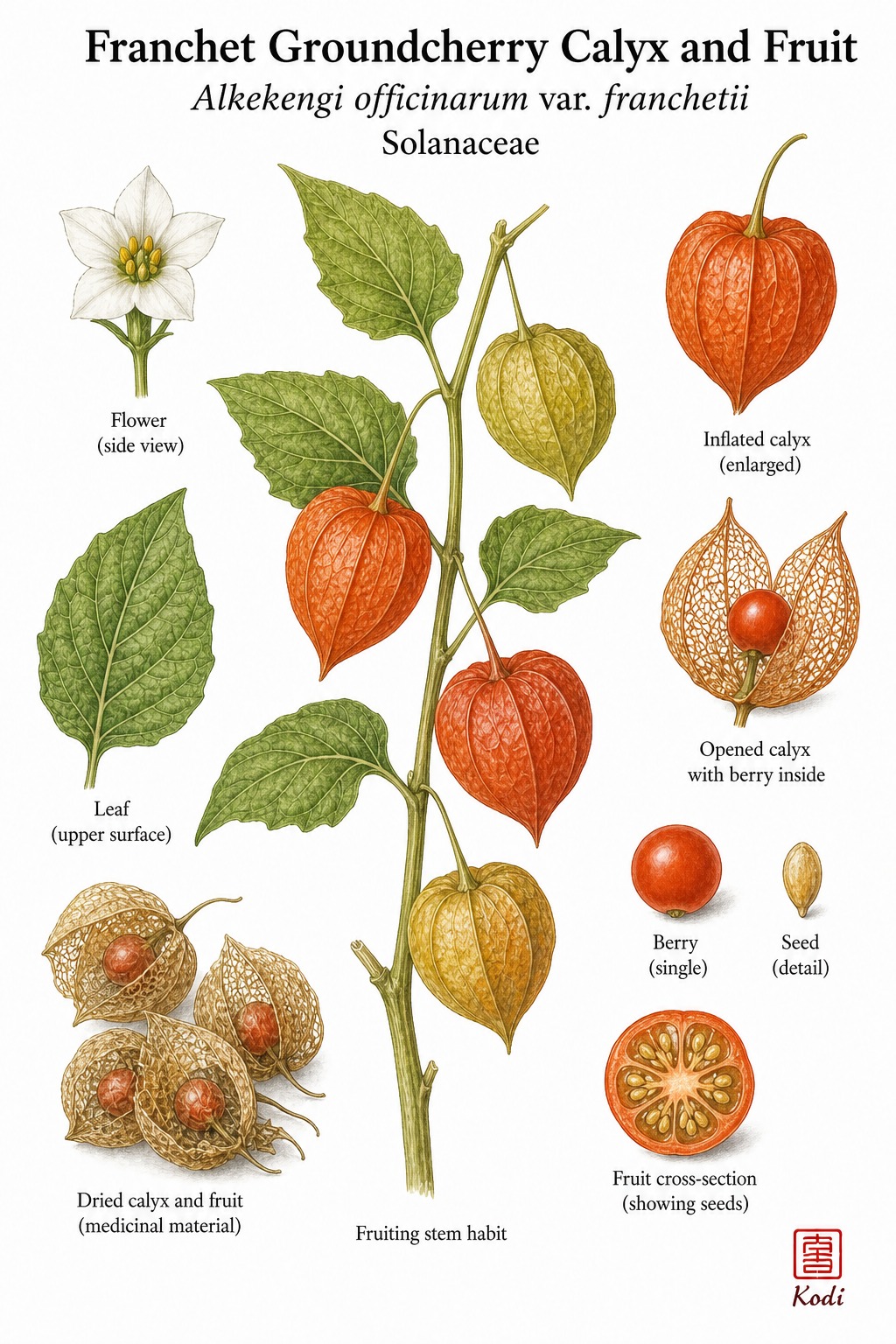
Known in TCM as Gua Jin Deng (挂金灯), this bitter, cold herb enters the Lung. Traditionally, it clears heat and relieves sore throat - Gua Jin Deng is used for painful swollen throat, hoarseness, and pharyngeal inflammation from toxic heat, most often applied for sore throat, tonsillitis, and cough. Modern research has identified Physalins among its active constituents.
Part used: Calyx
Also Known As
Latin: Calyx Seu Fructus Physalis | Pinyin: Gua Jin Deng | Chinese: 挂金灯
TCM Properties
- Taste
- bitter
- Temperature
- cold
- Channels
- Lung
Traditional Use
Primary Actions
- Clears heat and relieves sore throat - Gua Jin Deng is used for painful swollen throat, hoarseness, and pharyngeal inflammation from toxic heat.
- Resolves phlegm and eases cough - traditional use includes phlegmy cough and Lung-heat irritation of the upper airway.
- Clears toxin and promotes urination - materia medica sources extend its use to edema, jaundice, and dysuria in damp-heat patterns.
- Can be applied externally for toxic skin conditions - pemphigus, eczema, and inflamed lesions are classic external indications.
Secondary Actions
- Chinese materia medica often standardizes this drug under the name Jin Deng Long, while Gua Jin Deng remains a popular alias for the same lantern-fruit medicine.
- The medicinal drug includes the calyx and fruit and should not be confused with casual ornamental Chinese-lantern plant material.
Classical References
- TCM Wiki's Jin Deng Long monograph describes the drug as bitter and cold, entering the Lung to clear heat, remove toxicity, and promote diuresis.
- Chinese Pharmacopoeia-oriented reviews note use for throat pain, dysphonia, phlegmy cough, pemphigus, and eczema while recognizing Gua Jin Deng as a common alias.
Modern Research
Active Compounds
- Physalins - the best-known bioactive steroidal lactone class in Physalis alkekengi
- Flavonoids and phenolic acids - supportive antioxidant and anti-inflammatory constituents
- Carotenoid fractions - pigment-rich extracts studied for lipoxygenase-related activity
- Polysaccharides and sterol-like constituents - additional bioactive fractions discussed in review literature
Studied Effects
- A 2022 review summarized the pharmacognosy, chemical constituents, pharmacological effects, quality control, and applications of Physalis alkekengi var. franchetii, the standard source behind Jin Deng Long / Gua Jin Deng (PMID 35908519).
- An in vitro study found that Physalis alkekengi extracts reduced oxidative stress, inflammatory signaling, and apoptosis in endothelial cells exposed to hyperglycemia (PMID 32824505).
- A carotenoidic extract from Physalis alkekengi inhibited soybean lipoxygenase-1 activity, supporting continued anti-inflammatory interest in pigment fractions (PMID 24511537).
PubMed References
- Physalis alkekengi L. var. franchetii (Mast.) Makino: A review of the pharmacognosy, chemical constituents, pharmacological effects, quality control, and applications. (2022)
- Physalis alkekengi L. Extract Reduces the Oxidative Stress, Inflammation and Apoptosis in Endothelial Vascular Cells Exposed to Hyperglycemia. (2020)
- Physalis alkekengi carotenoidic extract inhibitor of soybean lipoxygenase-1 activity. (2014)
Safety & Interactions
Contraindications
- Spleen-Stomach cold or loose stool from deficiency
- Very weak patients without a true heat or toxicity pattern
Cautions
- Do not assume garden ornamental Chinese-lantern material is interchangeable with properly sourced medicinal-grade drug.
- Modern work centers on Physalis alkekengi / Jin Deng Long as the standardized drug, and identity variation across folk names should be checked carefully.
- MSK page not found - drug interaction data not available from Memorial Sloan Kettering integrative medicine database
Conditions
- Sore Throat Traditional ★★★★☆ JSON
- Tonsillitis Traditional ★★★☆☆ JSON
- Cough Traditional ★★★☆☆ JSON
- Urinary Tract Infection Traditional ★★☆☆☆ JSON
- Eczema Traditional ★★☆☆☆ JSON
Frequently Asked Questions
What is Franchet Groundcherry Calyx and Fruit used for?
Franchet Groundcherry Calyx and Fruit is traditionally used to Clears heat and relieves sore throat - Gua Jin Deng is used for painful swollen throat, hoarseness, and pharyngeal inflammation from toxic heat., Resolves phlegm and eases cough - traditional use includes phlegmy cough and Lung-heat irritation of the upper airway., Clears toxin and promotes urination - materia medica sources extend its use to edema, jaundice, and dysuria in damp-heat patterns., Can be applied externally for toxic skin conditions - pemphigus, eczema, and inflamed lesions are classic external indications.. Research has investigated its effects on: A 2022 review summarized the pharmacognosy, chemical constituents, pharmacological effects, quality control, and applications of Physalis alkekengi var. franchetii, the standard source behind Jin Deng Long / Gua Jin Deng (PMID 35908519).; An in vitro study found that Physalis alkekengi extracts reduced oxidative stress, inflammatory signaling, and apoptosis in endothelial cells exposed to hyperglycemia (PMID 32824505)..
What are other names for Franchet Groundcherry Calyx and Fruit?
Franchet Groundcherry Calyx and Fruit is also known as Seu. In TCM: 挂金灯 (Gua Jin Deng); Calyx Seu Fructus Physalis.
Is Franchet Groundcherry Calyx and Fruit safe during pregnancy?
The safety of Franchet Groundcherry Calyx and Fruit during pregnancy has not been established. Consult a qualified healthcare provider before use.
What are the contraindications for Franchet Groundcherry Calyx and Fruit?
Franchet Groundcherry Calyx and Fruit should not be used in: Spleen-Stomach cold or loose stool from deficiency; Very weak patients without a true heat or toxicity pattern. Consult a qualified practitioner before use.