Fresh Rehmannia Root
- Chinese
- 生地黄
- Pinyin
- Sheng Di Huang
- Latin
- Radix Rehmanniae
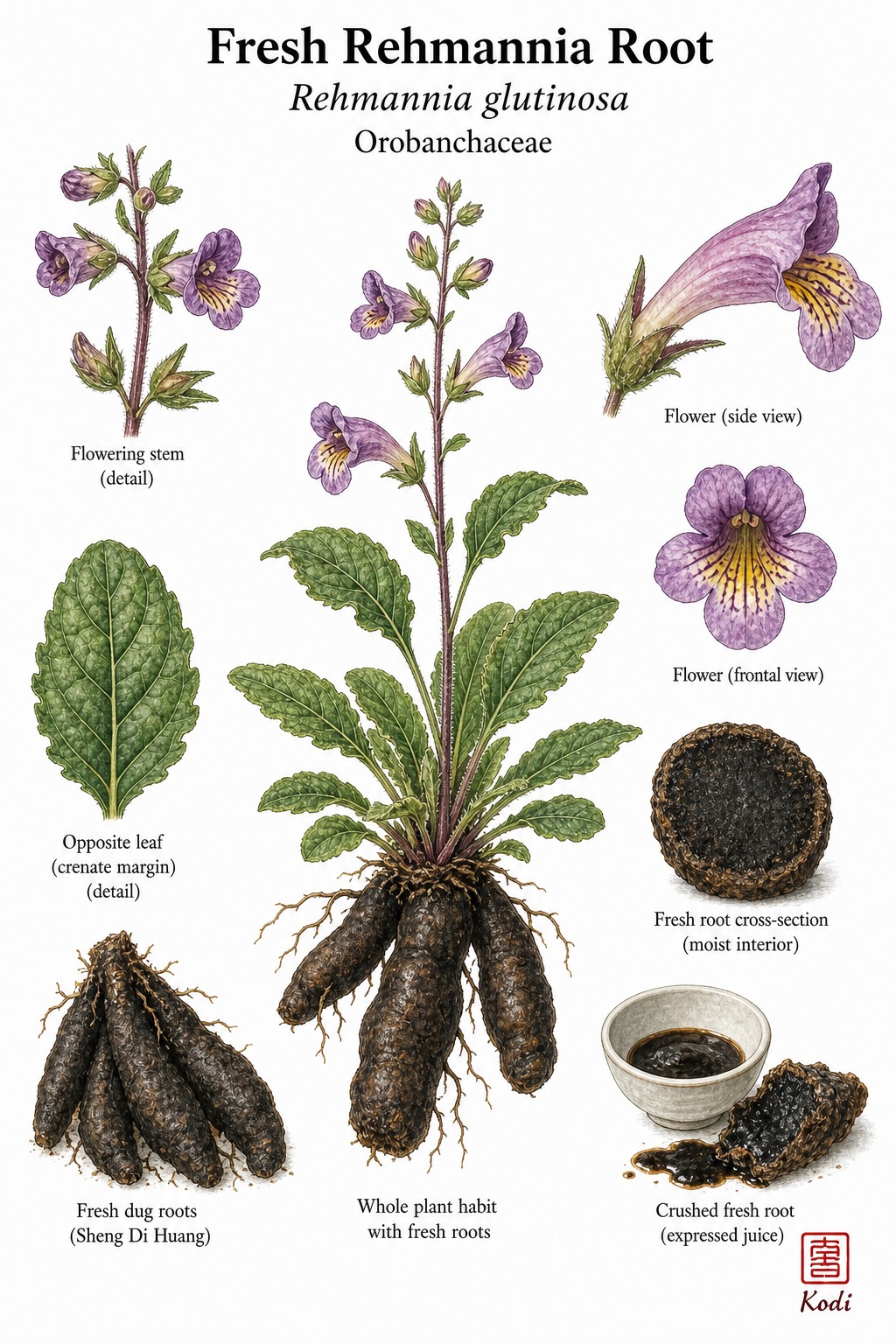
Known in TCM as Sheng Di Huang (生地黄), this sweet and bitter, cold herb enters the Heart, Liver, Stomach, and Kidney. Traditionally, it clears heat and cools the blood - Sheng Di Huang is central to febrile disease patterns with crimson tongue, irritability, heat entering the nutritive-blood level, and blood-heat bleeding, most often applied for fever, yin deficiency, and constipation. Modern research has identified Catalpol among its active constituents.
Part used: Root
Also Known As
Latin: Radix Rehmanniae | Pinyin: Sheng Di Huang | Chinese: 生地黄
TCM Properties
- Taste
- sweet, bitter
- Temperature
- cold
- Channels
- Heart, Liver, Stomach, Kidney
Traditional Use
Primary Actions
- Clears heat and cools the blood - Sheng Di Huang is central to febrile disease patterns with crimson tongue, irritability, heat entering the nutritive-blood level, and blood-heat bleeding.
- Nourishes Yin and generates fluids - it is used for thirst, dry mouth, deficiency heat, and residual dryness after warm disease or chronic depletion.
- Stops bleeding from blood heat - traditional indications include nosebleed, uterine bleeding, hemoptysis, and rash or macules when heat agitates the blood.
- Moistens dryness and benefits the bowels - it is added when heat and Yin damage lead to dry constipation.
Secondary Actions
- Classical texts distinguish fresh Xian Di Huang from dried raw Sheng Di Huang, but modern materia medica often discusses them together within the raw Rehmannia family.
- Its cold, rich nature makes it inappropriate for weak digestion with dampness or diarrhea unless balanced in formula.
Classic Formulas
- Qing Ying Tang - nutritive-level heat formula using Sheng Di Huang to cool blood while protecting Yin.
- Qing Wei San - Stomach-fire and bleeding-gum formula in which Sheng Di Huang cools the blood and nourishes Yin.
- Bai He Di Huang Tang - classical formula pairing Bai He with fresh Sheng Di Huang juice for post-febrile Yin-deficiency agitation.
- Zhi Gan Cao Tang - pulse-restoring formula that uses Sheng Di Huang to enrich Yin and blood.
Classical References
- TCM Wiki describes Di Huang as sweet, bitter, and cold, entering the Heart, Liver, Stomach, and Kidney to clear heat, cool blood, stop bleeding, and nourish Yin.
- Traditional formula literature repeatedly places Sheng Di Huang in blood-heat bleeding, warm-disease, and Stomach-Yin depletion patterns.
Modern Research
Active Compounds
- Catalpol and related iridoid glycosides - signature constituents of raw Rehmannia
- Verbascoside / acteoside and related phenylpropanoid glycosides - important antioxidant and anti-inflammatory markers
- Polysaccharides - major macromolecular fraction in tonic and immunology research
- Saccharide and glycoside fractions - key quality-control constituents discussed in the Rehmannia literature
Studied Effects
- A 2024 review summarized Rehmannia glutinosa within a classical anti-depression herb pair and reviewed anti-inflammatory, anti-anxiety, and related pharmacologic interests (PMID 39539631).
- Experimental work reported anti-aging effects through maintenance of hematopoietic stem-cell quiescence and reduced senescence (PMID 30891565).
- Another study found Rehmannia glutinosa suppressed inflammatory responses elicited by advanced glycation end products, supporting anti-inflammatory relevance of the raw herb family (PMID 22327862).
PubMed References
- Rehmannia glutinosa DC.-Lilium lancifolium Thunb. in the treatment of depression: a comprehensive review and perspectives. (2024)
- Rehmannia glutinosa exhibits anti-aging effect through maintaining the quiescence and decreasing the senescence of hematopoietic stem cells. (2018)
- Rehmannia glutinosa suppresses inflammatory responses elicited by advanced glycation end products. (2012)
Safety & Interactions
Contraindications
- Spleen deficiency with loose stool or damp encumbrance
- Cold-damp middle-burner patterns without heat or fluid injury
Cautions
- The distinction between fresh Xian Di Huang and dried raw Sheng Di Huang is blurred in some modern literature, so processing form should be checked when precise formula matching matters.
- The herb can be cloying and may aggravate loose stool or abdominal fullness in weak digestion.
- MSK page not found - drug interaction data not available from Memorial Sloan Kettering integrative medicine database
Conditions
- Fever Traditional ★★★★☆ JSON
- Yin Deficiency Traditional ★★★★☆ JSON
- Constipation Traditional ★★★☆☆ JSON
- Abnormal Uterine Bleeding Traditional ★★☆☆☆ JSON
Frequently Asked Questions
What is Fresh Rehmannia Root used for?
Fresh Rehmannia Root is traditionally used to Clears heat and cools the blood - Sheng Di Huang is central to febrile disease patterns with crimson tongue, irritability, heat entering the nutritive-blood level, and blood-heat bleeding., Nourishes Yin and generates fluids - it is used for thirst, dry mouth, deficiency heat, and residual dryness after warm disease or chronic depletion., Stops bleeding from blood heat - traditional indications include nosebleed, uterine bleeding, hemoptysis, and rash or macules when heat agitates the blood., Moistens dryness and benefits the bowels - it is added when heat and Yin damage lead to dry constipation.. Research has investigated its effects on: A 2024 review summarized Rehmannia glutinosa within a classical anti-depression herb pair and reviewed anti-inflammatory, anti-anxiety, and related pharmacologic interests (PMID 39539631).; Experimental work reported anti-aging effects through maintenance of hematopoietic stem-cell quiescence and reduced senescence (PMID 30891565)..
What are other names for Fresh Rehmannia Root?
Fresh Rehmannia Root is also known as Rehmannia. In TCM: 生地黄 (Sheng Di Huang); Radix Rehmanniae.
Is Fresh Rehmannia Root safe during pregnancy?
The safety of Fresh Rehmannia Root during pregnancy has not been established. Consult a qualified healthcare provider before use.
What are the contraindications for Fresh Rehmannia Root?
Fresh Rehmannia Root should not be used in: Spleen deficiency with loose stool or damp encumbrance; Cold-damp middle-burner patterns without heat or fluid injury. Consult a qualified practitioner before use.