Rangooncreeper Fruit
- Chinese
- 使君子
- Pinyin
- Shi Jun Zi
- Latin
- Fructus Quisqualis
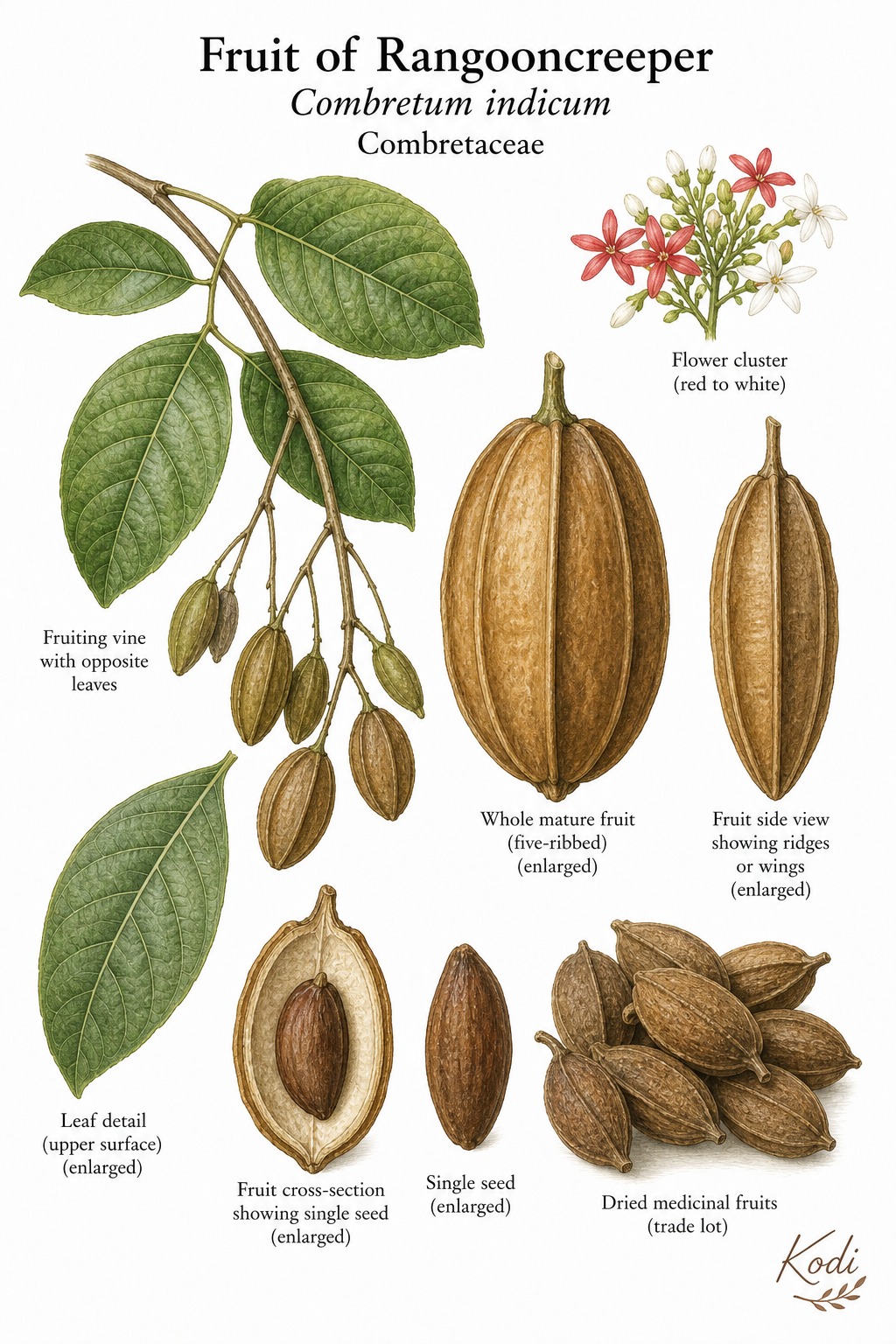
Known in TCM as Shi Jun Zi (使君子), this sweet, warm herb enters the Spleen and Stomach. Traditionally, it expels intestinal parasites - Shi Jun Zi is a classic sweet, relatively gentle worm-expelling herb best known for roundworm and pinworm patterns, especially in children, most often applied for intestinal parasites, parasitic infection, and abdominal pain. Modern research has identified Quisqualic among its active constituents.
Part used: Fruit
Also Known As
Latin: Fructus Quisqualis | Pinyin: Shi Jun Zi | Chinese: 使君子
TCM Properties
- Taste
- sweet
- Temperature
- warm
- Channels
- Spleen, Stomach
Traditional Use
Primary Actions
- Expels intestinal parasites - Shi Jun Zi is a classic sweet, relatively gentle worm-expelling herb best known for roundworm and pinworm patterns, especially in children.
- Improves digestion while treating parasite burden - unlike harsher antiparasitic herbs, it is also used when poor appetite, distended abdomen, and thinness accompany the infestation.
- Relieves abdominal pain linked to worms or food accumulation - it is chosen when digestive stagnation and cramping sit alongside evidence of parasites.
- Supports pediatric accumulation patterns - traditional use often centers on children with sallow complexion, emaciation, or recurrent digestive complaints tied to parasites.
Secondary Actions
- Shi Jun Zi is usually viewed as gentler than strongly bitter toxic worm-expelling herbs, which is why classic texts repeatedly emphasize pediatric use.
- Traditional processing may include stir-baking the seed to improve aroma and digestibility, but dose discipline remains important because excess can provoke nausea or hiccup.
Classic Formulas
- Shi Jun Zi San - classic worm-expelling formula pairing Shi Jun Zi with Bing Lang and Ku Lian Pi for roundworm-type abdominal pain and parasite accumulation.
- Fei Er Wan - pediatric accumulation formula using Shi Jun Zi with Shen Qu, Mai Ya, and digestive-supportive herbs when parasites coexist with poor appetite and thinness.
- Shi Jun Zi Wan - child-focused digestive-accumulation formula family combining Shi Jun Zi with qi-moving herbs such as Hou Po and Chen Pi when distention and anorexia are prominent.
Classical References
- Kai Bao Ben Cao and later materia medica texts present Shi Jun Zi as a sweet warm fruit that kills parasites while remaining especially suitable for children.
- Traditional herbology also preserves the practical warning that large doses or taking Shi Jun Zi with hot tea can trigger hiccup, nausea, vomiting, dizziness, or diarrhea.
Modern Research
Active Compounds
- Quisqualic acid - the signature acidic amino acid long associated with Quisqualis Fructus and its traditional antiparasitic identity
- Trigonelline - an alkaloid used as a modern quality-control marker in Quisqualis fruit studies
- Ellagic acid and 3,3'-di-O-methylellagic acid - polyphenolic constituents highlighted in recent chemometric quality work
- Rutin - a repeatedly cited flavonoid constituent in broader phytochemical reviews of Quisqualis indica
Studied Effects
- A 2024 UPLC-Q-TOF-MS and HPLC study characterized 106 constituents in Quisqualis Fructus and proposed quality markers including trigonelline, adenosine, ellagic acid derivatives, and quisqualic acid, showing how modern authentication is refining this old antiparasitic drug (PMID 38988635).
- A 2022 GLP repeated-dose study of a standardized Quisqualis indica seed extract found no treatment-related adverse effects up to the tested levels and no genotoxicity, suggesting a measurable safety margin for standardized extracts even though crude-seed overuse still requires caution (PMID 36277358).
- A 2019 antioxidant study reported radical-scavenging and phenolic activity across Quisqualis indica plant extracts, illustrating that current laboratory research is broader than the herb's traditional parasite-focused reputation and remains largely preclinical (PMID 30772796).
PubMed References
- Chemical constituent characterization and determination of Quisqualis fructus based on UPLC-Q-TOF-MS and HPLC combined with fingerprint and chemometric analysis. (2024)
- Repeated oral dose toxicity and genotoxicity of a standardized Quisqualis indica extract. (2022)
- Antioxidant activity of an ethnobotanically important plant Quisqualis indica Linn. (2019)
Safety & Interactions
Cautions
- Large doses can cause hiccup, dizziness, nausea, vomiting, or diarrhea, and classical sources specifically warn against taking Shi Jun Zi with hot tea.
- Traditional pediatric use does not make the crude seed a casual home remedy; children should be dosed conservatively and by an experienced practitioner.
- Modern standardized-extract safety data do not remove the need for caution with raw or poorly identified Quisqualis products.
Conditions
- Intestinal Parasites Traditional ★★★★☆ JSON
- Parasitic Infection Traditional ★★★★☆ JSON
- Abdominal Pain Traditional ★★★☆☆ JSON
- Indigestion Traditional ★★★☆☆ JSON
- Poor Appetite Traditional ★★★☆☆ JSON
Frequently Asked Questions
What is Rangooncreeper Fruit used for?
Rangooncreeper Fruit is traditionally used to Expels intestinal parasites - Shi Jun Zi is a classic sweet, relatively gentle worm-expelling herb best known for roundworm and pinworm patterns, especially in children., Improves digestion while treating parasite burden - unlike harsher antiparasitic herbs, it is also used when poor appetite, distended abdomen, and thinness accompany the infestation., Relieves abdominal pain linked to worms or food accumulation - it is chosen when digestive stagnation and cramping sit alongside evidence of parasites., Supports pediatric accumulation patterns - traditional use often centers on children with sallow complexion, emaciation, or recurrent digestive complaints tied to parasites.. Research has investigated its effects on: A 2024 UPLC-Q-TOF-MS and HPLC study characterized 106 constituents in Quisqualis Fructus and proposed quality markers including trigonelline, adenosine, ellagic acid derivatives, and quisqualic acid, showing how modern authentication is refining this old antiparasitic drug (PMID 38988635).; A 2022 GLP repeated-dose study of a standardized Quisqualis indica seed extract found no treatment-related adverse effects up to the tested levels and no genotoxicity, suggesting a measurable safety margin for standardized extracts even though crude-seed overuse still requires caution (PMID 36277358)..
What are other names for Rangooncreeper Fruit?
Rangooncreeper Fruit is also known as Quisqualis. In TCM: 使君子 (Shi Jun Zi); Fructus Quisqualis.
Is Rangooncreeper Fruit safe during pregnancy?
The safety of Rangooncreeper Fruit during pregnancy has not been established. Consult a qualified healthcare provider before use.