Seabuckthorn Fruit
- Chinese
- 沙棘
- Pinyin
- Sha Ji
- Latin
- Fructus Hippophae
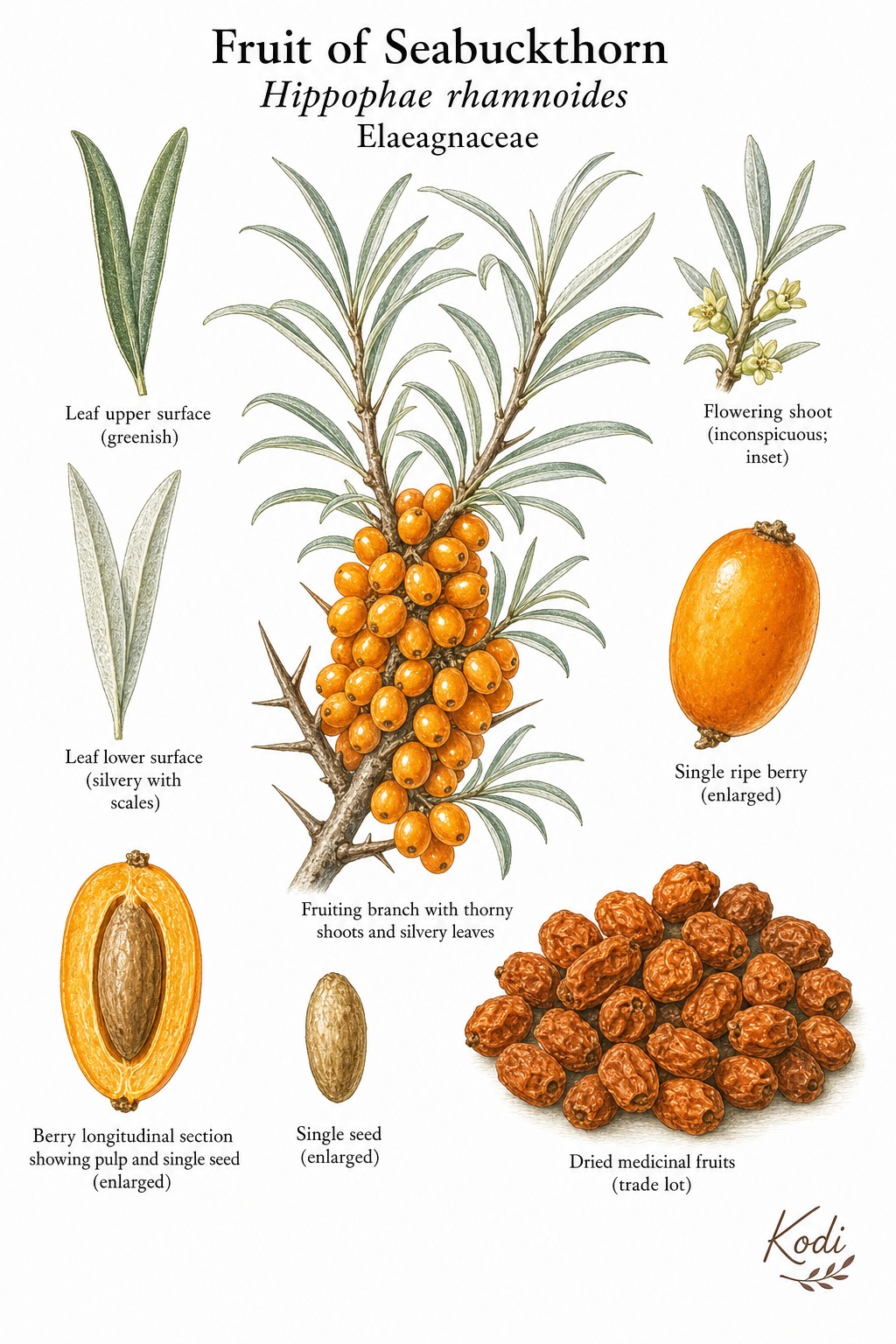
Known in TCM as Sha Ji (沙棘), this sour and astringent, warm herb enters the Lung, Spleen, and Heart. Traditionally, it stops cough and transforms phlegm - Sha Ji is used when chronic cough, difficult sputum, or weak recovery follows lingering phlegm accumulation, most often applied for productive cough, phlegm accumulation, and dyspepsia. Modern research has identified Isorhamnetin, among its active constituents.
Part used: Fruit
Also Known As
Latin: Fructus Hippophae | Pinyin: Sha Ji | Chinese: 沙棘
TCM Properties
- Taste
- sour, astringent
- Temperature
- warm
- Channels
- Lung, Spleen, Heart
Traditional Use
Primary Actions
- Stops cough and transforms phlegm - Sha Ji is used when chronic cough, difficult sputum, or weak recovery follows lingering phlegm accumulation.
- Promotes digestion and relieves food stagnation - it appears when appetite is poor, the abdomen feels full, and weak digestion mixes with retained food.
- Invigorates blood and disperses stasis - traditional use extends to chest discomfort, amenorrhea, and traumatic bruising where stagnant blood is part of the picture.
- Generates fluids while remaining food-like - the sour fruit has long occupied a border zone between medicinal herb, tonic food, and restorative concentrate.
Secondary Actions
- Chinese, Tibetan, and Mongolian traditions all use sea buckthorn, but the dry medicinal fruit should not be confused with modern juice, berry oil, or fortified nutraceutical products.
- Sha Ji is unusual among cough herbs because it also carries digestive and blood-moving functions, which makes it broader than a simple lung remedy.
Classic Formulas
- Sha Ji Gao - concentrated sea-buckthorn paste traditionally used for chronic cough with phlegm and weak recovery after respiratory illness.
- Digestive formulas pair Sha Ji with Shan Zha or Shen Qu when food retention, abdominal pain, and poor appetite occur together.
- Blood-moving formulas combine it with herbs such as Dan Shen or Tao Ren when chest pain, traumatic bruising, or menstrual stasis are part of the presentation.
Classical References
- Modern Chinese pharmacopoeial tradition emphasizes Sha Ji for relieving cough, aiding digestion, promoting circulation, and resolving blood stasis rather than for generic tonification.
- Tibetan and Mongolian medical traditions also preserve sea buckthorn as a food-medicine plant used for respiratory, digestive, and restorative purposes.
Modern Research
Active Compounds
- Isorhamnetin, quercetin, and related flavonols - key polyphenols frequently used to explain the fruit's antioxidant and cardiometabolic interest
- Palmitoleic acid and other unsaturated fatty acids - prominent lipid constituents especially discussed in fruit and seed oil applications
- Carotenoids and vitamin C - hallmark nutritive compounds that help distinguish sea buckthorn among medicinal berries
- Triterpenes such as ursolic and oleanolic acid derivatives - constituents linked to anti-inflammatory and tissue-protective research
Studied Effects
- A 2026 comprehensive review summarized sea buckthorn ethnopharmacology, phytochemistry, and pharmacology, highlighting hepatoprotective, anti-inflammatory, cardioprotective, and neuroprotective signals while cautioning that much of the evidence remains preclinical (PMID 41868122).
- A 2021 study isolated three triterpenes from Hippophae rhamnoides and showed anti-inflammatory activity in lipopolysaccharide-stimulated macrophages, supporting one mechanistic route behind the herb's traditional inflammatory uses (PMID 34769438).
- A 2016 study found Hippophae rhamnoides fruit preparations reduced oxidative stress markers in human blood platelets and plasma ex vivo, reflecting modern interest in vascular and cardiometabolic applications of the berry (PMID 26933473).
PubMed References
- Ethnopharmacology, phytochemistry, and pharmacology of sea buckthorn (Hippophae rhamnoides L.): a comprehensive review. (2026)
- Anti-Inflammatory Activity of Three Triterpene from Hippophae rhamnoides L. in Lipopolysaccharide-Stimulated RAW264.7 Cells. (2021)
- Hippophae rhamnoides L. Fruits Reduce the Oxidative Stress in Human Blood Platelets and Plasma. (2016)
Safety & Interactions
Contraindications
- Bleeding disorders or unsupervised use alongside anticoagulant therapy
- Marked acid-sensitive gastritis or peptic irritation aggravated by sour fruits
Cautions
- High-acid fruit preparations may aggravate reflux, gastritis, or ulcer discomfort in sensitive patients.
- Sea buckthorn food products, seed oil, and concentrated supplements are not equivalent to the dry medicinal fruit and can deliver very different exposures.
- Because the herb also moves blood, pregnancy use should remain practitioner-guided even though severe classical prohibition is not commonly emphasized.
Drug Interactions
- Anticoagulant and antiplatelet drugs - sea buckthorn fruit fractions have demonstrated antiplatelet and blood-flow effects in preclinical research, so concurrent use may increase bleeding tendency
Conditions
- Productive Cough Traditional ★★★★☆ JSON
- Phlegm Accumulation Traditional ★★★★☆ JSON
- Dyspepsia Traditional ★★★☆☆ JSON
- Abdominal Pain Traditional ★★★☆☆ JSON
- Chest Pain Traditional ★★☆☆☆ JSON
Frequently Asked Questions
What is Seabuckthorn Fruit used for?
Seabuckthorn Fruit is traditionally used to Stops cough and transforms phlegm - Sha Ji is used when chronic cough, difficult sputum, or weak recovery follows lingering phlegm accumulation., Promotes digestion and relieves food stagnation - it appears when appetite is poor, the abdomen feels full, and weak digestion mixes with retained food., Invigorates blood and disperses stasis - traditional use extends to chest discomfort, amenorrhea, and traumatic bruising where stagnant blood is part of the picture., Generates fluids while remaining food-like - the sour fruit has long occupied a border zone between medicinal herb, tonic food, and restorative concentrate.. Research has investigated its effects on: A 2026 comprehensive review summarized sea buckthorn ethnopharmacology, phytochemistry, and pharmacology, highlighting hepatoprotective, anti-inflammatory, cardioprotective, and neuroprotective signals while cautioning that much of the evidence remains preclinical (PMID 41868122).; A 2021 study isolated three triterpenes from Hippophae rhamnoides and showed anti-inflammatory activity in lipopolysaccharide-stimulated macrophages, supporting one mechanistic route behind the herb's traditional inflammatory uses (PMID 34769438)..
What are other names for Seabuckthorn Fruit?
Seabuckthorn Fruit is also known as Hippopha. In TCM: 沙棘 (Sha Ji); Fructus Hippophae.
Is Seabuckthorn Fruit safe during pregnancy?
The safety of Seabuckthorn Fruit during pregnancy has not been established. Consult a qualified healthcare provider before use.
What are the contraindications for Seabuckthorn Fruit?
Seabuckthorn Fruit should not be used in: Bleeding disorders or unsupervised use alongside anticoagulant therapy; Marked acid-sensitive gastritis or peptic irritation aggravated by sour fruits. Consult a qualified practitioner before use.
Does Seabuckthorn Fruit interact with any medications?
Seabuckthorn Fruit may interact with: Anticoagulant and antiplatelet drugs - sea buckthorn fruit fractions have demonstrated antiplatelet and blood-flow effects in preclinical research, so concurrent use may increase bleeding tendency. Always inform your healthcare provider of any herbal supplements you are taking.