Thinleaf Adina Fruit
- Chinese
- 水杨梅
- Pinyin
- Shui Yang Mei
- Latin
- Fructus Adinae
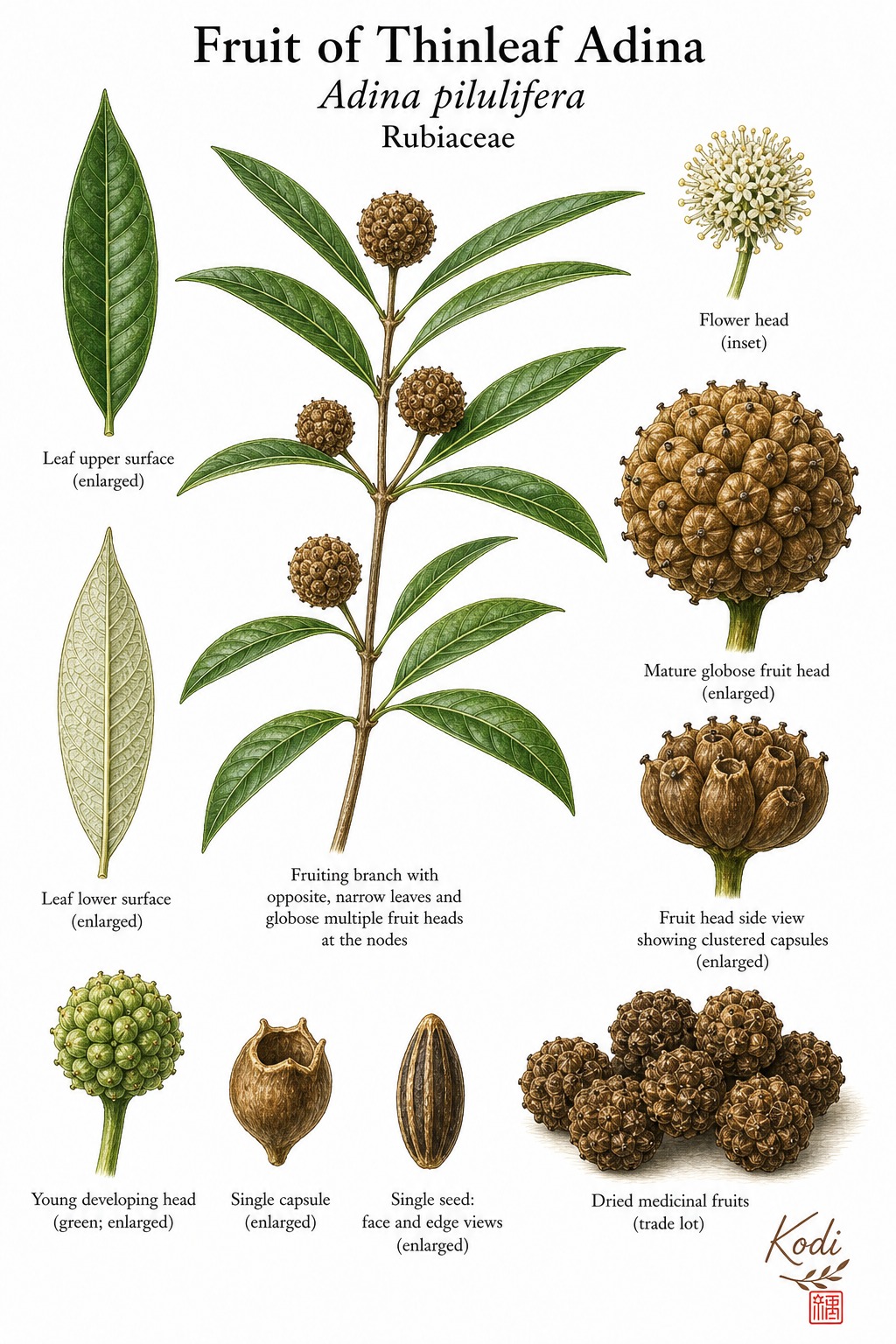
Known in TCM as Shui Yang Mei (水杨梅), this bitter and astringent, cool herb enters the Lung and Large Intestine. Traditionally, it clears heat and resolves toxin - Shui Yang Mei is used in regional practice for inflamed sores, boils, weeping skin lesions, and other heat-toxin presentations affecting the skin and superficial tissues, most often applied for traumatic injury, eczema, and abscess. Modern research has identified Triterpenoid among its active constituents.
Part used: Fruit
Also Known As
Latin: Fructus Adinae | Pinyin: Shui Yang Mei | Chinese: 水杨梅
TCM Properties
- Taste
- bitter, astringent
- Temperature
- cool
- Channels
- Lung, Large Intestine
Traditional Use
Primary Actions
- Clears heat and resolves toxin - Shui Yang Mei is used in regional practice for inflamed sores, boils, weeping skin lesions, and other heat-toxin presentations affecting the skin and superficial tissues.
- Disperses blood stasis and relieves pain - the fruit line is applied for bruising, sprains, and traumatic swelling when minor bleeding and fixed pain need both cleansing and movement.
- Stops minor bleeding and assists topical wound care - traditional use includes pounded or decocted preparations for traumatic bleeding and irritated skin eruptions.
Secondary Actions
- Materia medica references for Shui Yang Mei are somewhat part-variable: some emphasize the fruit, while others include flower or aerial-part use from the same Adina pilulifera lineage.
- Compared with mainstream internal TCM medicinals, Shui Yang Mei is better understood as a regional toxin-resolving and trauma-support herb than as a major classical formula staple.
Classic Formulas
- Topical wash or poultice combinations with heat-clearing herbs such as Ku Shen or Huang Bai - used in regional external practice for eczema, boils, and damp-heat skin irritation.
- Traumatic-injury powders and washes paired with blood-moving herbs such as San Qi - folk-style use when bruising, swelling, and minor bleeding occur together.
Classical References
- TCM Wiki describes Shui Yang Mei as bitter, astringent, and cool, entering the Lung and Large Intestine channels to clear heat, remove toxicity, dissipate blood stasis, and alleviate pain.
- Regional Chinese herb references also preserve the practical point that Shui Yang Mei is commonly used externally, which helps explain why modern monographs often center on wounds, eczema, and sores.
Modern Research
Active Compounds
- Triterpenoid saponins - repeatedly reported from Adina pilulifera phytochemical studies
- Oleanane- and ursane-type triterpenoid constituents - part of the plant's broader secondary-metabolite profile
- Polyphenolic fractions - supportive constituents likely relevant to the herb's traditional external anti-inflammatory reputation
Studied Effects
- A 2007 phytochemical study characterized the chemical constituents of Adina pilulifera and reinforced that triterpenoid-rich secondary metabolites are a major part of this plant's modern research profile (PMID 18236749).
- A 2003 study isolated two new triterpenoid saponins from Adina pilulifera, showing that chemistry work on this species remains more developed than direct clinical evidence for the crude fruit drug itself (PMID 12608633).
- Taken together, the indexed literature supports chemical activity and ethnobotanical plausibility, but it still leaves Shui Yang Mei with very limited herb-specific human clinical evidence.
PubMed References
Safety & Interactions
Cautions
- Direct human evidence is sparse, so Shui Yang Mei should not be treated as a proven standalone internal remedy for infected or rapidly worsening conditions.
- Because part usage varies across references, source identity and the intended medicinal part should be verified carefully before extrapolating from other Adina preparations.
- Traditional external use for wounds or eczema does not replace appropriate medical care when there is spreading infection, severe bleeding, or significant tissue injury.
Conditions
Frequently Asked Questions
What is Thinleaf Adina Fruit used for?
Thinleaf Adina Fruit is traditionally used to Clears heat and resolves toxin - Shui Yang Mei is used in regional practice for inflamed sores, boils, weeping skin lesions, and other heat-toxin presentations affecting the skin and superficial tissues., Disperses blood stasis and relieves pain - the fruit line is applied for bruising, sprains, and traumatic swelling when minor bleeding and fixed pain need both cleansing and movement., Stops minor bleeding and assists topical wound care - traditional use includes pounded or decocted preparations for traumatic bleeding and irritated skin eruptions.. Research has investigated its effects on: A 2007 phytochemical study characterized the chemical constituents of Adina pilulifera and reinforced that triterpenoid-rich secondary metabolites are a major part of this plant's modern research profile (PMID 18236749).; A 2003 study isolated two new triterpenoid saponins from Adina pilulifera, showing that chemistry work on this species remains more developed than direct clinical evidence for the crude fruit drug itself (PMID 12608633)..
What are other names for Thinleaf Adina Fruit?
Thinleaf Adina Fruit is also known as Adina, Shui Yang Mei Fruit. In TCM: 水杨梅 (Shui Yang Mei); Fructus Adinae.
Is Thinleaf Adina Fruit safe during pregnancy?
The safety of Thinleaf Adina Fruit during pregnancy has not been established. Consult a qualified healthcare provider before use.