Large-fruited Elm Seed Paste
- Chinese
- 芜荑
- Pinyin
- Wu Yi
- Latin
- Fructus Ulmi
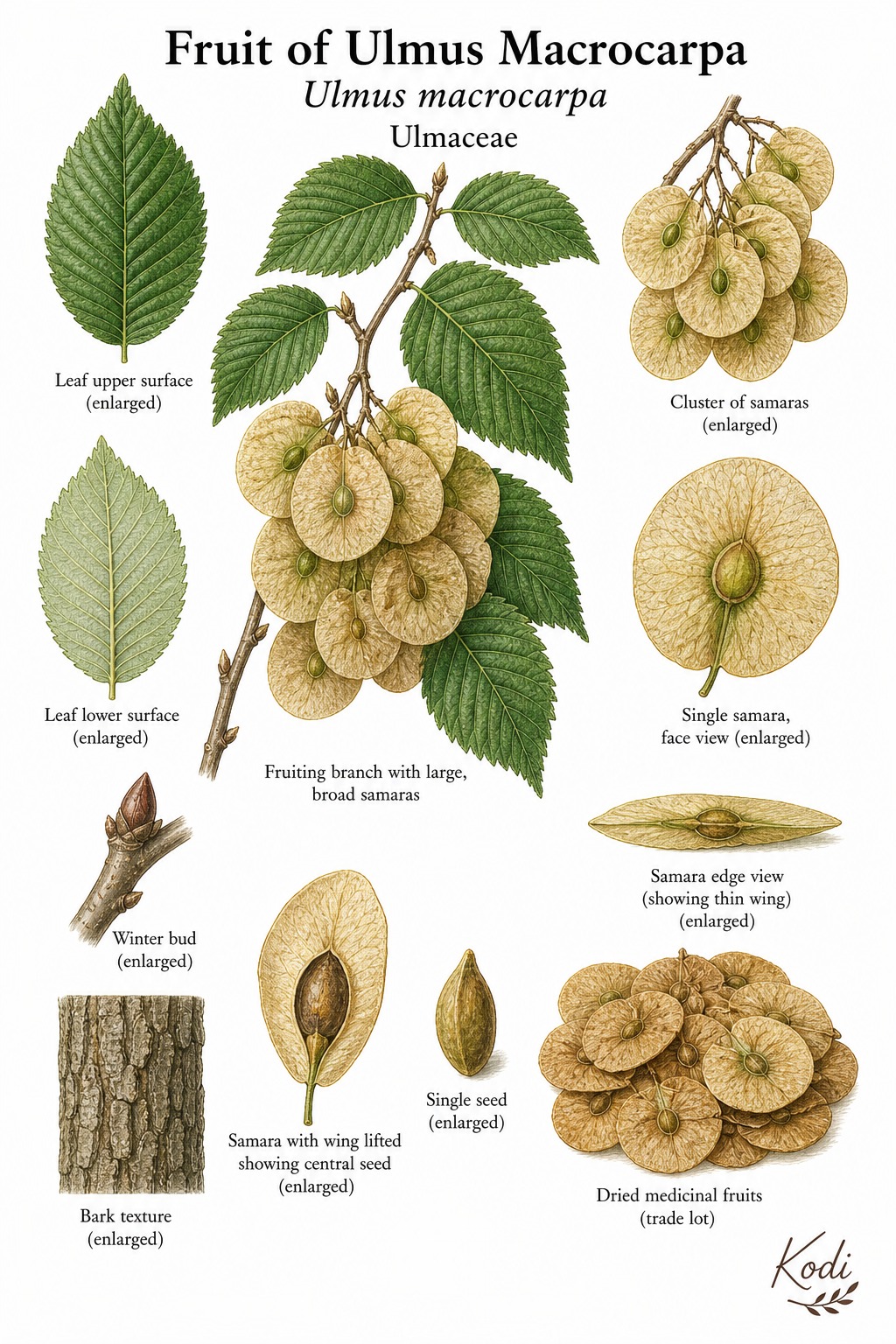
Known in TCM as Wu Yi (芜荑), this pungent and bitter, warm herb enters the Spleen and Stomach. Traditionally, it expels intestinal parasites - Wu Yi is a classic processed elm-fruit medicine for worm accumulation, especially when abdominal pain, poor appetite, or pediatric thinness accompany infestation, most often applied for intestinal parasites, parasitic infection, and abdominal pain. Modern research has identified Phenolic among its active constituents.
Part used: Fruit
Also Known As
Latin: Fructus Ulmi | Pinyin: Wu Yi | Chinese: 芜荑
TCM Properties
- Taste
- pungent, bitter
- Temperature
- warm
- Channels
- Spleen, Stomach
Traditional Use
Primary Actions
- Expels intestinal parasites - Wu Yi is a classic processed elm-fruit medicine for worm accumulation, especially when abdominal pain, poor appetite, or pediatric thinness accompany infestation.
- Reduces food accumulation and supports digestion - it is traditionally used when parasites and stagnant digestion reinforce one another, producing distension, foul appetite, or childhood gan ji patterns.
- Relieves parasite-related abdominal pain - the herb is chosen when cramping, restlessness, or malnourished digestion point to worms rather than to simple qi stagnation alone.
Secondary Actions
- Wu Yi is a processed medicinal paste rather than a casual edible elm fruit, and traditional preparation is considered part of its identity.
- Compared with sweeter, gentler antiparasitic herbs, Wu Yi is more pungent and drying, so it is usually combined with digestive-supportive or harmonizing herbs.
Classic Formulas
- Hua Chong Wan and related antiparasitic formulas - Wu Yi is paired with Bing Lang, Lei Wan, or other worm-expelling herbs when abdominal pain and food accumulation are both prominent.
- Pediatric gan ji formulas with Shen Qu, Mai Ya, or qi-regulating herbs - used when worm burden coexists with poor appetite, abdominal fullness, and undernourished children.
- Wu Yi San lineage preparations - simpler powder-style uses centered on killing worms and reducing accumulation.
Classical References
- TCM Wiki describes Wu Yi as pungent, bitter, and warm, with the core actions of expelling parasites and promoting digestion.
- Classical material preserved in the Shen Nong Ben Cao Jing tradition states that Wu Yi eliminates the three worms and transforms food accumulation, which remains the clearest traditional summary of the herb.
Modern Research
Active Compounds
- Phenolic compounds - the best-defined modern constituents in indexed Ulmus macrocarpa anti-inflammatory studies
- Tannins and astringent polyphenols - plausible contributors to the processed drug's traditional digestive and antiparasitic profile
- Flavonoid-rich antioxidant fractions - repeatedly discussed in broader Ulmus phytochemistry
Studied Effects
- A 2011 study reported antioxidative and anti-inflammatory effects from phenolic compounds isolated from Ulmus macrocarpa roots, suggesting biologic activity but also underscoring that much of the modern literature is root-focused rather than specific to the processed fruit paste (PMID 21975807).
- A 2003 screening study found anti-protozoal activity in medicinal-herb extracts that included Ulmus macrocarpa, which gives limited but relevant support to the species' longstanding antiparasitic reputation (PMID 14519322).
- A 1990 report described Ulmus macrocarpa use in ulcerative colitis, but the evidence is old, narrow, and not enough to equate the herb with modern gastroenterology treatment standards (PMID 2392003).
PubMed References
- Antioxidative and anti-inflammatory effects of phenolic compounds from the roots of Ulmus macrocarpa. (2011)
- Anti-protozoal efficacy of medicinal herb extracts against Toxoplasma gondii and Neospora caninum. (2003)
- Ulmus macrocarpa hance for the treatment of ulcerative colitis--a report of 36 cases. (1990)
Safety & Interactions
Contraindications
- Spleen-Stomach deficiency without parasites or food accumulation
- Dryness or heat patterns rather than cold accumulation
- Pregnancy without practitioner supervision
Cautions
- Most modern studies are on roots, bark, or broader species extracts rather than the processed Wu Yi fruit paste used in TCM.
- Because Wu Yi is a processed medicinal product, identity and preparation quality matter more than with ordinary plant foods.
- The herb contains astringent phenolic material, so separating it from oral medications by a few hours is a reasonable precaution when clinically important absorption is a concern.
Drug Interactions
- Iron supplements or other orally administered drugs - theoretical reduction in absorption from tannin-rich preparations.
Conditions
- Intestinal Parasites Traditional ★★★★☆ JSON
- Parasitic Infection Traditional ★★★★☆ JSON
- Abdominal Pain Traditional ★★★☆☆ JSON
- Poor Appetite Traditional ★★★☆☆ JSON
- Dyspepsia Traditional ★★★☆☆ JSON
Frequently Asked Questions
What is Large-fruited Elm Seed Paste used for?
Large-fruited Elm Seed Paste is traditionally used to Expels intestinal parasites - Wu Yi is a classic processed elm-fruit medicine for worm accumulation, especially when abdominal pain, poor appetite, or pediatric thinness accompany infestation., Reduces food accumulation and supports digestion - it is traditionally used when parasites and stagnant digestion reinforce one another, producing distension, foul appetite, or childhood gan ji patterns., Relieves parasite-related abdominal pain - the herb is chosen when cramping, restlessness, or malnourished digestion point to worms rather than to simple qi stagnation alone.. Research has investigated its effects on: A 2011 study reported antioxidative and anti-inflammatory effects from phenolic compounds isolated from Ulmus macrocarpa roots, suggesting biologic activity but also underscoring that much of the modern literature is root-focused rather than specific to the processed fruit paste (PMID 21975807).; A 2003 screening study found anti-protozoal activity in medicinal-herb extracts that included Ulmus macrocarpa, which gives limited but relevant support to the species' longstanding antiparasitic reputation (PMID 14519322)..
What are other names for Large-fruited Elm Seed Paste?
Large-fruited Elm Seed Paste is also known as Ulmus, Elm Seed Paste. In TCM: 芜荑 (Wu Yi); Fructus Ulmi.
Is Large-fruited Elm Seed Paste safe during pregnancy?
The safety of Large-fruited Elm Seed Paste during pregnancy has not been established. Consult a qualified healthcare provider before use.
What are the contraindications for Large-fruited Elm Seed Paste?
Large-fruited Elm Seed Paste should not be used in: Spleen-Stomach deficiency without parasites or food accumulation; Dryness or heat patterns rather than cold accumulation; Pregnancy without practitioner supervision. Consult a qualified practitioner before use.
Does Large-fruited Elm Seed Paste interact with any medications?
Large-fruited Elm Seed Paste may interact with: Iron supplements or other orally administered drugs - theoretical reduction in absorption from tannin-rich preparations.. Always inform your healthcare provider of any herbal supplements you are taking.