Funneled Physochlaina Root
- Chinese
- 华山参
- Pinyin
- Hua Shan Shen
- Latin
- Radix Physochlainae
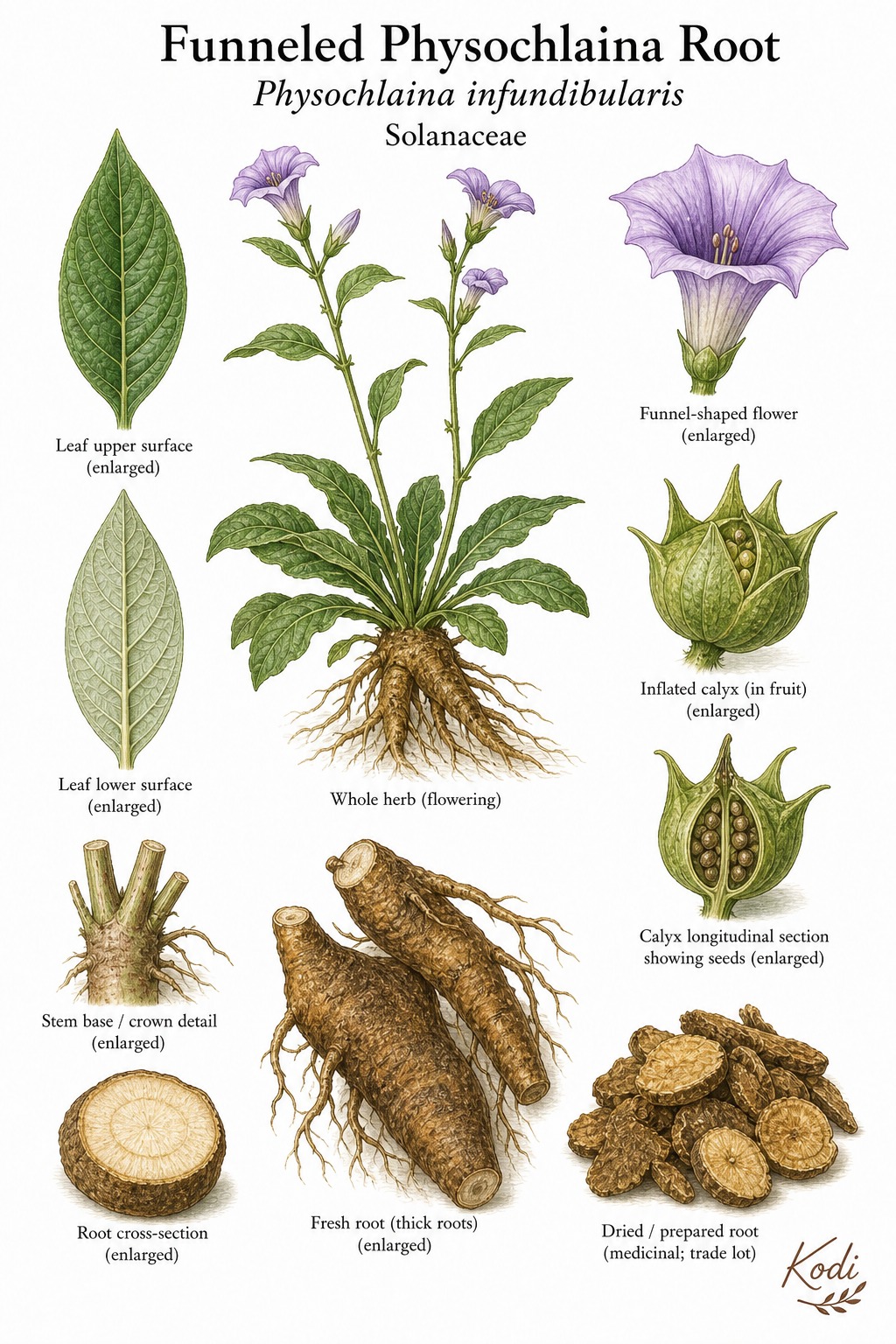
Known in TCM as Hua Shan Shen (华山参), this sweet and slightly bitter and astringent, hot herb enters the Liver and Kidney. Traditionally, it dispels phlegm and stops cough - Hua Shan Shen is used for cold-phlegm respiratory patterns rather than for hot, dry cough conditions, most often applied for cough, wheezing, and asthma. Modern research has identified Scopolamine among its active constituents.
Part used: Root
Also Known As
Latin: Radix Physochlainae | Pinyin: Hua Shan Shen | Chinese: 华山参
TCM Properties
- Taste
- sweet, slightly bitter, astringent
- Temperature
- hot
- Channels
- Liver, Kidney
Traditional Use
Primary Actions
- Dispels phlegm and stops cough - Hua Shan Shen is used for cold-phlegm respiratory patterns rather than for hot, dry cough conditions.
- Relieves wheezing and asthma - its traditional role is strongest when bronchospasm, cough, and difficult breathing occur with cold-phlegm accumulation.
- Induces tranquilization - classical use extends to palpitations, insomnia, and easy waking when sedation and restraint are needed.
Secondary Actions
- Despite the name 'Shen,' Hua Shan Shen is not a true Panax ginseng tonic; it is a toxic solanaceous root with a very different pharmacology and safety profile.
- The herb's traditional dose is small because the desired antiasthmatic and sedative effects sit close to atropine-like toxicity risk.
Classic Formulas
- Cold-phlegm cough combinations with Xing Ren, Zi Wan, or other antiasthmatic herbs - traditional strategy when wheezing and thick phlegm dominate.
- Sedative pairings with Long Gu or Suan Zao Ren - later practice logic when palpitations and insomnia accompany agitation.
Classical References
- TCM Wiki describes Hua Shan Shen as sweet, slightly bitter, astringent, hot, and toxic, entering the Liver and Kidney to dispel phlegm, induce tranquilization, stop cough, and relieve asthma.
- Traditional cautions explicitly list pregnancy, glaucoma, and severe prostatic hypertrophy as contraindicated settings.
Modern Research
Active Compounds
- Scopolamine - a characteristic tropane alkaloid relevant to anticholinergic pharmacology
- Atropine and related tropane alkaloids - major contributors to both bronchodilating effects and toxicity risk
- Amide constituents - newer compounds isolated in recent Physochlainae Radix chemistry work
Studied Effects
- A 2024 review of Physochlainae Radix summarized ethnobotany, phytochemistry, pharmacology, and quality-marker prediction, emphasizing that modern understanding of Hua Shan Shen is dominated by tropane alkaloid pharmacology and safety questions (PMID 38934285).
- A 2023 chemometric study compared Physochlainae Radix samples from different regions, highlighting the importance of origin and quality control for a toxic herb with narrow practical margins (PMID 37735985).
- A 2023 phytochemistry paper isolated two new amides from Physochlainae Radix, showing that the herb continues to attract compound-discovery interest beyond its classic anticholinergic constituents (PMID 37469185).
PubMed References
- Physochlainae Radix: A Review of Ethnobotany, Phytochemistry, Pharmacology, Q-marker Prediction, and Future Directions. (2024)
- Qualitative identification and quantitative comparison of Physochlainae Radix from different regions based on chemometric methods. (2023)
- Two New Amides from Physochlainae Radix. (2023)
Safety & Interactions
Contraindications
- Pregnancy
- Glaucoma
- Severe prostatic hypertrophy or urinary retention
- Tachyarrhythmia or marked anticholinergic sensitivity
Cautions
- Hua Shan Shen is toxic and should not be confused with safe food-grade or tonic roots simply because its pinyin includes 'Shen.'
- Anticholinergic overdose risk includes dry mouth, blurred vision, urinary retention, agitation, tachycardia, and central nervous system toxicity.
- Because modern pharmacology is closely linked to atropine-like alkaloids, combining the herb with anticholinergic drugs requires high caution.
Drug Interactions
- Anticholinergic medications - possible additive toxicity.
- Sedatives or central nervous system-active drugs - clinical effects may become less predictable in a toxic solanaceous herb.
Conditions
Frequently Asked Questions
What is Funneled Physochlaina Root used for?
Funneled Physochlaina Root is traditionally used to Dispels phlegm and stops cough - Hua Shan Shen is used for cold-phlegm respiratory patterns rather than for hot, dry cough conditions., Relieves wheezing and asthma - its traditional role is strongest when bronchospasm, cough, and difficult breathing occur with cold-phlegm accumulation., Induces tranquilization - classical use extends to palpitations, insomnia, and easy waking when sedation and restraint are needed.. Research has investigated its effects on: A 2024 review of Physochlainae Radix summarized ethnobotany, phytochemistry, pharmacology, and quality-marker prediction, emphasizing that modern understanding of Hua Shan Shen is dominated by tropane alkaloid pharmacology and safety questions (PMID 38934285).; A 2023 chemometric study compared Physochlainae Radix samples from different regions, highlighting the importance of origin and quality control for a toxic herb with narrow practical margins (PMID 37735985)..
What are other names for Funneled Physochlaina Root?
Funneled Physochlaina Root is also known as Physochlaina, Hot Ginseng. In TCM: 华山参 (Hua Shan Shen); Radix Physochlainae.
Is Funneled Physochlaina Root safe during pregnancy?
Funneled Physochlaina Root is not recommended during pregnancy.
What are the contraindications for Funneled Physochlaina Root?
Funneled Physochlaina Root should not be used in: Pregnancy; Glaucoma; Severe prostatic hypertrophy or urinary retention; Tachyarrhythmia or marked anticholinergic sensitivity. Consult a qualified practitioner before use.
Does Funneled Physochlaina Root interact with any medications?
Funneled Physochlaina Root may interact with: Anticholinergic medications - possible additive toxicity.; Sedatives or central nervous system-active drugs - clinical effects may become less predictable in a toxic solanaceous herb.. Always inform your healthcare provider of any herbal supplements you are taking.