Gadfly
- Chinese
- 虻虫
- Pinyin
- Meng Chong
- Latin
- Tabanus
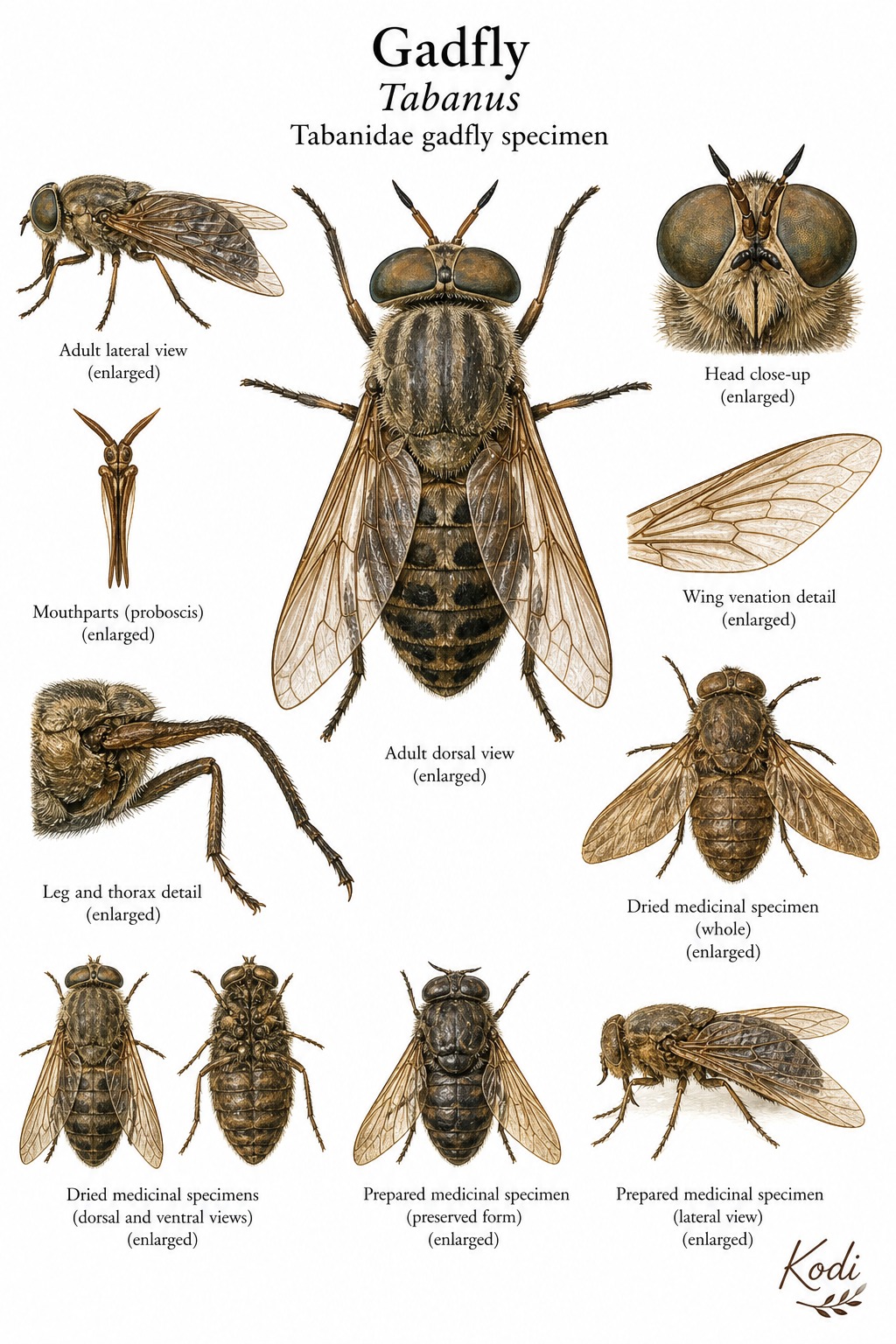
Known in TCM as Meng Chong (虻虫), this bitter, slightly cold herb enters the Liver. Traditionally, it breaks blood and expels stasis - Meng Chong is a forceful insect medicinal used for severe fixed blood stasis rather than for mild routine pain, most often applied for blood stasis, amenorrhea, and traumatic injury. Modern research has identified Salivary-gland among its active constituents.
Also Known As
Latin: Tabanus | Pinyin: Meng Chong | Chinese: 虻虫
TCM Properties
- Taste
- bitter
- Temperature
- slightly cold
- Channels
- Liver
Traditional Use
Primary Actions
- Breaks blood and expels stasis - Meng Chong is a forceful insect medicinal used for severe fixed blood stasis rather than for mild routine pain.
- Disperses accumulations and masses - classical indications include abdominal masses, amenorrhea from blood stasis, and long-standing congealed blood patterns.
- Relieves traumatic stasis - later use extends to bruising and traumatic injury when hard stasis and swelling predominate.
Secondary Actions
- Meng Chong is stronger, rougher, and less commonly used today than many standard blood-moving botanicals because its intended action is to attack severe, stubborn stasis.
- Traditional processing and small dosing matter: this is not an edible-insect wellness product but a specialized toxic medicinal.
Classic Formulas
- Di Dang Tang - the best-known blood-stasis formula using Meng Chong with Shui Zhi, Tao Ren, and Da Huang for severe lower-abdomen stasis patterns.
- Di Huang Tong Jing Wan - menstrual-stasis formula tradition using Meng Chong to break congealed blood in amenorrhea.
- Da Huang Zhe Chong Wan - later blood-stasis and mass-dispersing formula family in which insect medicinals represent the harsh end of stasis-breaking therapy.
Classical References
- Chinese materia medica references describe Meng Chong as bitter, slightly cold, and slightly toxic, entering the Liver to break blood, dispel stasis, and scatter concretions.
- Traditional cautions are especially strong in pregnancy and marked qi-blood deficiency because the herb's action is to drive out severe stasis.
Modern Research
Active Compounds
- Salivary-gland peptide fractions - the main modern bioactive focus in horsefly studies
- Anticoagulant and antiplatelet proteins - biologically relevant to the fly's blood-feeding function
- Allergen Tab y 1 - a characterized horsefly salivary protein with platelet-related activity
Studied Effects
- A 2009 study characterized the anti-thrombosis repertoire of blood-feeding horsefly salivary glands, providing a modern mechanistic bridge to the blood-moving reputation historically assigned to Meng Chong-type insect materials (PMID 19531497).
- A 2015 paper isolated a potent anti-inflammatory peptide from horsefly salivary glands, suggesting that salivary proteins have broader biologic activity than anticoagulation alone (PMID 26496724).
- A 2011 study identified the novel allergen Tab y 1 from horsefly salivary glands and found platelet-aggregation-inhibitory activity, reinforcing both pharmacologic interest and allergy caution (PMID 21848516).
PubMed References
Safety & Interactions
Contraindications
- Pregnancy
- Bleeding disorders
- Marked qi-blood deficiency
- Known insect allergy
Cautions
- Meng Chong is a toxic blood-breaking medicinal and should not be used casually for ordinary bruising or menstrual discomfort.
- Modern horsefly literature centers on salivary anticoagulant and allergenic proteins, which supports extra caution in patients with bleeding risk or prior insect hypersensitivity.
- Concurrent use with anticoagulant or antiplatelet therapy is especially concerning because both the traditional indication and modern biochemical data point toward blood-thinning effects.
Drug Interactions
- Anticoagulants or antiplatelet drugs - possible additive bleeding risk.
Conditions
- Blood Stasis Traditional ★★★★☆ JSON
- Amenorrhea Traditional ★★★★☆ JSON
- Traumatic Injury Traditional ★★★☆☆ JSON
Frequently Asked Questions
What is Gadfly used for?
Gadfly is traditionally used to Breaks blood and expels stasis - Meng Chong is a forceful insect medicinal used for severe fixed blood stasis rather than for mild routine pain., Disperses accumulations and masses - classical indications include abdominal masses, amenorrhea from blood stasis, and long-standing congealed blood patterns., Relieves traumatic stasis - later use extends to bruising and traumatic injury when hard stasis and swelling predominate.. Research has investigated its effects on: A 2009 study characterized the anti-thrombosis repertoire of blood-feeding horsefly salivary glands, providing a modern mechanistic bridge to the blood-moving reputation historically assigned to Meng Chong-type insect materials (PMID 19531497).; A 2015 paper isolated a potent anti-inflammatory peptide from horsefly salivary glands, suggesting that salivary proteins have broader biologic activity than anticoagulation alone (PMID 26496724)..
What are other names for Gadfly?
Gadfly is also known as Horsefly, Tabanid Fly. In TCM: 虻虫 (Meng Chong); Tabanus.
Is Gadfly safe during pregnancy?
Gadfly is not recommended during pregnancy.
What are the contraindications for Gadfly?
Gadfly should not be used in: Pregnancy; Bleeding disorders; Marked qi-blood deficiency; Known insect allergy. Consult a qualified practitioner before use.
Does Gadfly interact with any medications?
Gadfly may interact with: Anticoagulants or antiplatelet drugs - possible additive bleeding risk.. Always inform your healthcare provider of any herbal supplements you are taking.