Galangal Resurrectionlily Rhizome
- Chinese
- 山柰
- Pinyin
- Shan Nai
- Latin
- Rhizoma Kaempferiae
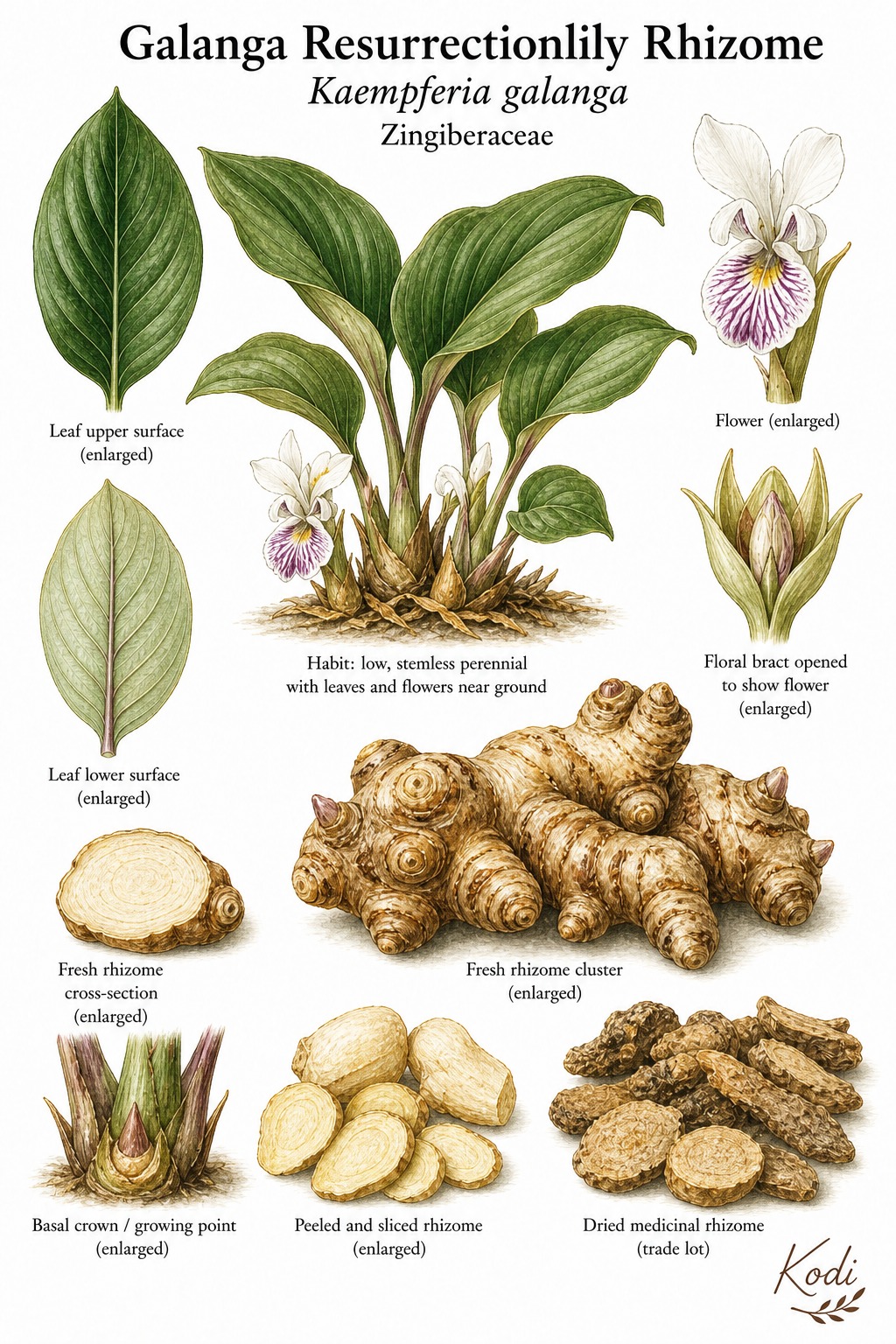
Known in TCM as Shan Nai (山柰), this pungent, warm herb enters the Stomach. Traditionally, it warms the middle burner and dispels cold - Shan Nai is used for cold-type abdominal discomfort, weak appetite, and indigestion when warmth and movement are both needed, most often applied for indigestion, abdominal pain, and toothache. Modern research has identified Ethyl among its active constituents.
Part used: Rhizome
Also Known As
Latin: Rhizoma Kaempferiae | Pinyin: Shan Nai | Chinese: 山柰
TCM Properties
- Taste
- pungent
- Temperature
- warm
- Channels
- Stomach
Traditional Use
Primary Actions
- Warms the middle burner and dispels cold - Shan Nai is used for cold-type abdominal discomfort, weak appetite, and indigestion when warmth and movement are both needed.
- Promotes digestion - it is especially suited to stagnation from cold-damp or weak digestive transformation rather than to heat-type food retention.
- Alleviates pain - traditional indications include toothache, traumatic discomfort, and chest or epigastric tightness when aromatic warming herbs are preferred.
Secondary Actions
- Shan Nai is an aromatic warming rhizome and should not be confused with the fruit-focused Hong Dou Kou line or with hotter dried-ginger-style interior rescuers.
- Both internal and external use are preserved in traditional references, which helps explain its overlap between digestive and pain-relieving applications.
Classic Formulas
- Middle-warming digestive pairings with Gao Liang Jiang or Chen Pi - common strategy when cold, stagnation, and fullness coexist.
- External powders or simple preparations for toothache and trauma - traditional use extends beyond the digestive tract when local pain and cold stagnation are emphasized.
Classical References
- TCM Wiki describes Shan Nai as pungent and warm, entering the Stomach to warm the middle energizer, promote digestion, and alleviate pain.
- Traditional cautions specifically note that Shan Nai is not appropriate for yin-deficiency heat or stomach-fire presentations.
Modern Research
Active Compounds
- Ethyl p-methoxycinnamate - a signature Kaempferia galanga constituent highlighted in modern pharmacology
- Ethyl cinnamate and related aromatic esters - major contributors to the rhizome's fragrance and bioactivity profile
- Volatile-oil fractions - central to the herb's antimicrobial and anti-inflammatory research literature
Studied Effects
- A 2019 review summarized the ameliorative and protective potential of Kaempferia galanga extracts and emphasized the plant's antioxidant, anti-inflammatory, and functional-food relevance, although most evidence remains preclinical (PMID 31431884).
- A 2023 study found that Kaempferia galanga extract and its major component ethyl p-methoxycinnamate suppressed proliferation in an Ehrlich ascites tumor model, illustrating ongoing interest in defined rhizome actives rather than only crude traditional use (PMID 37408910).
- A 2024 study on oral-mucosa-ulcer models reported anti-inflammatory and wound-healing-related effects from Kaempferia galanga extract, which fits its longstanding use as an aromatic pain-relieving and toxin-resolving rhizome (PMID 39224366).
PubMed References
- Aromatic ginger (Kaempferia galanga L.) extracts with ameliorative and protective potential as a functional food, beyond its flavor and nutritional benefits. (2019)
- Kaempferia galanga L. extract and its main component, ethyl p-methoxycinnamate, inhibit the proliferation of Ehrlich ascites tumor cells by suppressing TFAM expression. (2023)
- Kaempferia galanga L. alleviates the expression of COX-2 and NF-kappaB-p65 in the oral mucosa ulcer of Wistar rats and exhibits no irritation toward the vascular membrane of chicken eggs and the skin of albino rabbits. (2024)
Safety & Interactions
Contraindications
- Yin deficiency with heat
- Stomach fire or heat-type toothache
Cautions
- Most modern evidence is preclinical and species-level; it should not be treated as proof for every traditional internal indication.
- Concentrated aromatic extracts are stronger than ordinary decoction use and may irritate sensitive digestive tracts.
Conditions
- Indigestion Traditional ★★★★☆ JSON
- Abdominal Pain Traditional ★★★☆☆ JSON
- Toothache Traditional ★★★☆☆ JSON
- Traumatic Injury Traditional ★★☆☆☆ JSON
Frequently Asked Questions
What is Galangal Resurrectionlily Rhizome used for?
Galangal Resurrectionlily Rhizome is traditionally used to Warms the middle burner and dispels cold - Shan Nai is used for cold-type abdominal discomfort, weak appetite, and indigestion when warmth and movement are both needed., Promotes digestion - it is especially suited to stagnation from cold-damp or weak digestive transformation rather than to heat-type food retention., Alleviates pain - traditional indications include toothache, traumatic discomfort, and chest or epigastric tightness when aromatic warming herbs are preferred.. Research has investigated its effects on: A 2019 review summarized the ameliorative and protective potential of Kaempferia galanga extracts and emphasized the plant's antioxidant, anti-inflammatory, and functional-food relevance, although most evidence remains preclinical (PMID 31431884).; A 2023 study found that Kaempferia galanga extract and its major component ethyl p-methoxycinnamate suppressed proliferation in an Ehrlich ascites tumor model, illustrating ongoing interest in defined rhizome actives rather than only crude traditional use (PMID 37408910)..
What are other names for Galangal Resurrectionlily Rhizome?
Galangal Resurrectionlily Rhizome is also known as Kaempferia, Shan Nai Rhizome. In TCM: 山柰 (Shan Nai); Rhizoma Kaempferiae.
Is Galangal Resurrectionlily Rhizome safe during pregnancy?
The safety of Galangal Resurrectionlily Rhizome during pregnancy has not been established. Consult a qualified healthcare provider before use.
What are the contraindications for Galangal Resurrectionlily Rhizome?
Galangal Resurrectionlily Rhizome should not be used in: Yin deficiency with heat; Stomach fire or heat-type toothache. Consult a qualified practitioner before use.