Garlic
- Chinese
- 大蒜
- Pinyin
- Da Suan
- Latin
- Bulbus Allii Sativi
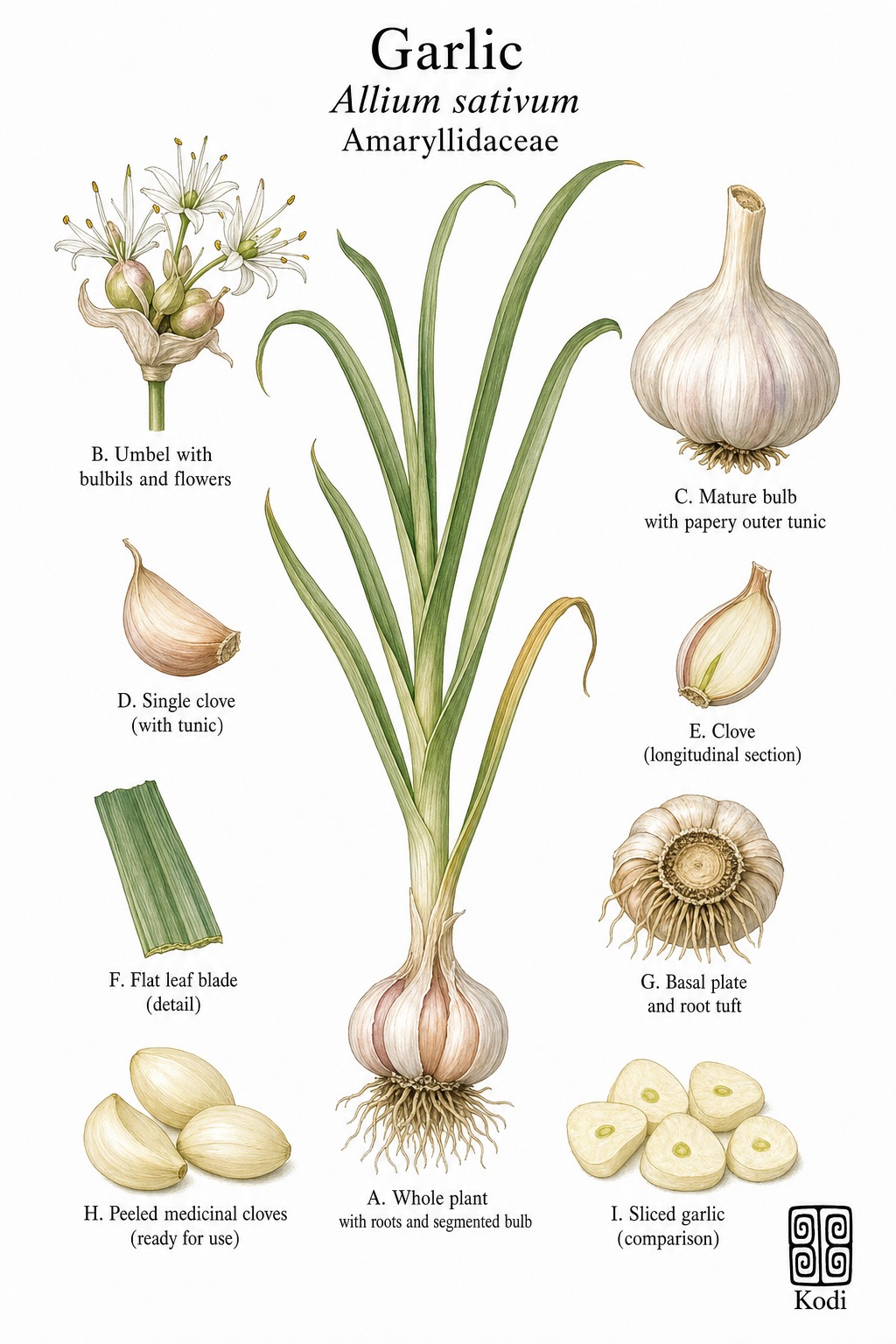
Known in TCM as Da Suan (大蒜), this pungent, warm herb enters the Spleen, Stomach, and Lung. Traditionally, it resolves toxicity and kills parasites - Da Suan is a classic food-medicine for intestinal worms, foodborne contamination, and toxic swellings, most often applied for intestinal parasites, parasitic infection, and diarrhea. Modern research has identified Alliin among its active constituents.
Part used: Bulb
Also Known As
Latin: Bulbus Allii Sativi | Pinyin: Da Suan | Chinese: 大蒜
TCM Properties
- Taste
- pungent
- Temperature
- warm
- Channels
- Spleen, Stomach, Lung
Traditional Use
Primary Actions
- Resolves toxicity and kills parasites - Da Suan is a classic food-medicine for intestinal worms, foodborne contamination, and toxic swellings.
- Warms the middle and stops dysenteric diarrhea - traditional use includes cold-type abdominal pain, dysentery, and weak digestion complicated by fermentation or toxic stagnation.
- Reduces abscesses and treats external fungal or toxic skin disorders - garlic is used topically and internally for boils, ringworm-type problems, and localized infections.
- Transforms phlegm and supports the Lung - later use includes cough with copious phlegm or chronic respiratory weakness where pungent warmth is appropriate.
Secondary Actions
- Because garlic is also a common food, it is easy to underappreciate the difference between culinary use and concentrated medicinal or supplemental use.
- Da Suan is warming and dispersing rather than neutral, so it is not a universal tonic and can aggravate heat or irritation when overused.
Classic Formulas
- Antiparasitic combinations with Bing Lang or Shi Jun Zi - traditional strategy when worm accumulation is complicated by poor appetite and abdominal discomfort.
- Garlic-based folk dysentery preparations - longstanding food-medicine use when cold toxin and intestinal fermentation drive pain and loose stool.
- Topical garlic poultice or juice applications - traditional external use for fungal lesions, swellings, and localized toxin.
Classical References
- Chinese herb references consistently classify Da Suan as pungent and warm, entering the Spleen, Stomach, and Lung to kill parasites, resolve toxin, warm the middle, and stop dysentery.
- Traditional medicine treats medicinal garlic as more than a condiment, but classical cautions still recognize its irritant nature when used in excess.
Modern Research
Active Compounds
- Alliin - the stable sulfur precursor in intact garlic cloves
- Allicin - the best-known reactive sulfur compound produced when garlic is crushed
- Ajoene and related diallyl sulfides - downstream organosulfur compounds linked to cardiovascular and antimicrobial research
Studied Effects
- A 2026 updated meta-analysis reported improvements across multiple cardiovascular risk factors in adults using garlic supplementation, supporting continued interest in garlic as a cardiometabolic adjunct rather than a cure-all (PMID 40580481).
- A 2016 updated meta-analysis and review concluded that garlic lowers blood pressure in hypertensive individuals, helps regulate serum cholesterol, and may stimulate aspects of immunity (PMID 26764326).
- A 2020 review summarized garlic's major chemical constituents and broad pharmacologic activities, reinforcing that allicin-centered sulfur chemistry remains the key bridge between traditional pungent warmth and modern biomedical interest (PMID 32213941).
PubMed References
- Effects of Garlic Supplementation on Cardiovascular Risk Factors in Adults: A Comprehensive Updated Systematic Review and Meta-Analysis of Randomized Controlled Trials. (2026)
- Garlic Lowers Blood Pressure in Hypertensive Individuals, Regulates Serum Cholesterol, and Stimulates Immunity: An Updated Meta-analysis and Review. (2016)
- Chemical Constituents and Pharmacological Activities of Garlic (Allium sativum L.): A Review. (2020)
Safety & Interactions
Contraindications
- Active bleeding tendency
- Perioperative use of concentrated garlic supplements
- Marked Stomach heat or mucosal irritation aggravated by pungent foods
Cautions
- MSK notes that garlic can alter platelet function and should be stopped at least 7 days before surgery when used as a supplement.
- Food-level garlic and concentrated garlic extracts are not interchangeable from an interaction or bleeding-risk standpoint.
- Topical garlic can cause chemical burns and should not be treated like a harmless household skin treatment.
Drug Interactions
- Anticoagulants or antiplatelet drugs - possible increased bleeding risk.
- Insulin or glucose-lowering medications - garlic supplements may have additive hypoglycemic effects.
- CYP2C9, CYP2C19, or CYP3A4 substrate drugs - garlic may alter metabolism.
- P-glycoprotein substrate drugs - garlic extract may reduce activity of these drugs.
Conditions
- Intestinal Parasites Traditional ★★★★☆ JSON
- Parasitic Infection Traditional ★★★★☆ JSON
- Diarrhea Traditional ★★★☆☆ JSON
- Fungal Infection Traditional ★★★☆☆ JSON
- High Cholesterol Research ★★★☆☆ JSON
Frequently Asked Questions
What is Garlic used for?
Garlic is traditionally used to Resolves toxicity and kills parasites - Da Suan is a classic food-medicine for intestinal worms, foodborne contamination, and toxic swellings., Warms the middle and stops dysenteric diarrhea - traditional use includes cold-type abdominal pain, dysentery, and weak digestion complicated by fermentation or toxic stagnation., Reduces abscesses and treats external fungal or toxic skin disorders - garlic is used topically and internally for boils, ringworm-type problems, and localized infections., Transforms phlegm and supports the Lung - later use includes cough with copious phlegm or chronic respiratory weakness where pungent warmth is appropriate.. Research has investigated its effects on: A 2026 updated meta-analysis reported improvements across multiple cardiovascular risk factors in adults using garlic supplementation, supporting continued interest in garlic as a cardiometabolic adjunct rather than a cure-all (PMID 40580481).; A 2016 updated meta-analysis and review concluded that garlic lowers blood pressure in hypertensive individuals, helps regulate serum cholesterol, and may stimulate aspects of immunity (PMID 26764326)..
What are other names for Garlic?
Garlic is also known as Allium, Garlic Clove. In TCM: 大蒜 (Da Suan); Bulbus Allii Sativi.
Is Garlic safe during pregnancy?
The safety of Garlic during pregnancy has not been established. Consult a qualified healthcare provider before use.
What are the contraindications for Garlic?
Garlic should not be used in: Active bleeding tendency; Perioperative use of concentrated garlic supplements; Marked Stomach heat or mucosal irritation aggravated by pungent foods. Consult a qualified practitioner before use.
Does Garlic interact with any medications?
Garlic may interact with: Anticoagulants or antiplatelet drugs - possible increased bleeding risk.; Insulin or glucose-lowering medications - garlic supplements may have additive hypoglycemic effects.; CYP2C9, CYP2C19, or CYP3A4 substrate drugs - garlic may alter metabolism.; P-glycoprotein substrate drugs - garlic extract may reduce activity of these drugs.. Always inform your healthcare provider of any herbal supplements you are taking.