Ginkgo Leaf
- Chinese
- 银杏叶
- Pinyin
- Bai Guo Ye
- Latin
- Folium Ginkgo
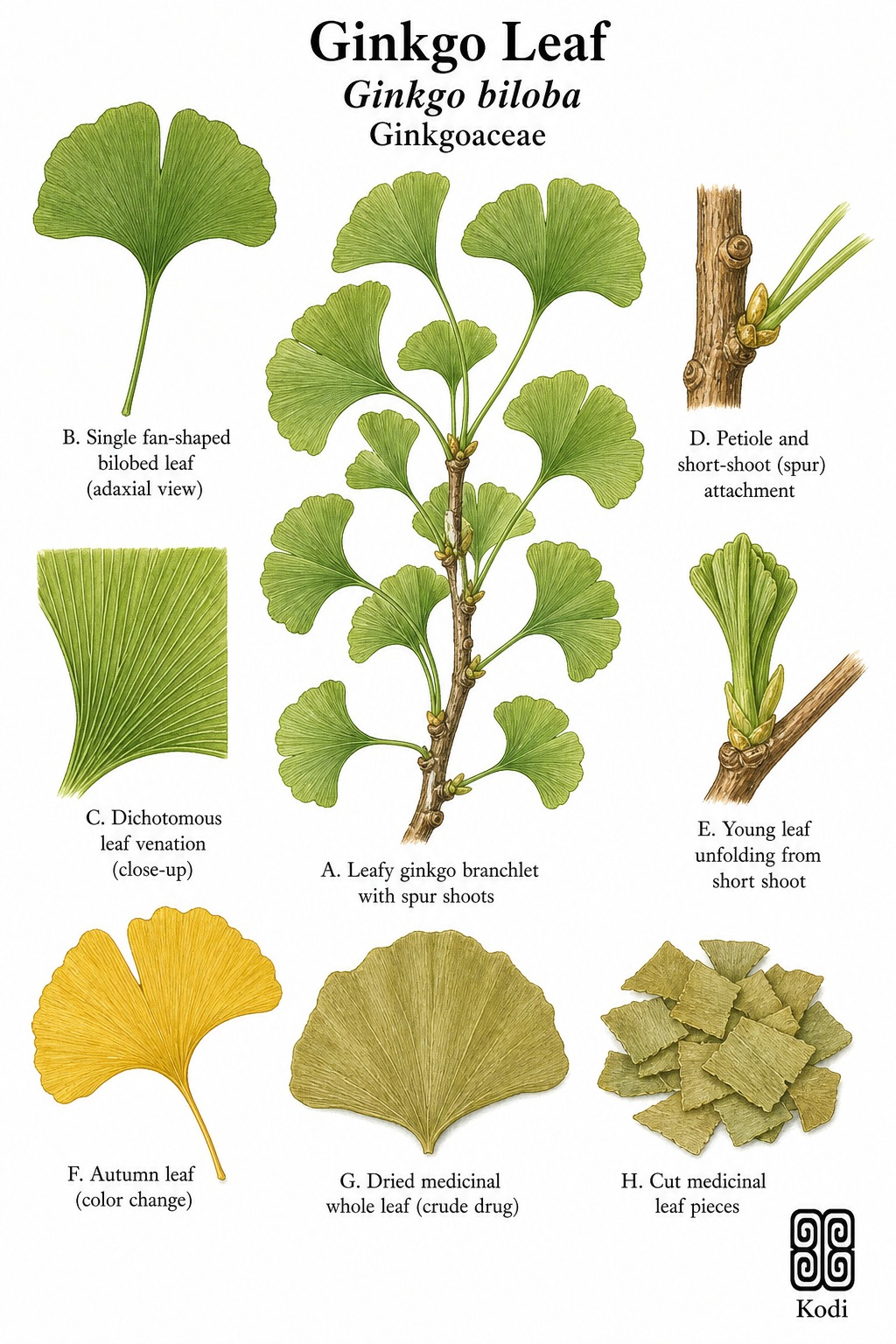
Known in TCM as Bai Guo Ye (银杏叶), this sweet and bitter and astringent, neutral herb enters the Heart and Lung. Traditionally, it astringes the Lung and calms wheezing - Bai Guo Ye is used in contemporary TCM practice for chronic cough, dyspnea, and phlegm-heavy Lung patterns when a mildly astringing leaf drug is preferred, most often applied for cognitive decline, stroke, and cardiovascular disease. Modern research has identified Flavonol among its active constituents.
Part used: Leaf
Also Known As
Latin: Folium Ginkgo | Pinyin: Bai Guo Ye | Chinese: 银杏叶
TCM Properties
- Taste
- sweet, bitter, astringent
- Temperature
- neutral
- Channels
- Heart, Lung
Traditional Use
Primary Actions
- Astringes the Lung and calms wheezing - Bai Guo Ye is used in contemporary TCM practice for chronic cough, dyspnea, and phlegm-heavy Lung patterns when a mildly astringing leaf drug is preferred.
- Unblocks collaterals and supports circulation - later Chinese practice especially values standardized ginkgo-leaf preparations for chest discomfort, stroke recovery support, and circulation-oriented pattern treatment.
- Clears turbidity and quiets the upper body - the leaf is used when dizziness, chest oppression, or cognitive dullness are interpreted through phlegm, stasis, or impaired clear-yang ascent.
Secondary Actions
- Bai Guo Ye should not be confused with Bai Guo seed: the leaf dominates modern vascular and cognitive supplement research, while the seed remains the classic Lung-Kidney astringent.
- Most modern ginkgo products use standardized leaf extracts, which are pharmacologically stronger and more interaction-prone than crude leaf tea.
Classic Formulas
- Modern circulation-support formulas pair Bai Guo Ye with Dan Shen, San Qi, or Hong Hua when blood stasis and collateral obstruction dominate the pattern picture.
- Respiratory pairings with Bai Guo or phlegm-transforming herbs - used when both Lung astringing and phlegm reduction are needed.
Classical References
- TCM and modern Chinese herb references describe ginkgo leaf as sweet, bitter, astringent, and neutral, entering the Heart and Lung to astringe the Lung and support circulation.
- The Bai Guo Ye record is substantially more modern in its clinical profile than the ancient Bai Guo seed record, especially in stroke and cognitive-decline settings.
Modern Research
Active Compounds
- Flavonol glycosides such as quercetin, kaempferol, and isorhamnetin derivatives - the core standardized ginkgo-leaf markers
- Terpene trilactones including ginkgolides and bilobalide - signature constituents in vascular and neurologic research
- Ginkgolic acids - unwanted allergenic/toxic constituents kept low in quality-controlled extracts
Studied Effects
- A 2024 systematic review of clinical trials on ginkgo biloba and Alzheimer's dementia concluded that interest remains high but the evidence is still mixed and far from a definitive solution, which is the right level of caution for Bai Guo Ye claims (PMID 38929090).
- A 2021 systematic review and meta-analysis found that ginkgo biloba leaf preparations may offer supportive benefit in ischemic-stroke settings, though the evidence base remains heterogeneous (PMID 34925528).
- A 2022 meta-analysis reported beneficial effects of ginkgo biloba leaf extract on inflammatory markers in clinical studies, supporting continued interest in systemic vascular and anti-inflammatory mechanisms (PMID 35781715).
PubMed References
- Ginkgo biloba: A Leaf of Hope in the Fight against Alzheimer's Dementia: Clinical Trial Systematic Review. (2024)
- The Clinical Efficacy of Ginkgo biloba Leaf Preparation on Ischemic Stroke: A Systematic Review and Meta-Analysis. (2021)
- Beneficial effects of Ginkgo biloba leaf extract on inflammatory markers: A systematic review and meta-analysis of the clinical trials. (2022)
Safety & Interactions
Contraindications
- Bleeding disorders
- Perioperative use
- Seizure disorders in the setting of unverified ginkgo products
Cautions
- MSK notes potential interactions with anticoagulants, NSAIDs, certain anticonvulsants, and some diabetes medications, so standardized ginkgo extract should not be treated like a benign tea.
- Commercial extract quality matters because ginkgolic-acid content and standardization strongly affect safety.
- Most modern evidence concerns standardized leaf extract rather than crude leaf decoction.
Drug Interactions
- Anticoagulants or antiplatelet drugs - possible increased bleeding risk.
- NSAIDs - possible additive bleeding risk.
- Anticonvulsants - seizure-threshold concerns with poor-quality products or inappropriate use.
- Diabetes medications - possible additive glucose-lowering effect.
Conditions
- Cognitive Decline Research ★★☆☆☆ JSON
- Stroke Research ★★☆☆☆ JSON
- Cardiovascular Disease Research ★★☆☆☆ JSON
- Cough Traditional ★★☆☆☆ JSON
- Palpitations Traditional ★★☆☆☆ JSON
Frequently Asked Questions
What is Ginkgo Leaf used for?
Ginkgo Leaf is traditionally used to Astringes the Lung and calms wheezing - Bai Guo Ye is used in contemporary TCM practice for chronic cough, dyspnea, and phlegm-heavy Lung patterns when a mildly astringing leaf drug is preferred., Unblocks collaterals and supports circulation - later Chinese practice especially values standardized ginkgo-leaf preparations for chest discomfort, stroke recovery support, and circulation-oriented pattern treatment., Clears turbidity and quiets the upper body - the leaf is used when dizziness, chest oppression, or cognitive dullness are interpreted through phlegm, stasis, or impaired clear-yang ascent.. Research has investigated its effects on: A 2024 systematic review of clinical trials on ginkgo biloba and Alzheimer's dementia concluded that interest remains high but the evidence is still mixed and far from a definitive solution, which is the right level of caution for Bai Guo Ye claims (PMID 38929090).; A 2021 systematic review and meta-analysis found that ginkgo biloba leaf preparations may offer supportive benefit in ischemic-stroke settings, though the evidence base remains heterogeneous (PMID 34925528)..
What are other names for Ginkgo Leaf?
Ginkgo Leaf is also known as Yin Xing Ye, Ginkgo biloba Leaf. In TCM: 银杏叶 (Bai Guo Ye); Folium Ginkgo.
Is Ginkgo Leaf safe during pregnancy?
The safety of Ginkgo Leaf during pregnancy has not been established. Consult a qualified healthcare provider before use.
What are the contraindications for Ginkgo Leaf?
Ginkgo Leaf should not be used in: Bleeding disorders; Perioperative use; Seizure disorders in the setting of unverified ginkgo products. Consult a qualified practitioner before use.
Does Ginkgo Leaf interact with any medications?
Ginkgo Leaf may interact with: Anticoagulants or antiplatelet drugs - possible increased bleeding risk.; NSAIDs - possible additive bleeding risk.; Anticonvulsants - seizure-threshold concerns with poor-quality products or inappropriate use.; Diabetes medications - possible additive glucose-lowering effect.. Always inform your healthcare provider of any herbal supplements you are taking.