Ginkgo Seed
- Chinese
- 白果
- Pinyin
- Bai Guo
- Latin
- Semen Ginkgo
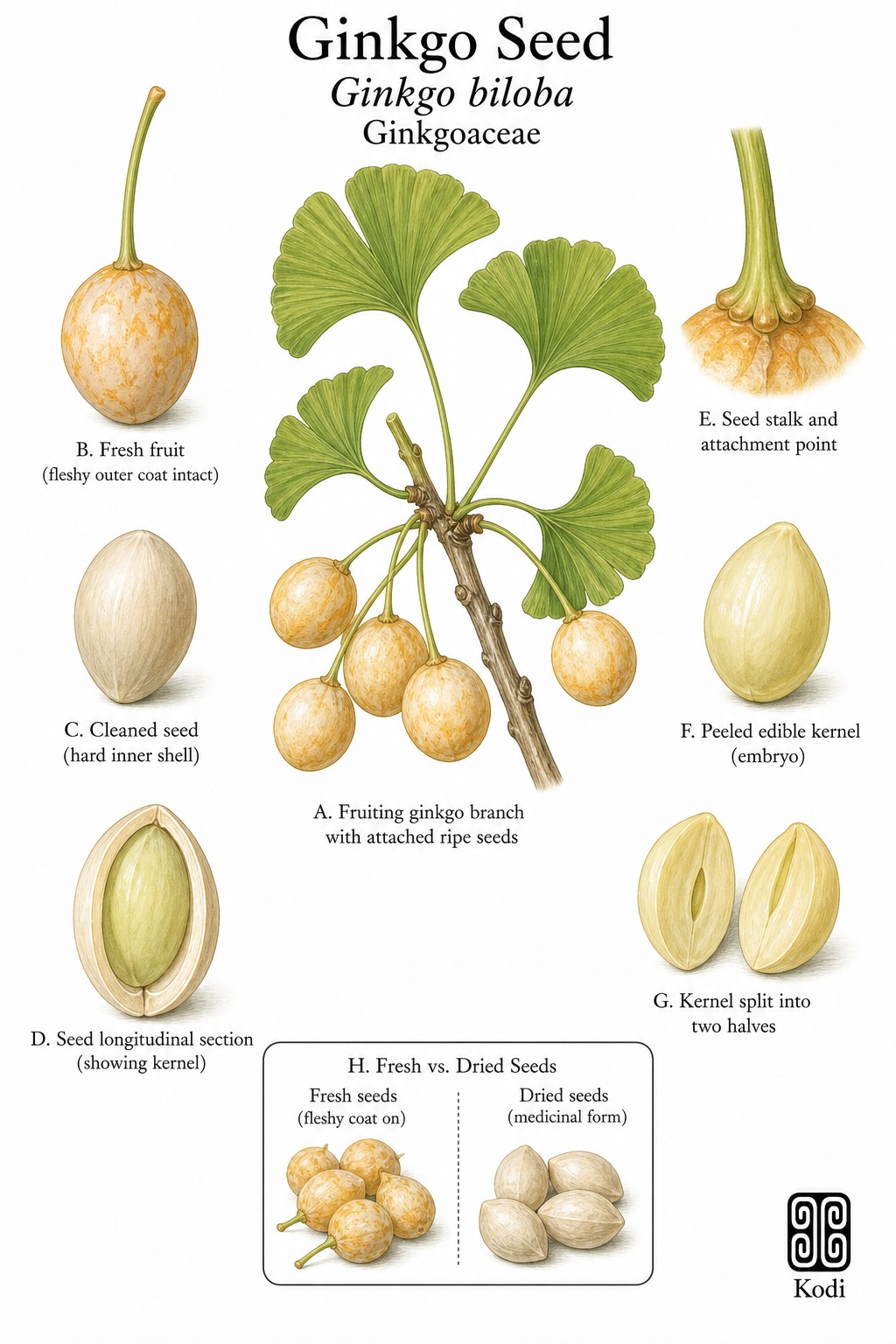
Known in TCM as Bai Guo (白果), this sweet and bitter and astringent, neutral herb enters the Lung and Kidney. Traditionally, it astringes the Lung and calms wheezing - Bai Guo is a classic choice for chronic cough, asthma, and dyspnea when leakage of Lung qi needs to be contained, most often applied for asthma, wheezing, and productive cough. Modern research has identified 4'-O-methylpyridoxine among its active constituents.
Part used: Seed
Also Known As
Latin: Semen Ginkgo | Pinyin: Bai Guo | Chinese: 白果
TCM Properties
- Taste
- sweet, bitter, astringent
- Temperature
- neutral
- Channels
- Lung, Kidney
Traditional Use
Primary Actions
- Astringes the Lung and calms wheezing - Bai Guo is a classic choice for chronic cough, asthma, and dyspnea when leakage of Lung qi needs to be contained.
- Transforms phlegm - it is used when cough and wheezing are accompanied by slippery, phlegm-heavy congestion rather than by dry heat alone.
- Stops leukorrhea and reduces frequent urination - the seed also secures the lower burner in deficiency or dampness patterns involving vaginal discharge or leakage.
Secondary Actions
- Bai Guo's astringing nature makes it useful when leakage and phlegm occur together, but that same quality can trap pathogens if the pattern is misjudged.
- The medicinal seed and the modern leaf extract should be kept conceptually separate because their safety issues and evidence bases are not the same.
Classic Formulas
- Ding Chuan Tang - classic wheezing formula using Bai Guo to astringe the Lung while other herbs disperse exterior and transform phlegm.
- Yi Huang Tang - formula lineage using Bai Guo for damp leukorrhea with lower-burner weakness.
- Bai Guo Ding Chuan strategies - later practice patterns centered on cough, wheezing, and phlegm with Lung leakage.
Classical References
- TCM Wiki and standard herb references describe Bai Guo as sweet, bitter, astringent, neutral, and slightly toxic, entering the Lung and Kidney to astringe the Lung, calm wheezing, resolve phlegm, and stop leukorrhea.
- Classical cautions are strong around raw seed use and excessive dosing, especially in children.
Modern Research
Active Compounds
- 4'-O-methylpyridoxine (ginkgotoxin) - the best-known toxic seed constituent
- Ginkgolic acids - irritant and potentially allergenic constituents relevant to safety screening
- Flavonoids and terpene-related compounds - supportive constituents discussed in broader whole-plant reviews
Studied Effects
- A 2022 comprehensive review of ginkgo leaves, seeds, and exocarp emphasized that the seed has a distinct traditional-use and toxicity profile from the better-studied leaf extract, which is an important framing point for Bai Guo (PMID 35988840).
- A 2023 animal study found that Ginkgo biloba seeds inhibited oxidative stress and inflammation in cigarette-smoke-induced COPD models through the Nrf2 pathway, providing preclinical support for the respiratory seed tradition without replacing toxicity caution (PMID 36167232).
- Even so, the bulk of modern clinical ginkgo literature remains leaf-extract-based, so Bai Guo claims should stay more conservative than Bai Guo Ye claims.
PubMed References
- Leaves, seeds and exocarp of Ginkgo biloba L. (Ginkgoaceae): A Comprehensive Review of Traditional Uses, phytochemistry, pharmacology, resource utilization and toxicity. (2022)
- Seeds of Ginkgo biloba L. inhibit oxidative stress and inflammation induced by cigarette smoke in COPD rats through the Nrf2 pathway. (2023)
Safety & Interactions
Contraindications
- Raw or undercooked seed use
- Infants and small children
- Seizure disorders or B6-deficiency susceptibility
- Excess pathogens still lodged in the Lung
Cautions
- Bai Guo is slightly toxic, and raw or excessive seed intake can cause serious poisoning through ginkgotoxin exposure.
- Children are especially vulnerable to seed toxicity, so dosing must be conservative and properly cooked.
- The herb's astringing effect can worsen disease if used too early in an acute external pathogen or unresolved phlegm-heat presentation.
Drug Interactions
- Anticonvulsant therapy - theoretical concern because seed toxicity lowers seizure threshold.
Conditions
- Asthma Traditional ★★★★☆ JSON
- Wheezing Traditional ★★★★☆ JSON
- Productive Cough Traditional ★★★☆☆ JSON
- Frequent Urination Traditional ★★★☆☆ JSON
- Leukorrhea Traditional ★★★☆☆ JSON
Frequently Asked Questions
What is Ginkgo Seed used for?
Ginkgo Seed is traditionally used to Astringes the Lung and calms wheezing - Bai Guo is a classic choice for chronic cough, asthma, and dyspnea when leakage of Lung qi needs to be contained., Transforms phlegm - it is used when cough and wheezing are accompanied by slippery, phlegm-heavy congestion rather than by dry heat alone., Stops leukorrhea and reduces frequent urination - the seed also secures the lower burner in deficiency or dampness patterns involving vaginal discharge or leakage.. Research has investigated its effects on: A 2022 comprehensive review of ginkgo leaves, seeds, and exocarp emphasized that the seed has a distinct traditional-use and toxicity profile from the better-studied leaf extract, which is an important framing point for Bai Guo (PMID 35988840).; A 2023 animal study found that Ginkgo biloba seeds inhibited oxidative stress and inflammation in cigarette-smoke-induced COPD models through the Nrf2 pathway, providing preclinical support for the respiratory seed tradition without replacing toxicity caution (PMID 36167232)..
What are other names for Ginkgo Seed?
Ginkgo Seed is also known as Ginkgo Nut, Yin Xing Seed. In TCM: 白果 (Bai Guo); Semen Ginkgo.
Is Ginkgo Seed safe during pregnancy?
The safety of Ginkgo Seed during pregnancy has not been established. Consult a qualified healthcare provider before use.
What are the contraindications for Ginkgo Seed?
Ginkgo Seed should not be used in: Raw or undercooked seed use; Infants and small children; Seizure disorders or B6-deficiency susceptibility; Excess pathogens still lodged in the Lung. Consult a qualified practitioner before use.
Does Ginkgo Seed interact with any medications?
Ginkgo Seed may interact with: Anticonvulsant therapy - theoretical concern because seed toxicity lowers seizure threshold.. Always inform your healthcare provider of any herbal supplements you are taking.