Ginseng Leaf
- Chinese
- 人参叶
- Pinyin
- Ren Shen Ye
- Latin
- Folium Ginseng
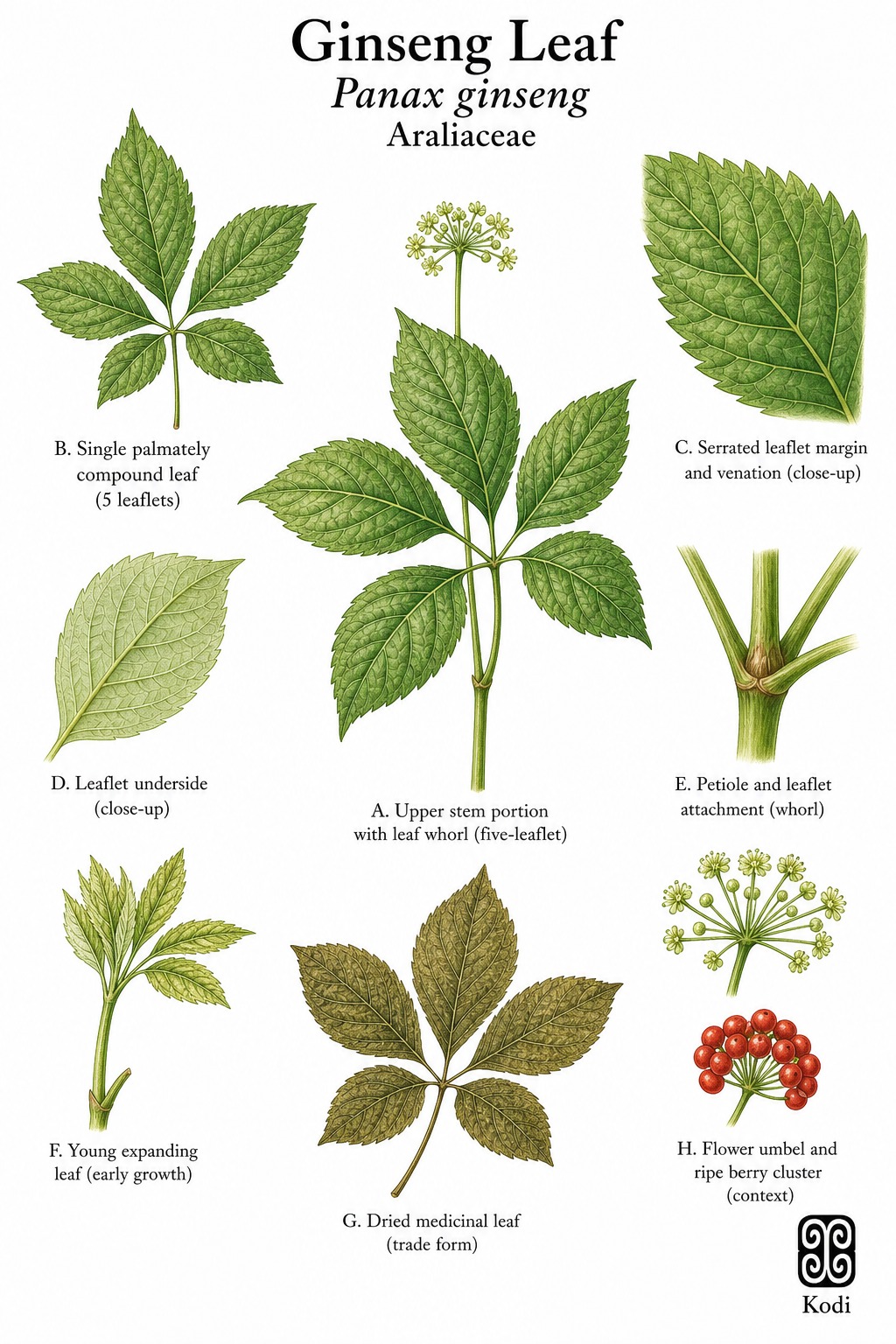
Known in TCM as Ren Shen Ye (人参叶), this bitter and sweet, cold herb enters the Lung and Stomach. Traditionally, it tonifies qi and benefits the Lung - Ren Shen Ye is used for fatigue, weak respiration, and deficiency cough when a lighter Panax preparation is preferred, most often applied for fatigue, cough, and dizziness. Modern research has identified Low-polar among its active constituents.
Part used: Leaf
Also Known As
Latin: Folium Ginseng | Pinyin: Ren Shen Ye | Chinese: 人参叶
TCM Properties
- Taste
- bitter, sweet
- Temperature
- cold
- Channels
- Lung, Stomach
Traditional Use
Primary Actions
- Tonifies qi and benefits the Lung - Ren Shen Ye is used for fatigue, weak respiration, and deficiency cough when a lighter Panax preparation is preferred.
- Clears summer-heat and generates fluids - traditional use includes thirst, vexation, and exhaustion after heat or fluid loss.
- Relieves dizziness and supports recovery - the leaf is selected when qi depletion presents with lightheadedness and lack of strength but a cooler medicament is wanted.
Secondary Actions
- Ren Shen Ye is cooler and more dispersing than Ren Shen root, which is why the two should not be treated as interchangeable tonic intensity.
- The leaf keeps the Panax identity but shifts it toward qi-plus-fluid recovery rather than dense root-level rescue.
Classic Formulas
- Summer-heat and qi-fluid depletion combinations with Mai Men Dong or Lu Gen - traditional strategy when thirst and fatigue are prominent.
- Lung-qi support pairings with Sha Shen or Wu Wei Zi - used when cough and weakness overlap but heavy warming root tonics are not desired.
Classical References
- Chinese herb references describe Ren Shen Ye as bitter, sweet, and cold, entering the Lung and Stomach to tonify qi, clear summer-heat, generate fluids, and benefit the Lung.
- The leaf record is traditionally distinct from the root record, particularly in its cooler temperature and lighter clinical emphasis.
Modern Research
Active Compounds
- Low-polar ginsenosides - important Panax ginseng leaf constituents highlighted in extraction studies
- Dammarane triterpenes - major leaf actives with immune and endocrine relevance
- Essential-oil fractions - supportive volatile compounds characterized in ginseng-leaf chemistry
Studied Effects
- A 2017 study isolated low-polar ginsenosides from Panax ginseng leaves and evaluated aromatase-inhibitory activity, demonstrating that the leaf has its own chemically distinct bioactive profile rather than being a simple root substitute (PMID 28027838).
- A 2014 study found that dammarane triterpenes from Panax ginseng leaves enhanced cellular immunity, supporting continued interest in leaf-specific immunologic activity (PMID 24290061).
- A 2014 analysis characterized the essential-oil composition of ginseng leaves and reported cytotoxic, antioxidant, and antibacterial activities, further reinforcing that the leaf has independent pharmacologic relevance (PMID 25115102).
PubMed References
- Extraction, isolation, and aromatase inhibitory evaluation of low-polar ginsenosides from Panax ginseng leaves. (2017)
- Dammarane triterpenes from the leaves of Panax ginseng enhance cellular immunity. (2014)
- Chemical composition, and cytotoxic, antioxidant and antibacterial activities of the essential oil from ginseng leaves. (2014)
Safety & Interactions
Contraindications
- Marked deficiency-cold states better suited to the warmer root
- Concurrent warfarin therapy without monitoring
Cautions
- Leaf-specific human interaction data are limited, but it is prudent to apply many of the same anticoagulant and glucose-lowering cautions used for Panax root preparations.
- The leaf is cooler than the root, so using it as a one-to-one replacement for Ren Shen can weaken formulas meant for cold qi collapse or severe deficiency.
- High-concentration Panax leaf extracts may not behave like simple tea or crude-leaf decoction.
Drug Interactions
- Warfarin - possible alteration of anticoagulant effect.
- Insulin or hypoglycemic drugs - possible additive glucose-lowering effect.
Conditions
Frequently Asked Questions
What is Ginseng Leaf used for?
Ginseng Leaf is traditionally used to Tonifies qi and benefits the Lung - Ren Shen Ye is used for fatigue, weak respiration, and deficiency cough when a lighter Panax preparation is preferred., Clears summer-heat and generates fluids - traditional use includes thirst, vexation, and exhaustion after heat or fluid loss., Relieves dizziness and supports recovery - the leaf is selected when qi depletion presents with lightheadedness and lack of strength but a cooler medicament is wanted.. Research has investigated its effects on: A 2017 study isolated low-polar ginsenosides from Panax ginseng leaves and evaluated aromatase-inhibitory activity, demonstrating that the leaf has its own chemically distinct bioactive profile rather than being a simple root substitute (PMID 28027838).; A 2014 study found that dammarane triterpenes from Panax ginseng leaves enhanced cellular immunity, supporting continued interest in leaf-specific immunologic activity (PMID 24290061)..
What are other names for Ginseng Leaf?
Ginseng Leaf is also known as Panax ginseng Leaf. In TCM: 人参叶 (Ren Shen Ye); Folium Ginseng.
Is Ginseng Leaf safe during pregnancy?
The safety of Ginseng Leaf during pregnancy has not been established. Consult a qualified healthcare provider before use.
What are the contraindications for Ginseng Leaf?
Ginseng Leaf should not be used in: Marked deficiency-cold states better suited to the warmer root; Concurrent warfarin therapy without monitoring. Consult a qualified practitioner before use.
Does Ginseng Leaf interact with any medications?
Ginseng Leaf may interact with: Warfarin - possible alteration of anticoagulant effect.; Insulin or hypoglycemic drugs - possible additive glucose-lowering effect.. Always inform your healthcare provider of any herbal supplements you are taking.